
Serengeti National Park Big Five: Where to Find and Photograph Each One
Serengeti National Park big five: lion, leopard, elephant, buffalo and rhino, how likely each is, and how to photograph them.
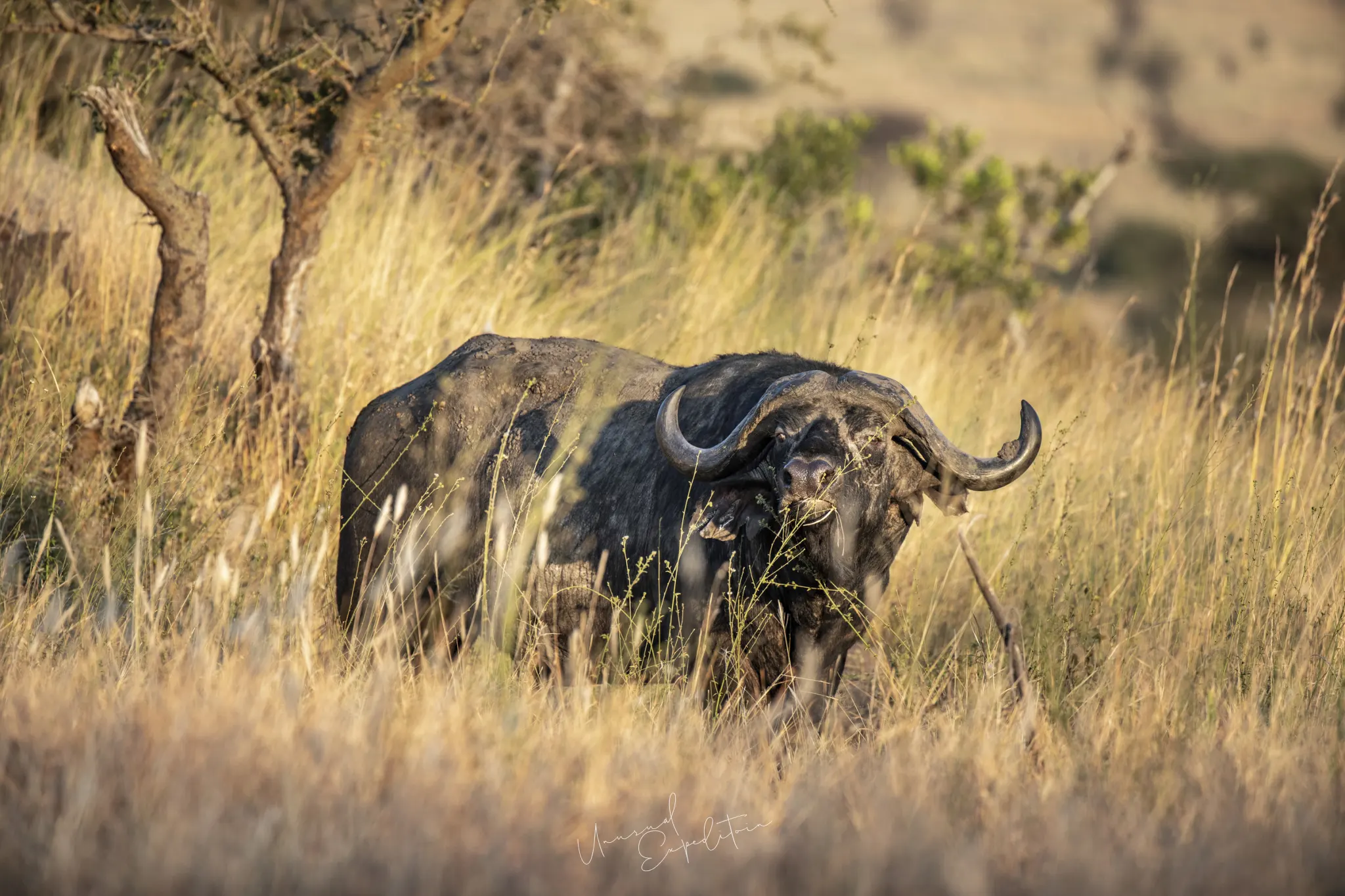
Serengeti National Park big five means lion, leopard, elephant, Cape buffalo and rhino, and four of the five are seen regularly: lions and buffalo on most game drives, elephants in the woodland and along the rivers, and leopards with patience in the trees of the central Serengeti. The black rhino is the hard one. Only a small, protected population lives in the park, and sightings are rare, so a photographer should plan for four and treat a rhino as a bonus.
Our Serengeti photography tour guide covers the park and its seasons. This destination guide takes the five animals one by one, with where to find them and how to photograph them well, not just tick them off.
What does the big five mean?
The big five is an old hunters' term, not a scientific one. It was coined in the colonial era for the five African animals considered the most difficult and dangerous to hunt on foot: lion, leopard, elephant, Cape buffalo and rhinoceros. Size had nothing to do with it, which is why the hippo and the giraffe are missing. Today the list is a safari phrase, and most visitors to Tanzania want to see all five. For a photographer the list is a useful start but a poor goal. The five are very different subjects, and a strong picture of one is worth more than a weak record of all of them. Treat them as five separate briefs, each with its own place, light and lens.
Serengeti national park big five: can you see all five?
You can see the Serengeti national park big five on one trip, but it is not likely. Lions, elephants and buffalo are found in good numbers across the park. Leopards are regular in the central Serengeti for anyone who gives them time. The black rhino is the problem. Poaching late in the last century almost wiped out the Serengeti's rhinos, and the Frankfurt Zoological Society, working with Tanzania National Parks (TANAPA), began the Serengeti Rhino Repatriation Project in 2010 to bring animals back. The population is small, closely guarded and mostly away from the main game drive routes. Many visitors who want all five add a day in the Ngorongoro Crater, where black rhinos are seen more often on the open crater floor. Ask your driver guide; rangers sometimes know where a rhino has been.
Lions
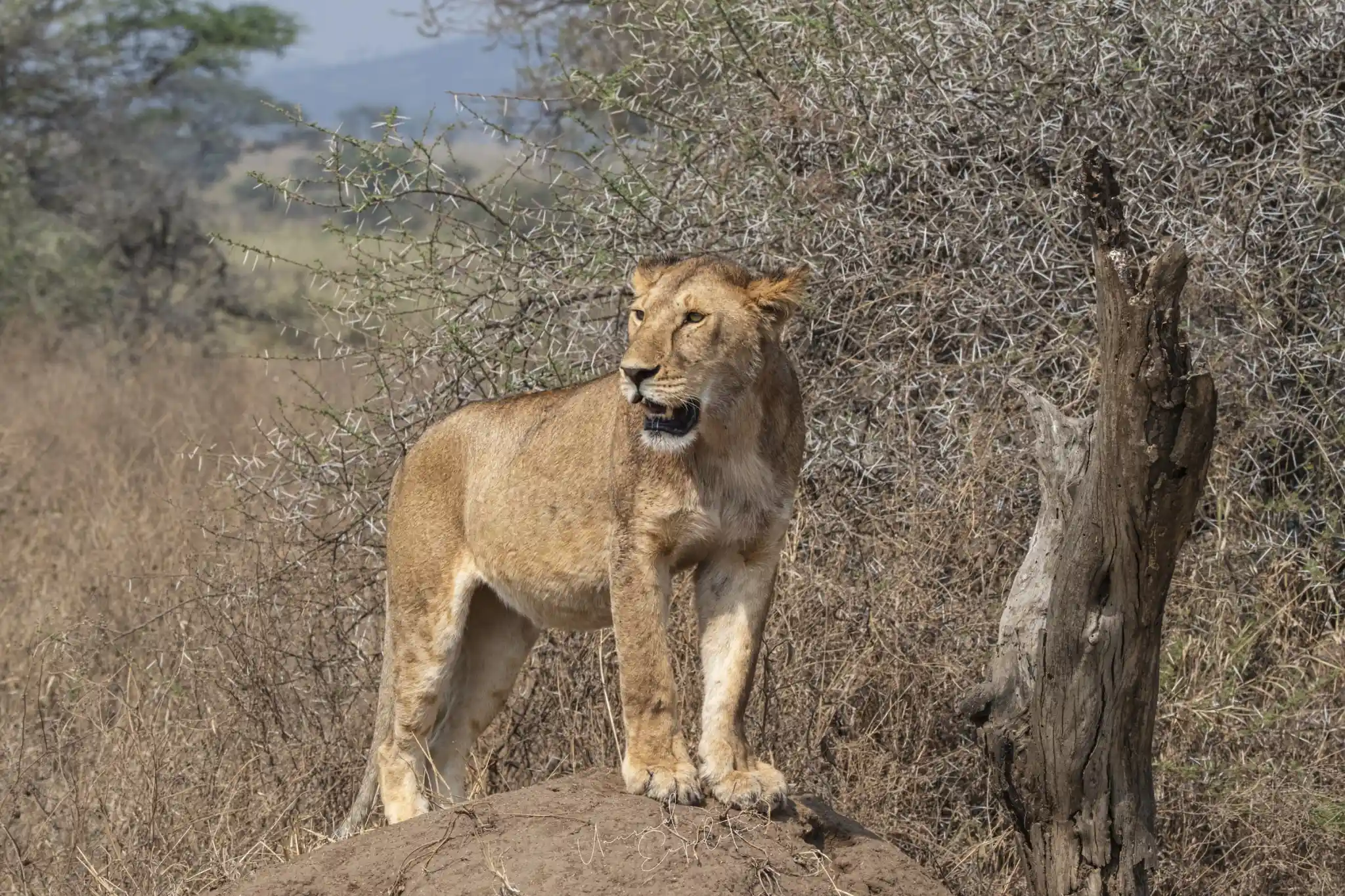
Lions are the easiest of the big five to find in the Serengeti, resting in prides under trees, on kopjes and on termite mounds that give them a lookout over the plains. A young male standing on a mound, scanning the grass, is a classic Serengeti picture: shoot from low so he stands against the sky or a soft green background, and wait for the head to turn towards something. Lions sleep through much of the day, so the early morning and late afternoon give the most activity. Use 1/500s for a resting lion and 1/2000s as soon as it moves. For more on the three cats together, see Serengeti big cats.
Leopards
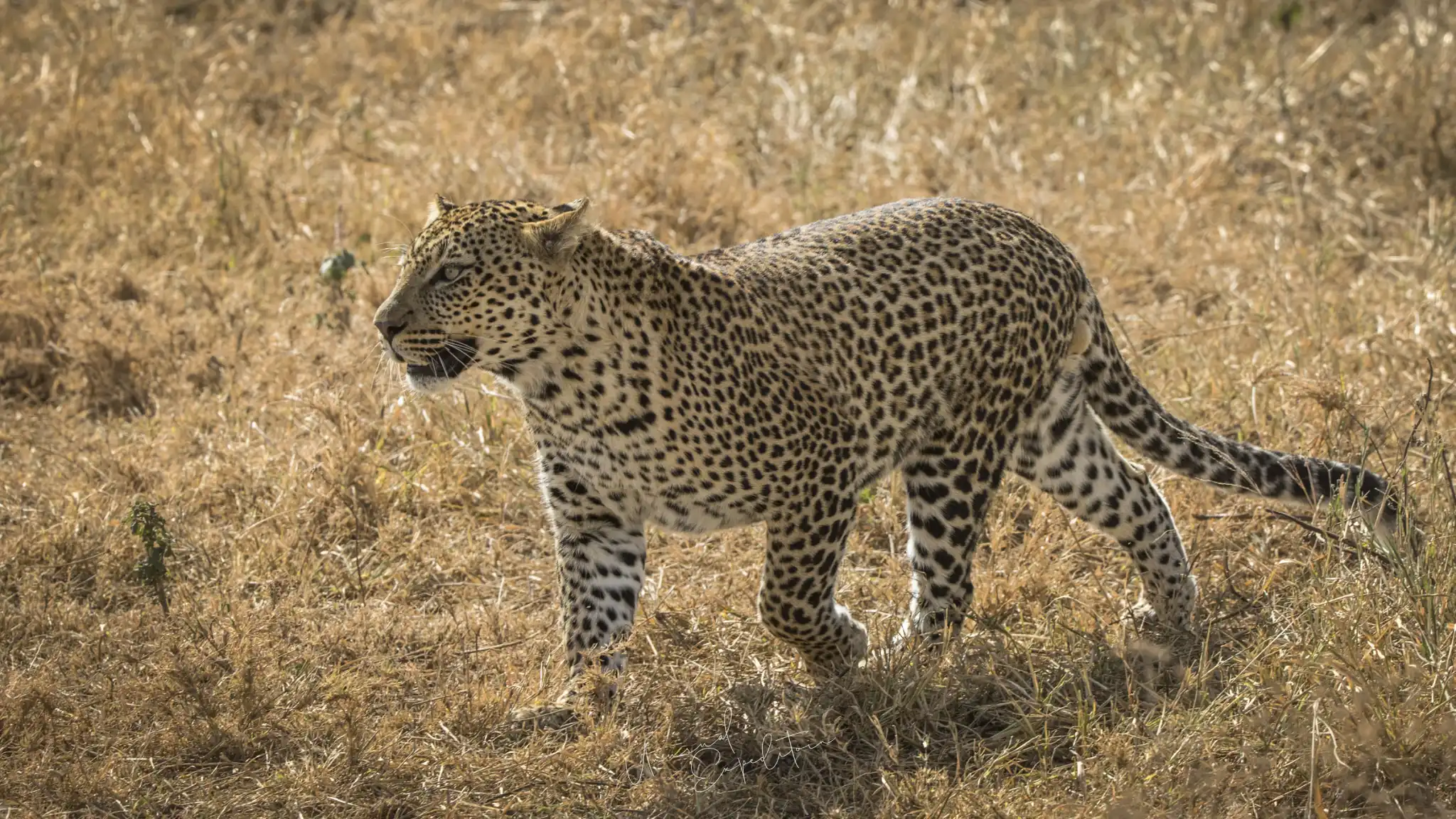
Leopards are the big five member that needs the most patience in the Serengeti. They rest in sausage trees and acacias along the rivers of the central Serengeti and lie on kopjes, and they spend much of the day asleep. When one comes down and walks through the grass, it is the best chance of a full-body picture. Keep the shutter fast, focus on the eye and leave space in front of the cat. The IUCN Red List classes the leopard as Vulnerable across its range. We give leopards a destination guide of their own: Serengeti leopards covers where to look and how to wait.
Elephants
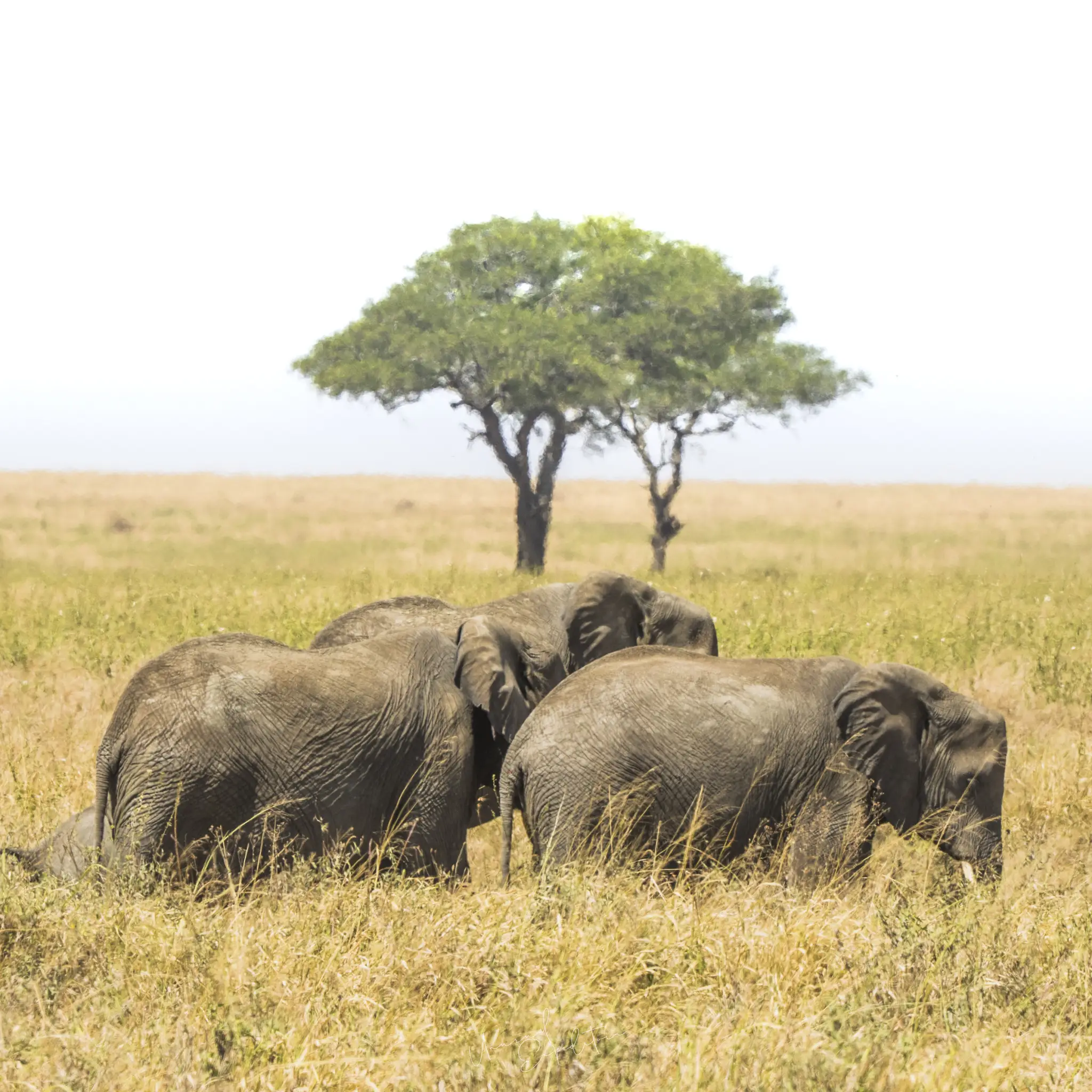
Elephants in the Serengeti live mainly in the woodland of the north and west and along the rivers, and they are common around the Mara River in the dry season. On the open plains they are fewer, which makes them easier to photograph as part of the landscape: two elephants under a flat-topped acacia, with a wide sky above, say Serengeti better than any close-up. Use a 70-200mm or a 24-70mm for those, and a longer lens for heads and tusks. Family groups crossing a river or drinking give the most behaviour. Keep a respectful distance from mothers with small calves. Our is the Serengeti worth visiting page shows an elephant bull in the long grass.
Cape buffalo
The Cape buffalo is the most underrated of the Serengeti big five for photography. Herds graze the long grass near water, and old bulls, often called dagga boys, live apart in small groups, caked in mud. Buffalo stare at vehicles with lowered heads and heavy horns, which gives direct, intense portraits. Shoot at eye level, focus on the eyes under the horn boss, and wait for oxpeckers to land on the back or face. Hunters' writing describes the buffalo as the most dangerous of the five on foot, which is a good reason to stay in the vehicle. Late light brings out the texture of the horns and hide.
Black rhino
The black rhino is the rarest of the big five in the Serengeti and the one most visitors miss. The park's rhinos live in a small, monitored population, and the Frankfurt Zoological Society's repatriation work aims to grow it, but sightings are not something a trip can be built around. We do not show a Serengeti rhino here because we cannot place our rhino pictures with certainty. If you see one, it will probably be distant: a 200-400mm or longer, a stable rest and a lot of patience. In the Ngorongoro Crater, black rhinos live on an open floor with fewer places to hide, and that is where most people photograph them in northern Tanzania.
The Serengeti big five at a glance
| Animal | Where in the Serengeti | How often seen | Lens |
|---|---|---|---|
| Lion | Everywhere, kopjes, mounds, shade trees | Most game drives | 100-400mm |
| Leopard | River trees and kopjes, central Serengeti | Regular with patience | 100-400mm, 200-400mm |
| Elephant | Woodland, rivers, north and west | Often | 70-200mm |
| Cape buffalo | Long grass near water | Most game drives | 100-400mm |
| Black rhino | Small protected population | Rare | 200-400mm or longer |
Four of the five are a realistic aim; the fifth is luck.
I stopped counting the big five years ago. A buffalo staring you down at eye level, mud on its horns, can be a better picture than a lion asleep under a bush. Go for the picture, not the list.
Joseph Mak, tour leader, Unusual Expedition
Photographing the big five well
Big five photography in the Serengeti works best when you slow down. Choose one animal per session and stay with it, and the behaviour comes: a lion waking, an elephant dusting, a buffalo turning to face you. Bring two bodies, a 100-400mm or 200-400mm and a 70-200mm or 24-70mm, and a bean bag for the window. Plan the cats for the edges of the day; buffalo and elephants are good subjects at any hour. For seasons and light, read the best time to visit the Serengeti.
Look for the big five with us
Our Serengeti Photo Tour 2027 combines the Mara River with the wider park, indicatively S$10,300 to S$12,300 per person depending on the room. The current departure and what it covers are on the Tanzania photography tours page.
Ask us about the big five in the Serengeti
Join the Serengeti photography tour
Serengeti Photo Tour – Tanzania 2027 departs 21 Aug 2027 To 01 Sep 2027. Small group, photography first. All Serengeti photography tours.
Explore Serengeti in depth
- Serengeti Photography Tour: The Complete GuideTanzania
- Serengeti National Park Zebra: Photographing the Stripes of the MigrationTanzania
- Serengeti National Park Birds: Bateleurs, Vultures, Hornbills and How to Photograph ThemTanzania
- Serengeti Leopards: Finding and Photographing Them in Seronera and on the KopjesTanzania
- Serengeti Photography FAQ: Fees, Weather, Rules and GearTanzania
- Is the Serengeti Worth Visiting? How to Get There and What to ExpectTanzania
- Serengeti Big Cats: Photographing Leopards, Lions and CheetahsTanzania
- Serengeti Sunrise and Sunset: Photographing the Golden HoursTanzania
- Mara River Crossing in the Serengeti: How to Photograph ItTanzania
- Best Time to Visit the Serengeti for Photography, Month by MonthTanzania
- Serengeti National Park Photos: What the Park Looks LikeTanzania
Upcoming Photo Tours
- Egypt Photo Tour – EgyptEgypt 12 Dec 2026 To 20 Dec 2026
- Inner Mongolia Winter Owl Photo Tour – ChinaChina 01 Jan 2027 To 04 Jan 2027
- Inner Mongolia Winter Photo Tour – ChinaChina 05 Jan 2027 To 11 Jan 2027
- Mekong And Central Highland Vietnam Photo Tour - VietnamVietnam 16 Jan 2027 To 24 Jan 2027