
Serengeti Sunrise and Sunset: Photographing the Golden Hours
Serengeti sunset and sunrise: silhouettes, backlit dust, settings, the balloon flight and night skies over camp.
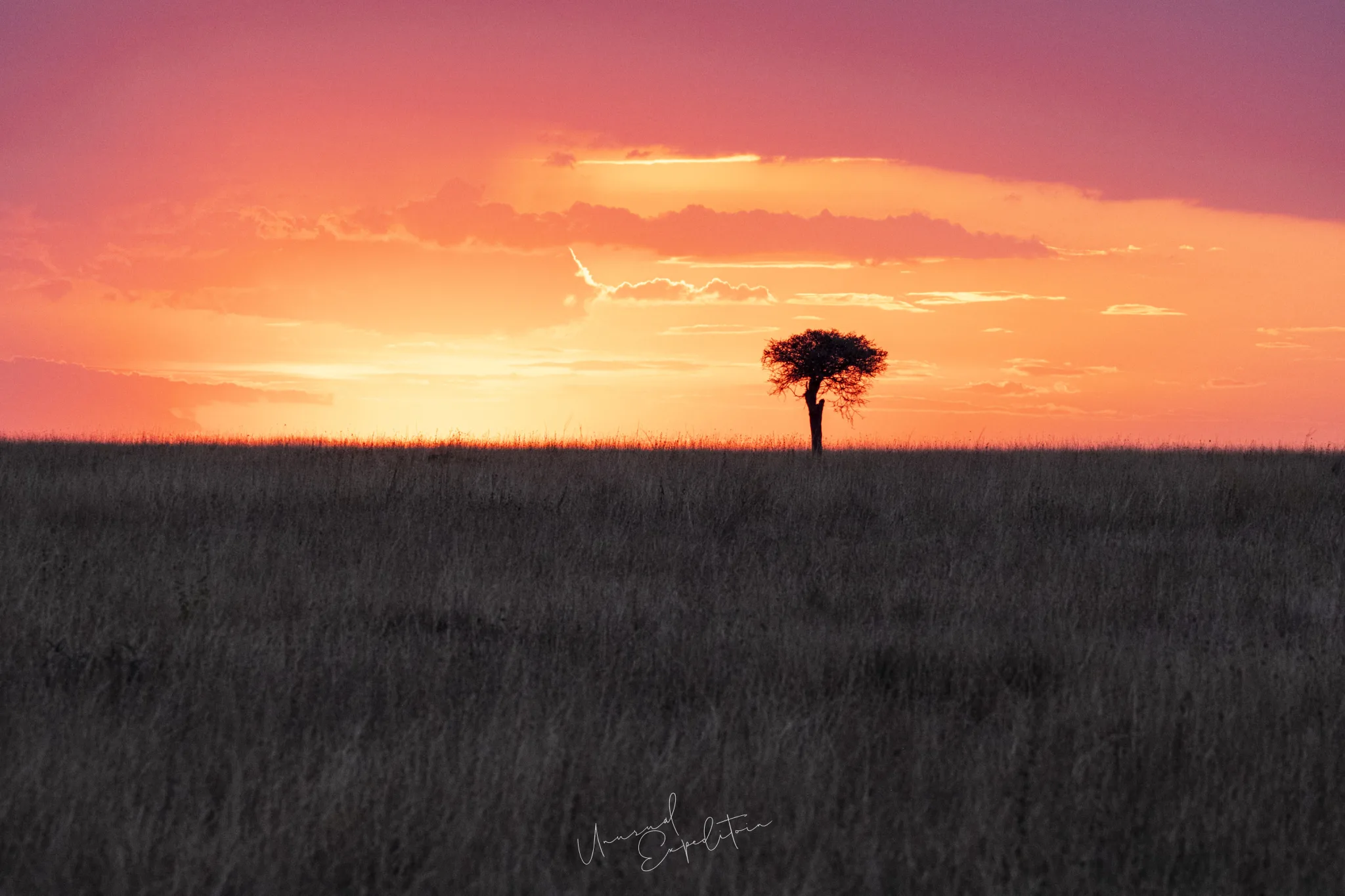
Serengeti sunset and sunrise photography is about a short, intense window of light. The Serengeti lies just south of the equator, so the sun climbs and drops quickly and the warm colour lasts only a little while at each end of the day. Use it for silhouettes of acacias, giraffes and safari vehicles against a red or orange sky, and for herds and dust lit from behind. Be in position before the sun touches the horizon, because the best colour often comes in the minutes just before and after.
Light is a theme across our Serengeti photography tour guide; this destination guide is about the two ends of the day.
Serengeti sunset: why it is short and strong
A Serengeti sunset looks the way it does because of where the park is and what is in the air. Close to the equator, the sun sets at a steep angle, so the golden light fades quickly and the sky moves through orange and red to dusk in a short time. Day length changes very little through the year, which means the drama is reliable but brief in every season. In the dry months, dust and smoke from grass fires hang low over the plains and turn the sun into a red disc; in the green season, storm clouds catch the colour and give bigger skies. The flat horizon of the central and southern Serengeti is ideal: nothing blocks the sun until it reaches the grass, and a single tree is enough for a picture.
Serengeti sunset images: what to look for
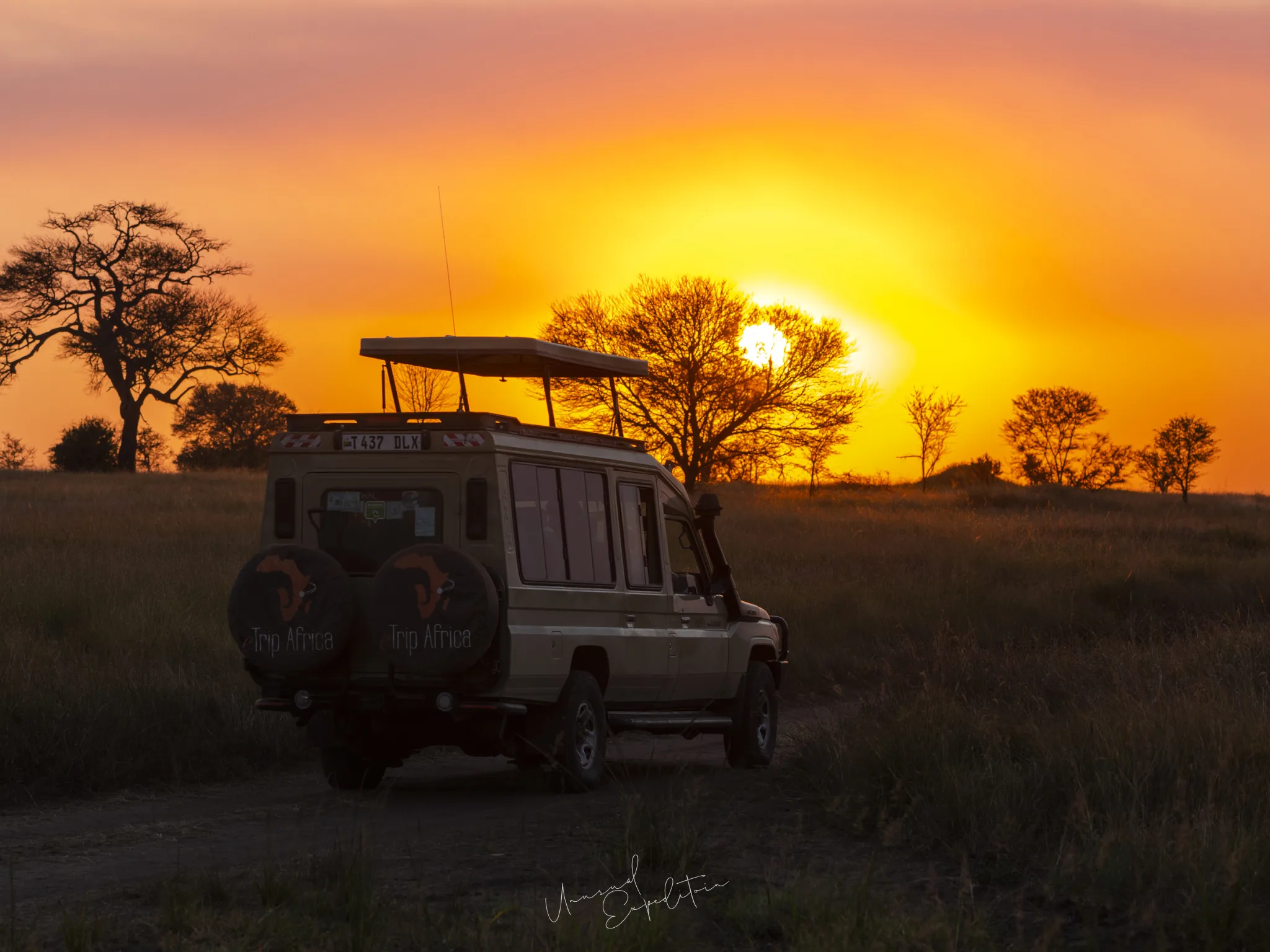
The Serengeti sunset images that work best have one strong shape against the sky. An umbrella acacia on a ridge, a giraffe walking past a tree, a line of wildebeest, a lion on a kopje, even the safari vehicle you came in: each reads clearly as a silhouette. Look for the subject first and then ask the driver to place the vehicle so that the sun sits beside it, not behind it, so the shape stays clean. Leave room in the frame for the colour of the sky, and keep the horizon low. A 24-70mm suits wide scenes with a tree; a 100-400mm compresses a large sun behind a distant animal, which is the classic safari frame and needs the subject far away and the sun close to the horizon.
Serengeti sunrise: starting the drive in the dark
A Serengeti sunrise needs an early start, because the colour comes before the sun is up and the predators are most active in the cool hours. Our game drives leave camp in the dark so that we are already out on the plains when the sky begins to colour. Sunrise is usually calmer and clearer than sunset, with less dust in the air, mist in the river valleys in some seasons and cool, soft light on the animals once the sun clears the horizon. It is also the best time for cats: lions still on the move after the night, cheetahs starting to look for a hunt. The light turns hard soon after, so the first part of the morning is the most valuable time of the day.
Backlight and dust
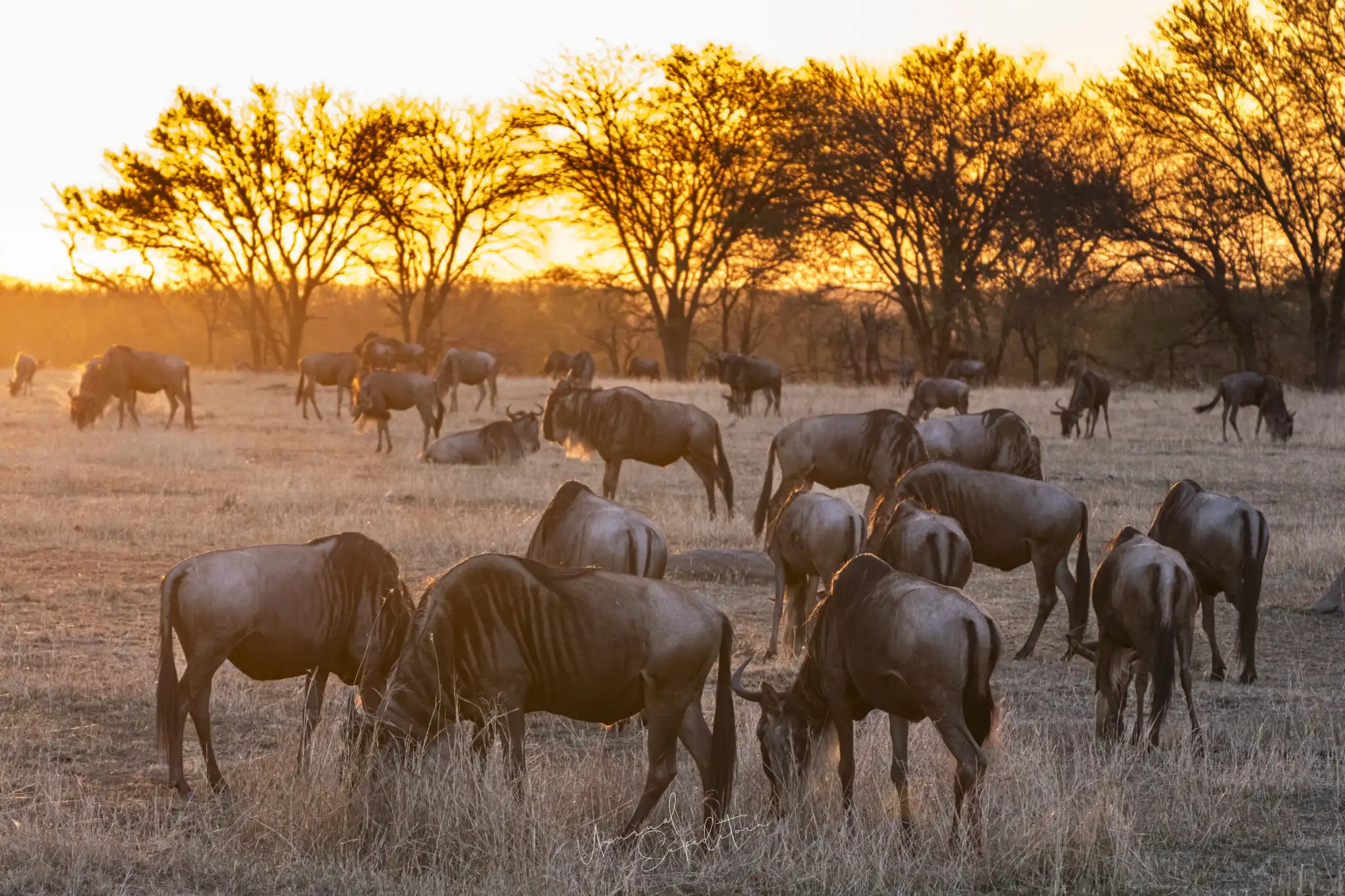
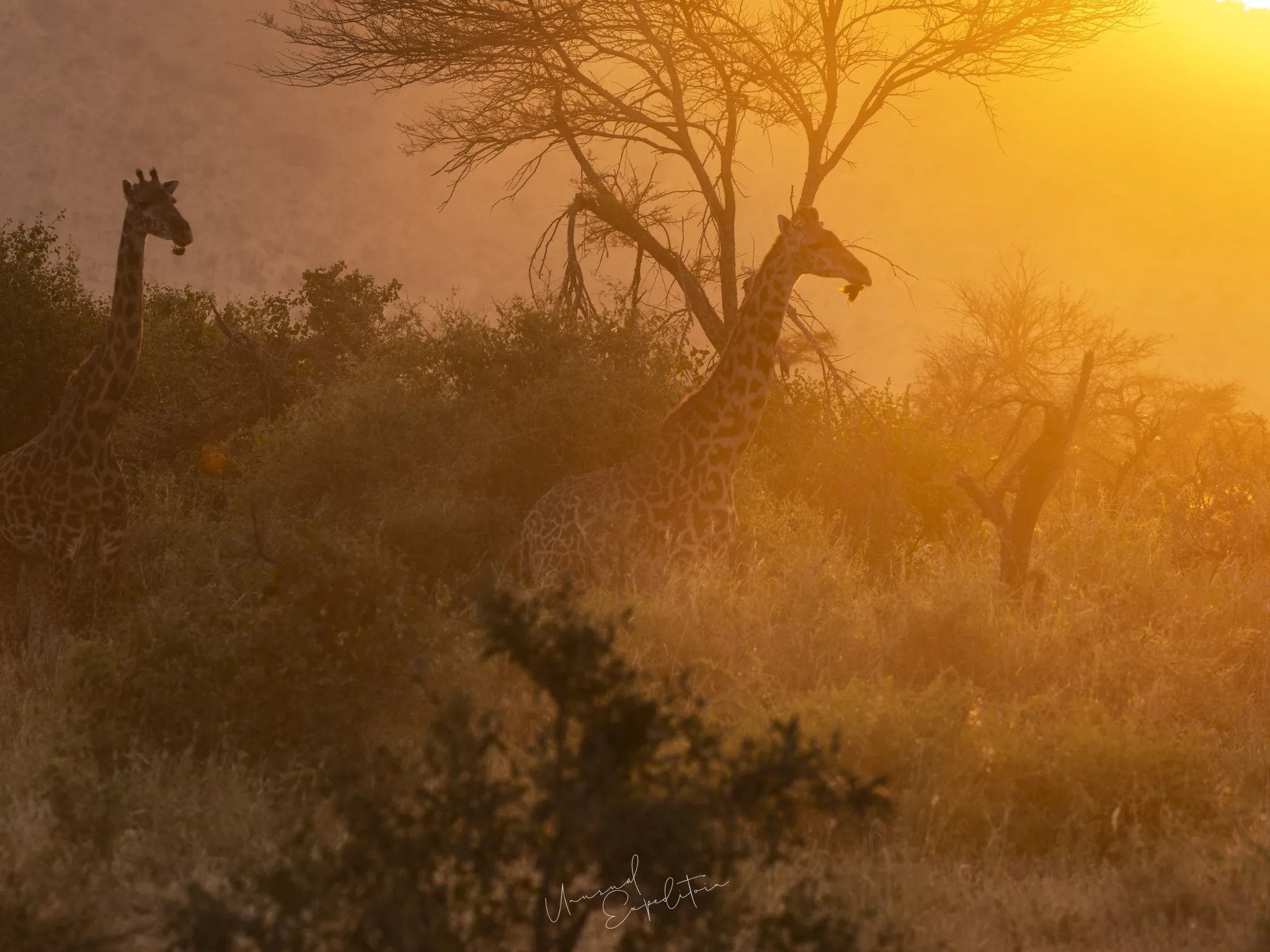
Backlight is the Serengeti's signature light. With the sun low and in front of you, dust kicked up by a herd glows gold, the edges of animals light up and the grass shines. Expose for the bright areas and let the animals go dark; the camera's meter will try to brighten the scene and wash out the colour, so use exposure compensation of minus one stop or more and check the histogram. A lens hood, or your hand shading the front element, keeps flare under control. Giraffes moving through bush in dusty evening light, as in our frame below, can look almost painted. These frames work best in the dry season, when there is dust in the air.
Settings for sunrise and sunset
| Scene | Lens | Settings to start from |
|---|---|---|
| Tree silhouette, wide sky | 24-70mm | Expose for the sky, minus one stop, f/8 |
| Large sun behind an animal | 100-400mm or 200-400mm | Spot meter beside the sun, 1/1000s |
| Backlit herd and dust | 70-200mm | Minus one to two stops, 1/1000s |
| Animals in warm side light | 100-400mm | Normal exposure, 1/500s, higher ISO as light fades |
| Afterglow and dusk | 24-70mm | Rest on the roof, slow shutter, raise ISO |
As the light falls, raise the ISO before you drop the shutter speed; a soft frame of a moving animal cannot be fixed later.
Serengeti sunrise hot air balloon
A Serengeti sunrise hot air balloon flight is the one way to photograph the plains from above, since drones are not an option in Tanzania's national parks without permits from both the Tanzania Civil Aviation Authority and the park authority. Serengeti Balloon Safaris, the best-known operator, launches at sunrise from the central Serengeti throughout the year, and the balloons drift over the plains and along the Seronera River as the sun comes up. They are not part of our standard trip; we can arrange one on request. Bring a 24-70mm and a 70-200mm, keep the strap on, and expect the basket to be crowded.
After dark
Once the sun is down, the drive back to camp is usually quick, as park rules limit game driving after dark inside Serengeti National Park; check the current rules with Tanzania National Parks (TANAPA). Night photography therefore happens at camp: the Milky Way over the acacias on a clear, moonless night, the glow of a campfire, the sounds of lions in the dark. A tripod and a wide lens are enough. Keep within the area your camp staff point out, as animals walk through unfenced camps at night.
Everyone asks for the big red sun behind an acacia. The trick is to find the tree in the afternoon and be back there with the vehicle parked before the colour starts, not to go looking for it when the sky is already red.
Joseph Mak, tour leader, Unusual Expedition
Where the light is best
The open central plains around Seronera and the southern short-grass plains give the cleanest horizons for silhouettes. The northern Serengeti near the Mara River is hillier and more wooded, which gives fewer bare horizons but more framing trees. For the timing of dust, storms and green grass through the year, read our best time to visit the Serengeti guide, and for the animals you will be silhouetting, see the Serengeti National Park photos set.
Catch the Serengeti light with us
On the Serengeti Photo Tour 2027 we plan every drive around the first and last light. The dates and trip details are on the Tanzania photography tours page.
Ask us about sunrise and sunset in the Serengeti
Join the Serengeti photography tour
Serengeti Photo Tour – Tanzania 2027 departs 21 Aug 2027 To 01 Sep 2027. Small group, photography first. All Serengeti photography tours.
Explore Serengeti in depth
- Serengeti Photography Tour: The Complete GuideTanzania
- Serengeti National Park Big Five: Where to Find and Photograph Each OneTanzania
- Serengeti National Park Zebra: Photographing the Stripes of the MigrationTanzania
- Serengeti National Park Birds: Bateleurs, Vultures, Hornbills and How to Photograph ThemTanzania
- Serengeti Leopards: Finding and Photographing Them in Seronera and on the KopjesTanzania
- Serengeti Photography FAQ: Fees, Weather, Rules and GearTanzania
- Is the Serengeti Worth Visiting? How to Get There and What to ExpectTanzania
- Serengeti Big Cats: Photographing Leopards, Lions and CheetahsTanzania
- Mara River Crossing in the Serengeti: How to Photograph ItTanzania
- Best Time to Visit the Serengeti for Photography, Month by MonthTanzania
- Serengeti National Park Photos: What the Park Looks LikeTanzania
Upcoming Photo Tours
- Egypt Photo Tour – EgyptEgypt 12 Dec 2026 To 20 Dec 2026
- Inner Mongolia Winter Owl Photo Tour – ChinaChina 01 Jan 2027 To 04 Jan 2027
- Inner Mongolia Winter Photo Tour – ChinaChina 05 Jan 2027 To 11 Jan 2027
- Mekong And Central Highland Vietnam Photo Tour - VietnamVietnam 16 Jan 2027 To 24 Jan 2027