
Serengeti National Park Birds: Bateleurs, Vultures, Hornbills and How to Photograph Them
Serengeti National Park birds: bateleurs, vultures, ground hornbills, ostriches and storks, where to find them and lenses.
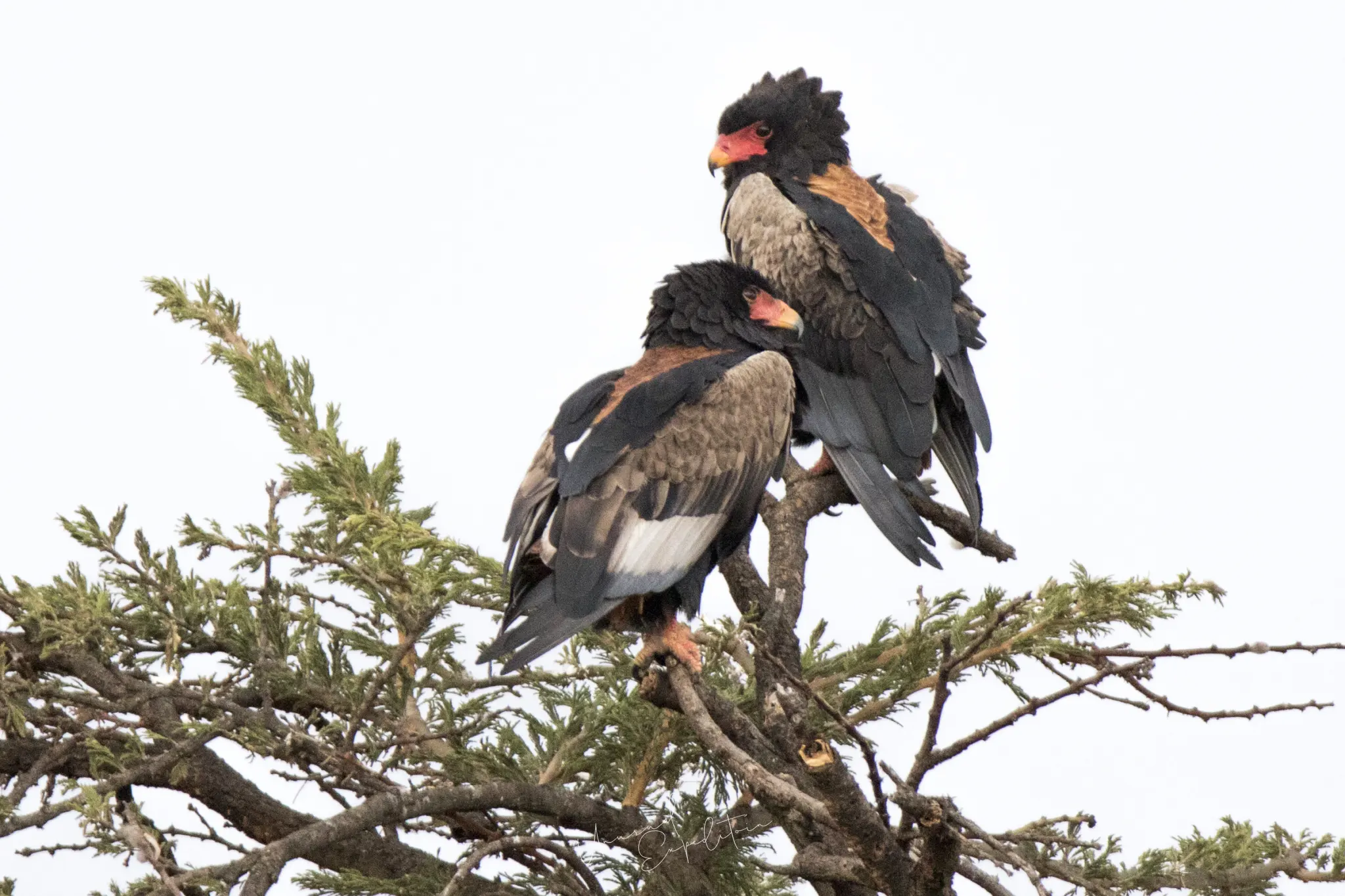
Serengeti National Park birds number somewhere around 460 to 500 species, depending on whose checklist you read, and for a photographer the stars are the big birds of the open plains: bateleurs and other eagles, vultures at every kill, marabou storks, southern ground hornbills, ostriches, kori bustards and secretary birds. Most of them sit still on bare trees or walk in the open, so a long lens from the vehicle is enough. Early morning light and a carcass on the plains give the best chances.
Birds appear throughout our Serengeti photography tour guide, between the cats and the herds. This destination guide gives them their own space: which birds you will see, where, and how to photograph them well.
Serengeti national park birds: how many species?
Serengeti national park birds have been counted many times, and the totals differ. BirdLife International's Important Bird Area factsheet for the park gives published estimates ranging from 458 species to 505, depending on the survey and its boundaries. The variety comes from the mix of habitats: short-grass plains in the south, long grass and acacia woodland in the centre and north, riverine forest along the Mara, Grumeti and Seronera rivers, and the swamps and pools in between. The migration adds its own birds, because the herds draw scavengers and birds that feed on the insects the animals stir up. For most visitors, though, bird photography in the Serengeti means a few dozen large, confident species that live alongside the game drive routes.
The raptors: bateleurs and eagles
The bateleur is the signature raptor of the Serengeti. Adults are black with a chestnut back, a bright red face and red legs, and in flight the very short tail makes them look like a boomerang tilting from side to side. Pairs often perch together on the top of an acacia, which is the easiest way to photograph them. BirdLife International notes that the bateleur was moved up to Endangered on the IUCN Red List in 2020, after steep declines across Africa, so a pair on a treetop is worth stopping for. Tawny eagles, martial eagles and several kinds of snake eagle also hunt over the plains. Shoot raptors on a perch against a plain sky and expose for the dark plumage, adding exposure compensation so the bird does not turn into a silhouette.
Vultures at the kill
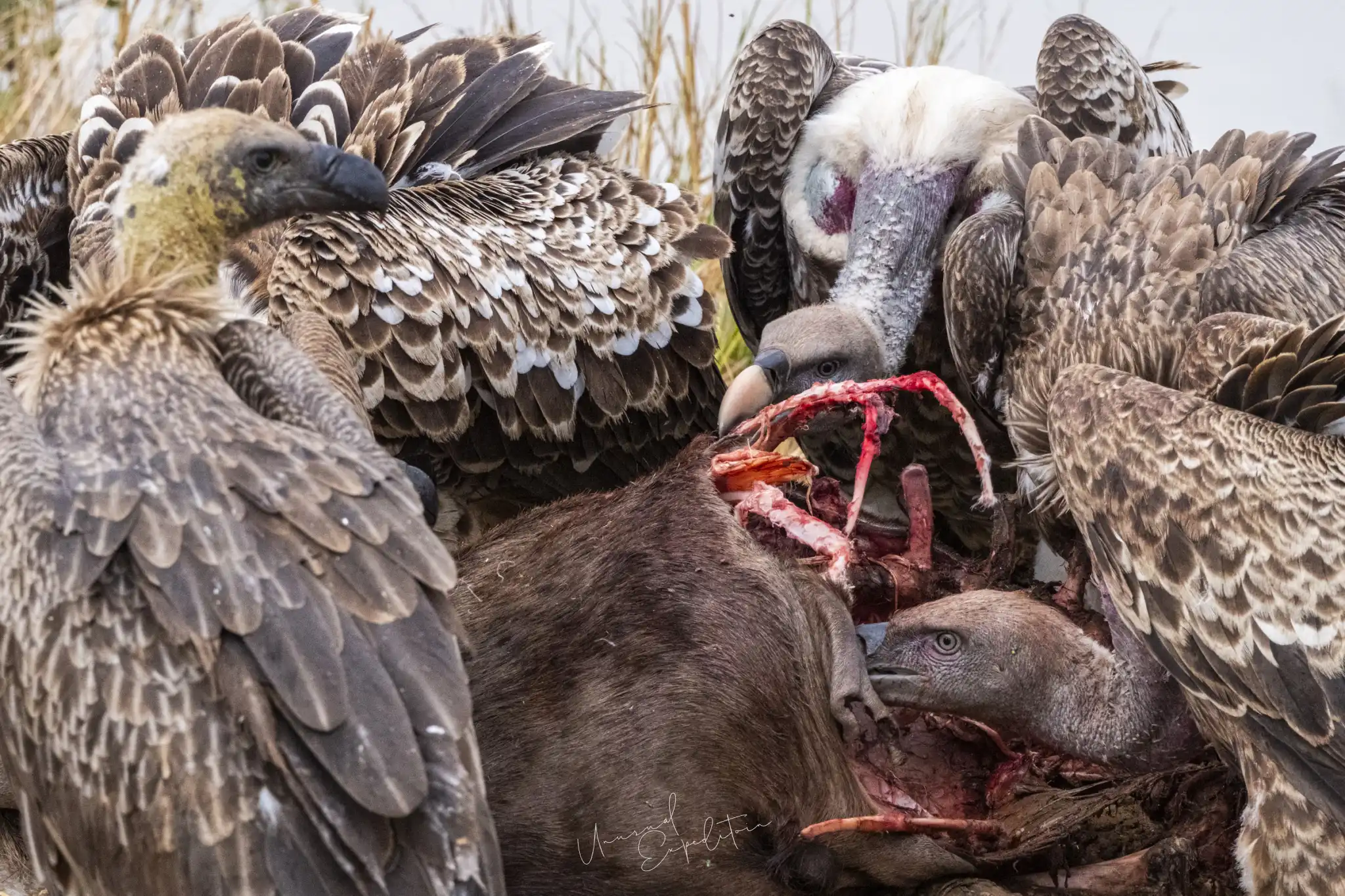
Vultures are the most dramatic birds in the Serengeti and the easiest to find: look up, and if they are circling or dropping, a kill is close. White-backed and Rüppell's vultures arrive in numbers, with the larger lappet-faced vulture and smaller hooded vulture among them. On the ground they pile onto a carcass, climbing over each other with wings spread, heads bloody, in a tangle of brown feathers. These birds are in serious trouble: in 2015 the IUCN Red List moved white-backed, Rüppell's and hooded vultures to Critically Endangered, mainly because of poisoning. Photograph the scrum tight with a 100-400mm for texture and detail, then pull wide to show the birds in the grass. Along the Mara River, vultures gather on drowned wildebeest after crossings; see the Mara River crossing in the Serengeti.
Ground birds of the plains
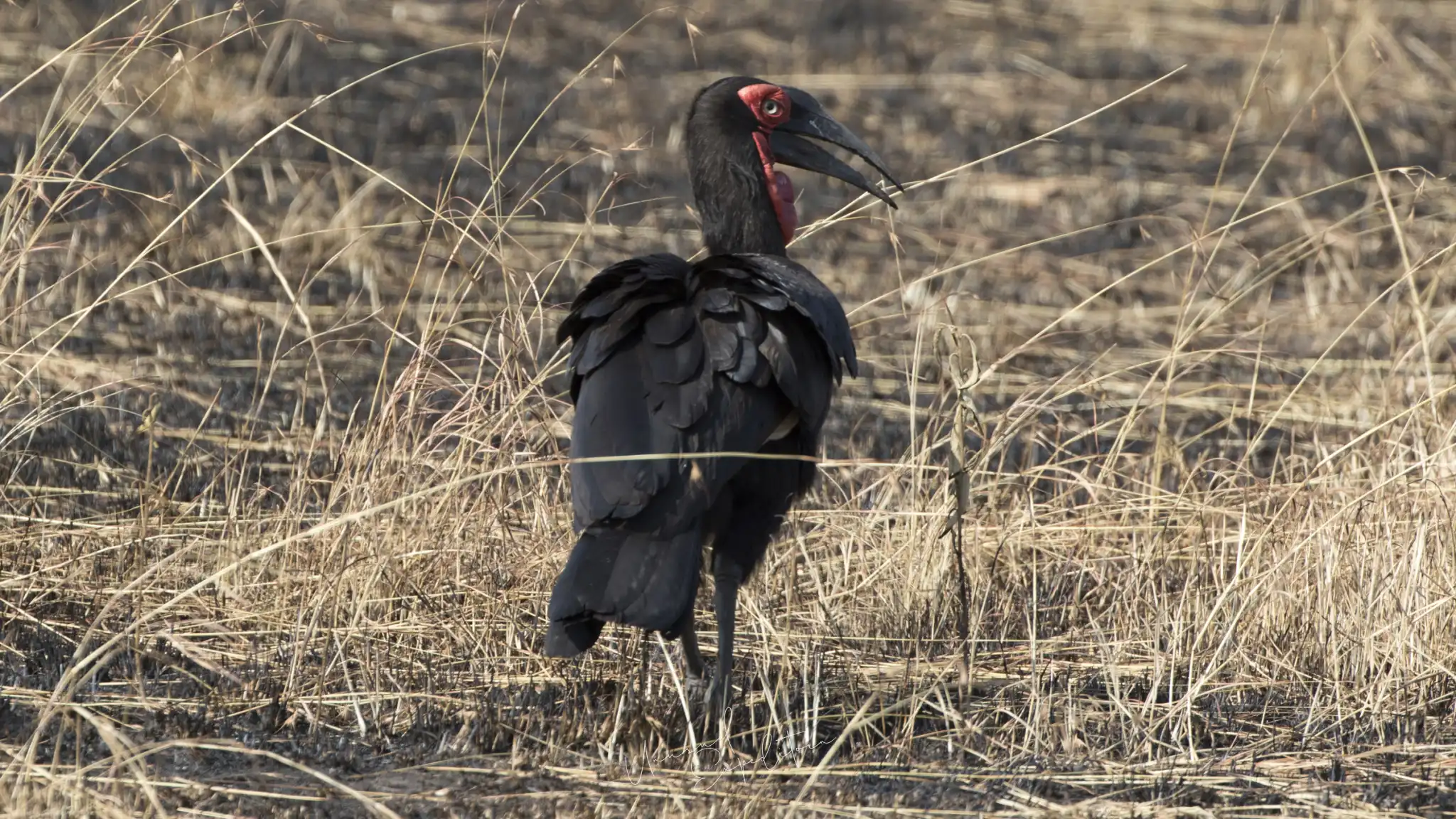
Some of the most photogenic birds of the Serengeti spend their days walking. The southern ground hornbill is a big black bird with a red face and throat that strides through the grass in small family groups, hunting insects, lizards and small animals. It is listed as Vulnerable on the IUCN Red List and is slow to breed, so a group is a good sighting. Kori bustards, among the heaviest flying birds, display on open ground with their neck feathers puffed out. Secretary birds stalk the grass on long legs, stamping on snakes. Get low for all of them: an eye-level frame from the vehicle window, with the grass soft in front, looks far better than shooting down from the roof hatch.
Ostriches
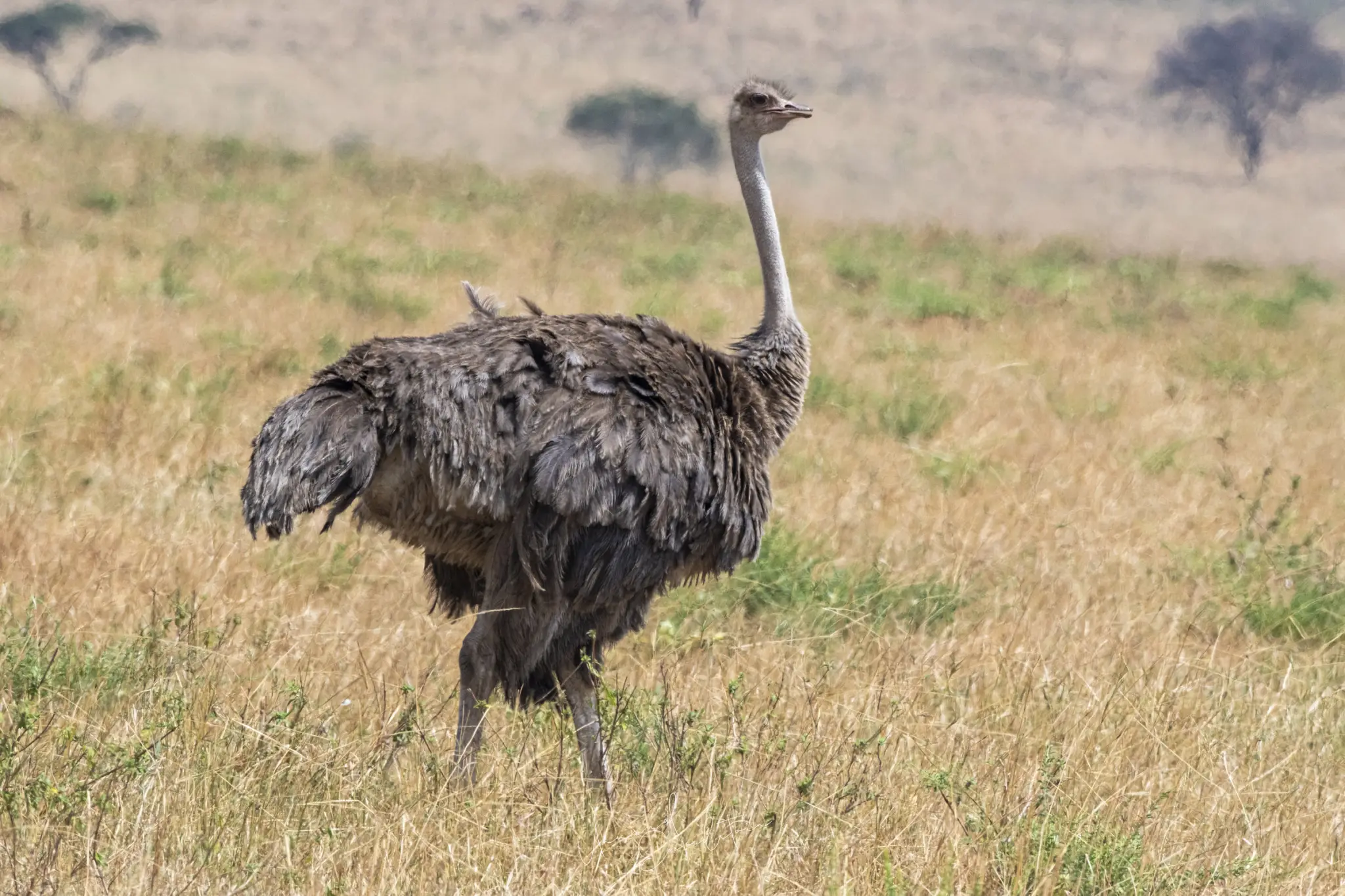
The ostrich is the largest bird in the Serengeti and one of the easiest to photograph, because it lives in the open and often walks with the zebra and wildebeest herds. Males are black and white, with pink necks and legs in the breeding season; females are grey-brown. A single ostrich on a green or golden slope, small against a wide landscape, makes a good environmental picture with a 70-200mm. For portraits, wait for the bird to turn its head side-on and focus on the eye, which is huge. In the heat of the day ostriches stand still for long periods, so there is time to get the framing right.
Storks of the Serengeti
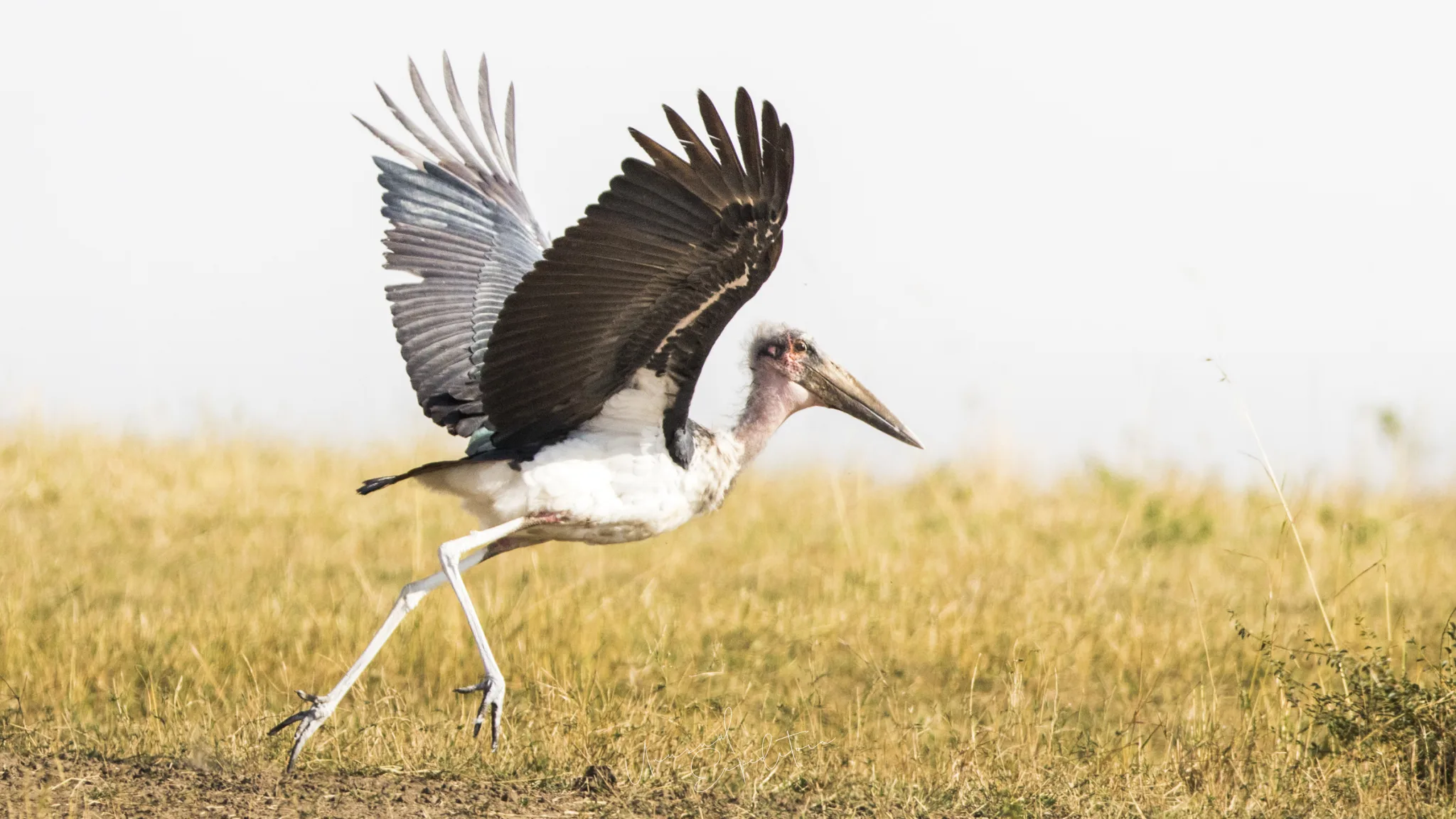
Storks are everywhere in the Serengeti once you start looking. Marabou storks, bald-headed and heavy-billed, stand around carcasses with the vultures and wait at the riverbanks during the crossings; their take-off, legs trailing and wings wide, is the moment to catch. Yellow-billed storks wade in pools along the rivers, and in some seasons other storks follow grass fires to catch insects escaping the flames. A marabou against a pale sky reads as a graphic shape, so expose for the sky and let the bird go dark if the light is flat, or wait for side light to show the feathers. A 100-400mm handles most stork pictures.
Small and colourful birds
Among the small birds, the lilac-breasted roller, the superb starling and the little bee-eaters bring colour to Serengeti photos. Rollers perch on dead twigs and drop to the ground for insects; starlings hop around picnic sites and camps, shimmering blue and orange; weavers hang their nests from acacia branches. They need the longest lens you have, a stable rest and an engine switched off. Our Serengeti National Park photos collection includes a roller.
Lenses for Serengeti birds
| Bird | Where | Lens | Shutter |
|---|---|---|---|
| Bateleur and eagles | Treetops on the plains | 200-400mm or longer | 1/1000s perched, 1/2500s in flight |
| Vultures | Carcasses, dead trees | 100-400mm | 1/2000s |
| Ground hornbill, bustard, secretary bird | Open grass | 100-400mm | 1/1000s |
| Ostrich | Plains with herds | 70-200mm | 1/500s |
| Storks | Rivers, pools, kills | 100-400mm | 1/2000s for take-off |
| Rollers and starlings | Bushes, camps | 400mm or longer | 1/2000s |
A teleconverter is worth packing if birds matter to you; the small ones are always further away than you hope.
On a slow morning with no cats around, I tell people to look at the trees. There is nearly always a bateleur or an eagle sitting up there in good light, and those mornings often give the cleanest pictures of the trip.
Joseph Mak, tour leader, Unusual Expedition
When birds are best
Birds are active in the Serengeti all year, but the light is best in the first hours after sunrise and the last before sunset, and dry-season haze softens distant birds by midday. The rains bring migrant birds from Europe and Asia and green backgrounds, while the dry months concentrate birds around water and kills. If you want to see when the park is wet and dry, read the Serengeti photography FAQ.
Photograph Serengeti birds with us
Our Serengeti Photo Tour 2027 stops for birds as well as cats, with long lenses and time to wait. Read about the departure on the Tanzania photography tours page.
Ask us about bird photography in the Serengeti
Join the Serengeti photography tour
Serengeti Photo Tour – Tanzania 2027 departs 21 Aug 2027 To 01 Sep 2027. Small group, photography first. All Serengeti photography tours.
Explore Serengeti in depth
- Serengeti Photography Tour: The Complete GuideTanzania
- Serengeti National Park Big Five: Where to Find and Photograph Each OneTanzania
- Serengeti National Park Zebra: Photographing the Stripes of the MigrationTanzania
- Serengeti Leopards: Finding and Photographing Them in Seronera and on the KopjesTanzania
- Serengeti Photography FAQ: Fees, Weather, Rules and GearTanzania
- Is the Serengeti Worth Visiting? How to Get There and What to ExpectTanzania
- Serengeti Big Cats: Photographing Leopards, Lions and CheetahsTanzania
- Serengeti Sunrise and Sunset: Photographing the Golden HoursTanzania
- Mara River Crossing in the Serengeti: How to Photograph ItTanzania
- Best Time to Visit the Serengeti for Photography, Month by MonthTanzania
- Serengeti National Park Photos: What the Park Looks LikeTanzania
Upcoming Photo Tours
- Egypt Photo Tour – EgyptEgypt 12 Dec 2026 To 20 Dec 2026
- Inner Mongolia Winter Owl Photo Tour – ChinaChina 01 Jan 2027 To 04 Jan 2027
- Inner Mongolia Winter Photo Tour – ChinaChina 05 Jan 2027 To 11 Jan 2027
- Mekong And Central Highland Vietnam Photo Tour - VietnamVietnam 16 Jan 2027 To 24 Jan 2027