
Birds of Masai Mara: Photos and Names of the Birds You Will See
Birds of Masai Mara photos and names: vultures, storks, rollers and shrikes, where to find them and how to photograph them.
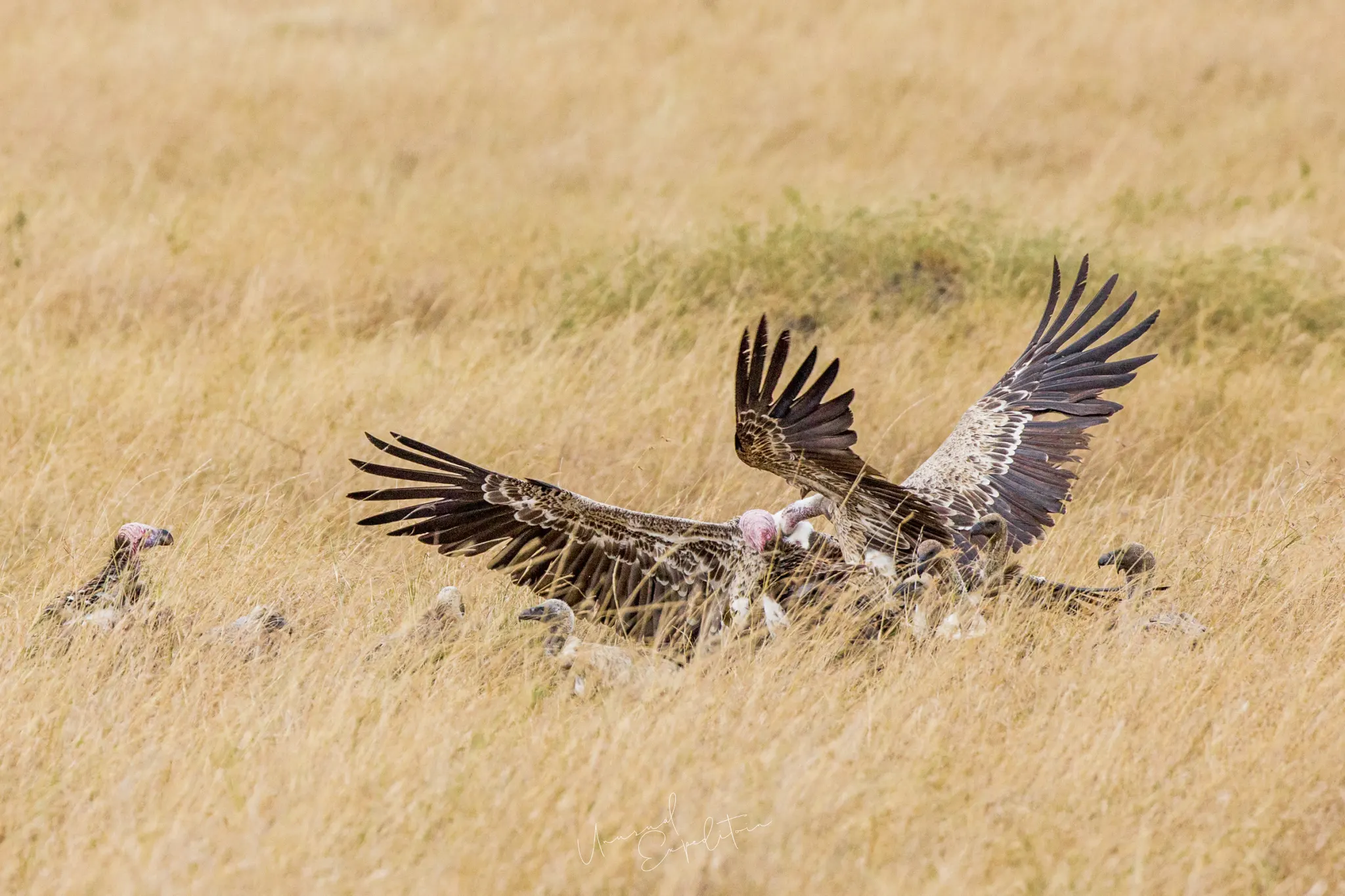
Birds of Masai Mara photos and names start with the big, obvious ones: vultures, marabou storks, secretary birds and ostriches on the open grass, then the colour of lilac-breasted rollers and shrikes in the bushes. BirdLife International lists more than 500 species for the greater Mara, including 53 birds of prey, so a photographer can fill a card with birds alone. The easiest pictures are birds at a carcass and birds on a bare perch, early in the morning, from the vehicle with a long lens.
This destination guide sits under our Masai Mara photography tour guide, which covers the reserve as a whole. Here we look only at the birds, with the names you will hear from the driver guide.
Birds of Masai Mara photos and names: the ones you will see
A first visit to the Masai Mara turns up the same core list of birds almost every time, because they are big, they live in the open and they ignore safari vehicles. The table below lists the birds we work with, with where each bird usually is and what makes the picture. It is not a checklist of the reserve; it lists birds that fill a frame from a vehicle on a track.
| Bird | Where in the Mara | What makes the picture | Lens |
|---|---|---|---|
| White-backed and Rüppell's vultures | On kills, dead trees, the sky above the plains | Spread wings at a carcass, landing, soaring | 100-400mm |
| Lappet-faced vulture | At carcasses, usually a pair | The bare pink head among the brown birds | 200-400mm |
| Marabou stork | Riverbanks, crossing points | Standing over the river, walking among vultures | 100-400mm |
| Secretary bird | Open short grass | Striding through the grass hunting | 200-400mm |
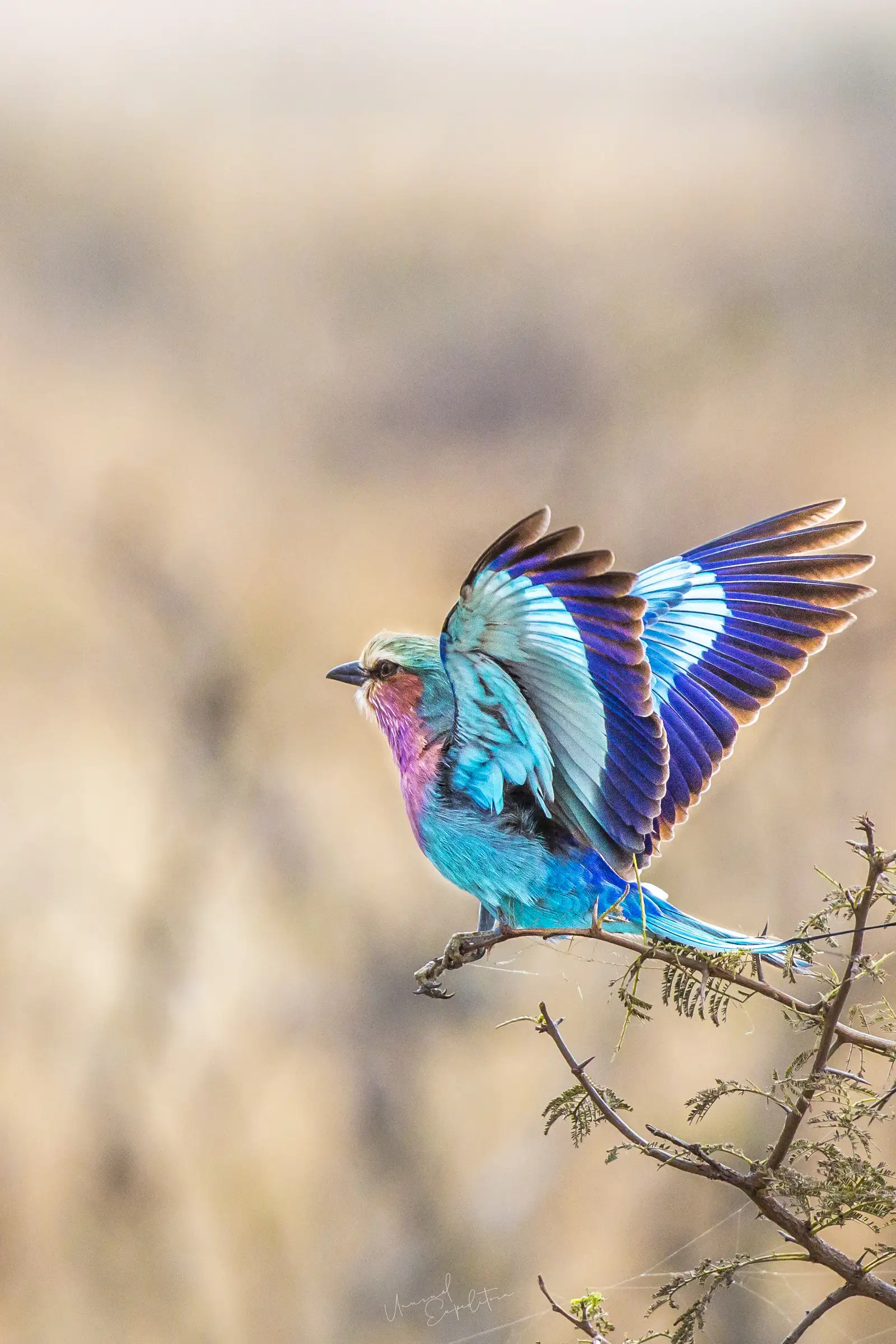
| Lilac-breasted roller | Bare perches on bushes and dead branches | Take-off and flight colours | 400mm or longer |
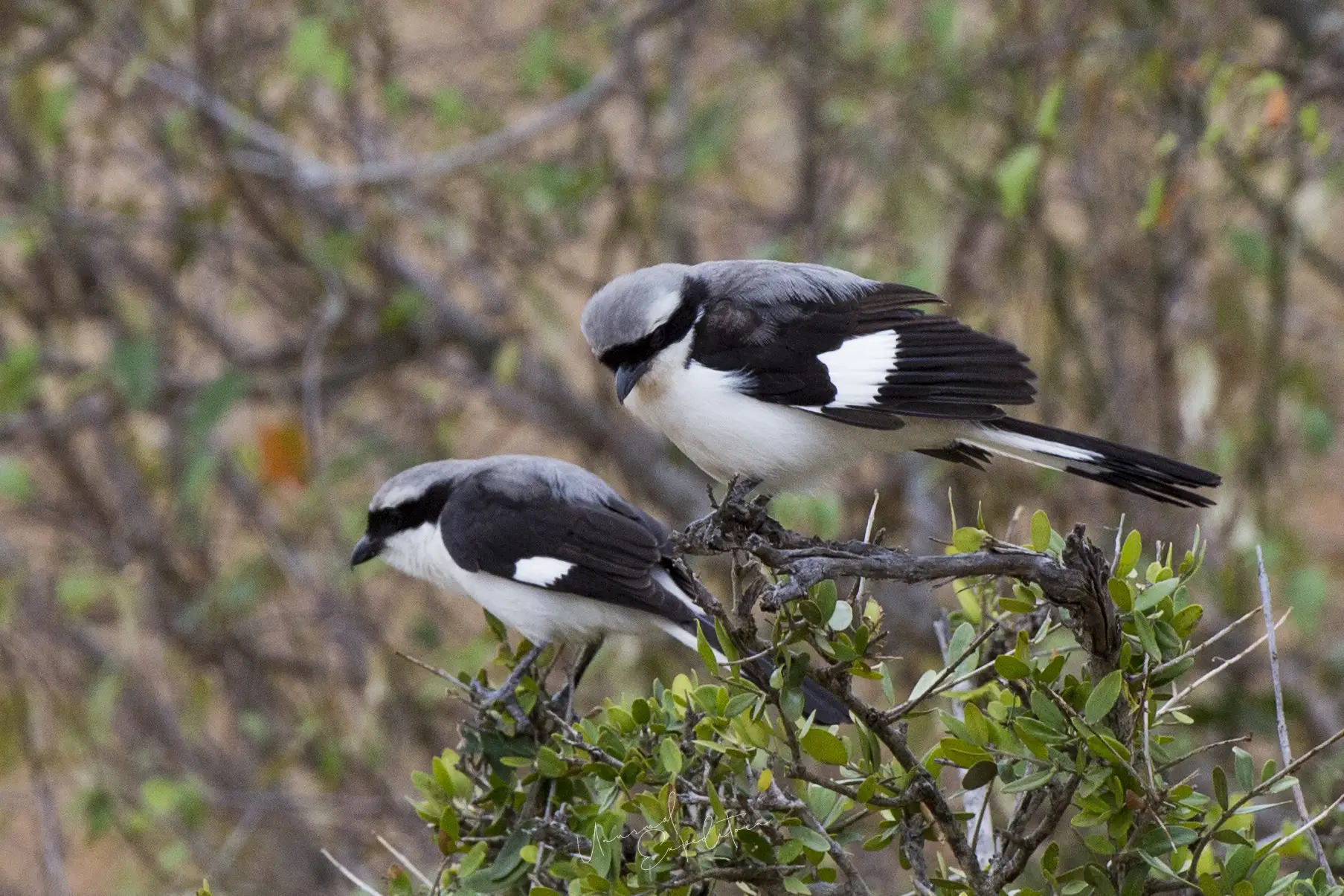
| Grey-backed fiscal | Bushes and thickets, in small groups | Pairs and threes on one twig | 400mm or longer |
| Ostrich | Open plains, often near herds | A lone bird under a big sky | 70-200mm |
Most of these birds show best in the first light of the morning, before the heat haze rises off the grass.
How many birds are in the Masai Mara?
The Masai Mara is one of East Africa's richest bird areas. BirdLife International's Important Bird Area factsheet for the Masai Mara says more than 500 species are known to occur in the wider Mara ecosystem, including 12 species of cisticola and 53 birds of prey. The variety comes from the mix of habitats: open grass plains, acacia and croton bush, riverine forest along the Mara and Talek rivers, and marshes. What the Mara does give is a high density of large birds that behave predictably, sitting on the same dead trees, following the same herds, coming down to the same carcasses. That is why our bird pictures from the Mara are mostly raptors, scavengers and a few bright perching birds.
Vultures of the Masai Mara
Vultures are the birds most visitors photograph in the Masai Mara without meaning to, because they arrive at every kill. The common ones are the white-backed vulture and Rüppell's vulture, with lappet-faced vultures, larger and pink-headed, usually arriving in a pair and pushing the others aside. They are also among the most threatened birds in Africa. In the 2015 update of the IUCN Red List, the white-backed and Rüppell's vultures were moved to Critically Endangered and the lappet-faced vulture to Endangered, mainly because of poisoning and the trade in vulture parts. Photographing them is a way of recording something that may not last.
Photographing vultures at a carcass
A carcass on the Masai Mara plains is the best place to photograph vultures, and also the busiest. Birds circle first, land a short distance away and walk in, then squabble over the best place with wings spread wide. The spread wings are the picture: wait for a bird to jump at another and fire a burst at 1/2000s or faster. Keep the vehicle at the distance your driver guide chooses; a carcass may belong to lions or hyenas lying in the grass nearby, and the Mara Conservancy's park rules ask vehicles to stay on tracks and keep their distance from wildlife. The light is harsh by mid-morning, so expose for the pale feathers and let the shadows go dark.
Birds in flight over the Mara
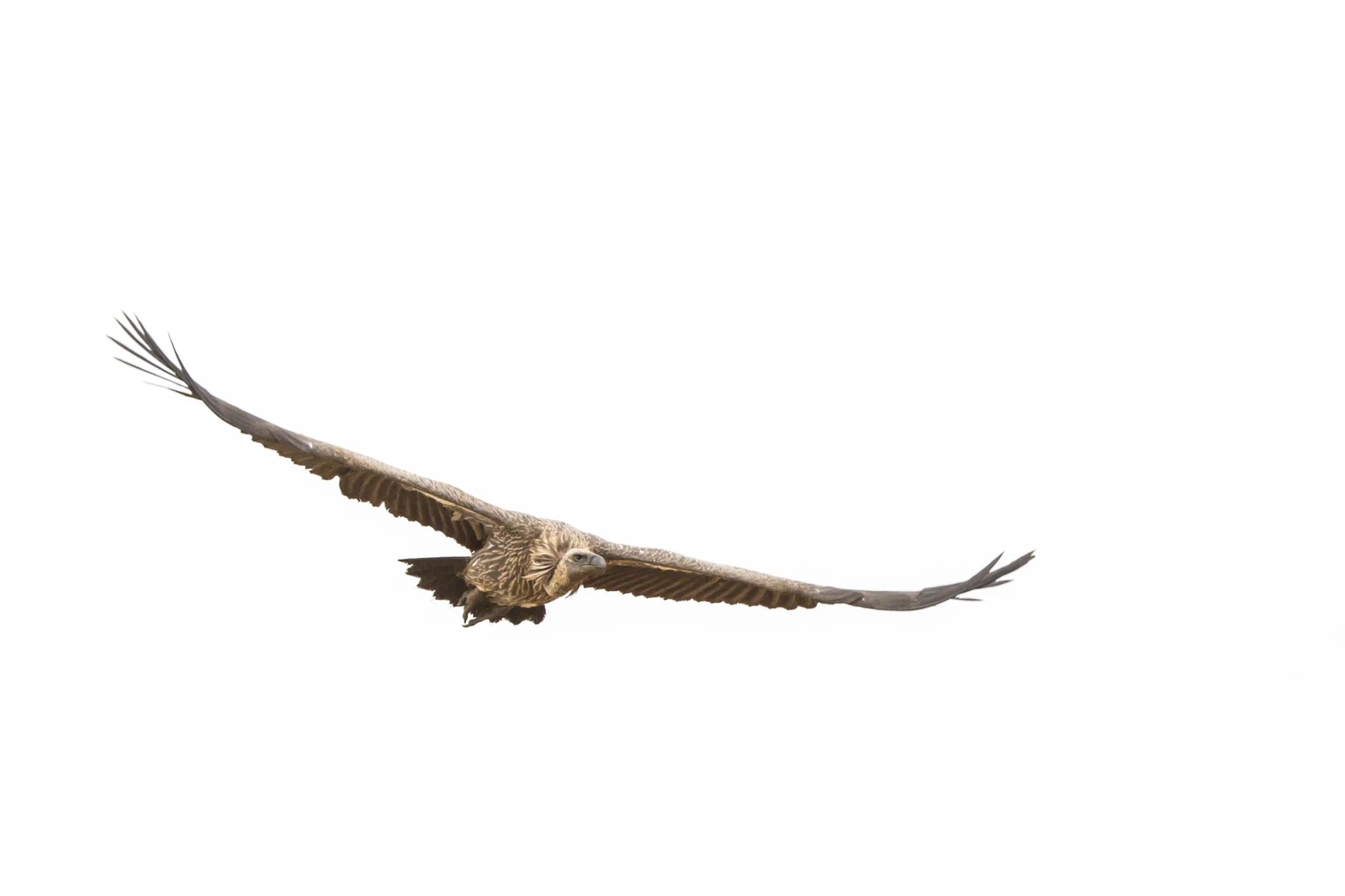
Birds in flight are the hardest bird pictures in the Masai Mara, and vultures are the place to learn. They are big, they glide slowly and they follow a predictable line as they come in to land. Set continuous autofocus with a group of focus points, a shutter speed of 1/2000s or more and expose for the underside of the wings, which is usually in shade against a bright sky. Add one or two stops of exposure compensation against white cloud. Start tracking a bird early and keep panning after you fire. A white or pale sky gives a clean, almost graphic picture; a blue sky with cumulus gives colour. The same technique works for storks and for the bateleurs that cruise low over the plains.
Masai Mara birds pictures: small birds in the bushes
Small birds give Masai Mara bird pictures their colour, and they need a different approach. The grey-backed fiscal, a black, grey and white shrike with a long tail, lives in small family groups that perch together on the tops of bushes, calling and flicking their tails. They are bold and will often sit still close to a track. Ask the driver to stop with the sun behind the vehicle, switch off the engine to stop the shake, and use the longest lens you have with a bean bag on the window frame. Look for two or three birds on one twig: the group is the picture, as it shows how these shrikes live. A wide aperture throws the bush behind into a soft green background.
The lilac-breasted roller
The lilac-breasted roller is the bird every Masai Mara photographer wants, and it is common. It sits on the highest dead twig of a bush, watching the grass for insects and lizards, and drops down to catch them. The colour only shows fully when the bird opens its wings, so the classic picture is the take-off. Focus on the perched bird, set a fast shutter and wait with a half-pressed button; when it leans forward, fire. A long lens and a distant background of dry grass give the clean beige setting that makes the blues and lilacs glow. We also show a roller in flight in our Masai Mara animals page, with the other wildlife you will meet.
Birds along the Mara River
The Mara River draws its own birds, and in the migration season they follow the herds to the crossing points. Vultures and marabou storks gather on the rocks and sandbanks where drowned wildebeest wash up, and they stay for days. A vulture standing on a carcass in the brown water is a harder, sadder picture than a vulture on the plains, but it tells the story of the crossings better than any herd shot. Long lenses are needed here because vehicles stay back from the bank. For the crossings themselves and how to photograph them, see the Mara River crossing guide.
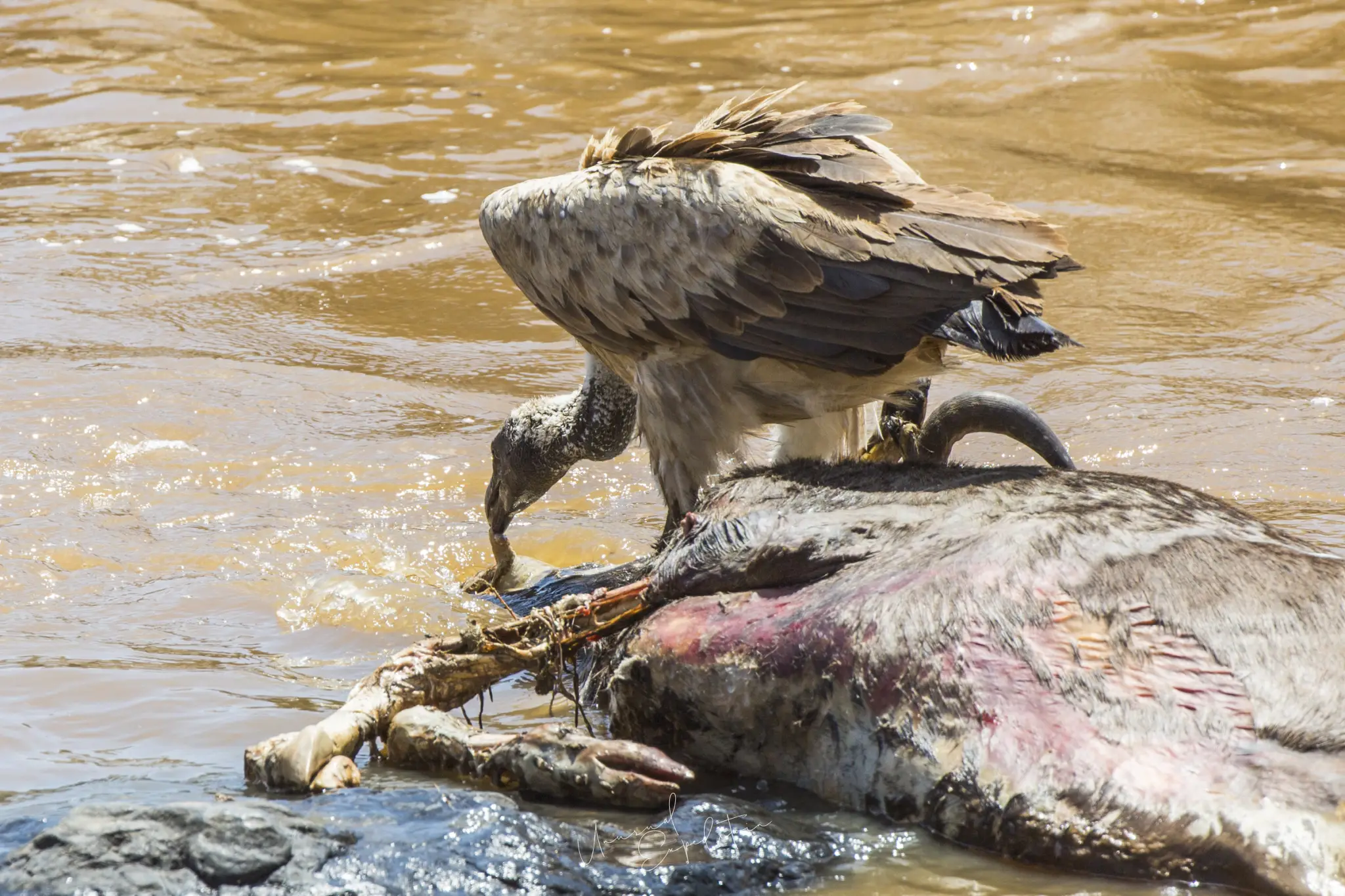
People come to the Mara for the cats and leave with a card full of vultures. Sit with a carcass and you see why: the fighting, the wings, the way the lappet-faced birds walk in like they own the place. It is the most action you will get all morning.
Joseph Mak, tour leader, Unusual Expedition
Lenses and settings for Mara birds
Bird photography in the Masai Mara needs reach. A 100-400mm zoom covers vultures, storks and ostriches; a 200-400mm, a 500mm or a 150-600mm brings the rollers and shrikes close enough to fill the frame. A crop-sensor body adds reach for small birds. Use a bean bag on the window or roof, never a tripod inside a vehicle. Keep the shutter at 1/2000s for anything that might move and let the ISO rise. Birds are busiest in the early morning and again in the late afternoon. For the landscape pictures and the light on the plains between bird stops, see our Masai Mara photos collection.
Photograph the birds of the Mara with us
We run the Masai Mara as a private trip on request, so a birding morning or a long wait at a carcass is your choice. We arrange all logistics to your needs, and a photographer or photography coaching can be added at extra cost. Ask at least two months ahead; last-minute can be arranged. See the Kenya photography tours page and our private tours.
Ask us about bird photography in the Masai Mara
Masai Mara photography tours
The next Masai Mara departure is announced on the Masai Mara photography tours page, with previous expeditions and all the planning guides.
Explore Masai Mara in depth
- Masai Mara Photography Tour: The Complete Guide to Photographing the MaraKenya
- Masai Mara Wildlife Photography: Techniques for the Plains and the RiverKenya
- Masai Mara National Reserve: What It Is, Where It Is and What It Looks LikeKenya
- How to Get to Masai Mara, and Is It Worth ItKenya
- Masai Mara Animals: Big Cats, Elephants, Hippos and BirdsKenya
- Maasai Village Visit: Photographing the Maasai with RespectKenya
- Masai Mara Hot Air Balloon Safari: Photographing the Sunrise FlightKenya
- Mara River Crossing: How to Photograph the Wildebeest at the RiverKenya
- Best Time to Visit Masai Mara for the Great MigrationKenya
- Masai Mara Photos: What the Reserve Really Looks LikeKenya
Upcoming Photo Tours
- Egypt Photo Tour – EgyptEgypt 12 Dec 2026 To 20 Dec 2026
- Inner Mongolia Winter Owl Photo Tour – ChinaChina 01 Jan 2027 To 04 Jan 2027
- Inner Mongolia Winter Photo Tour – ChinaChina 05 Jan 2027 To 11 Jan 2027
- Mekong And Central Highland Vietnam Photo Tour - VietnamVietnam 16 Jan 2027 To 24 Jan 2027