
Masai Mara Hot Air Balloon Safari: Photographing the Sunrise Flight
Masai Mara hot air balloon safari: how the flight works, the sunrise, the herds from above, camera settings and is it worth it.
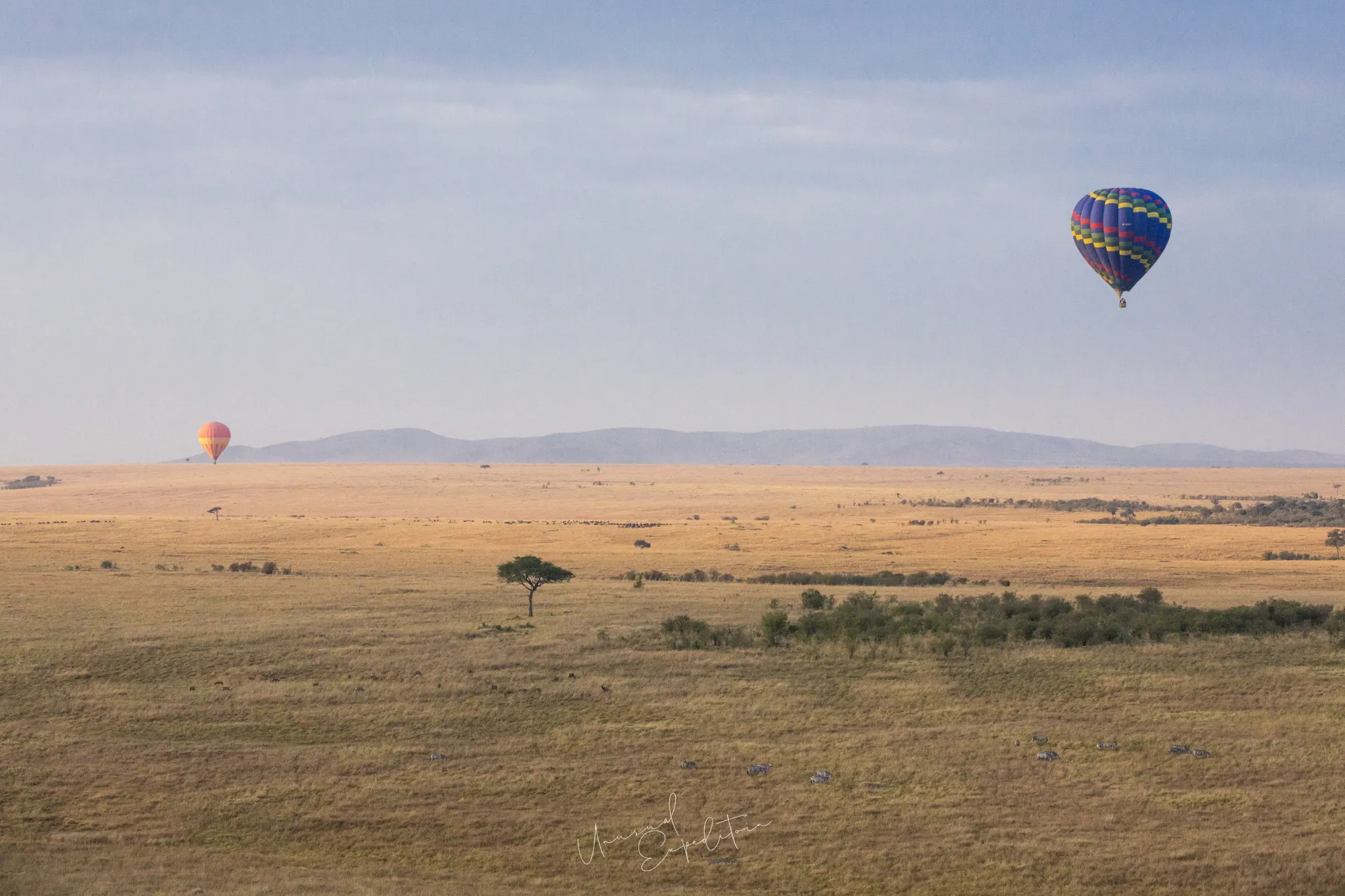
A Masai Mara hot air balloon safari lifts off at first light from a launch site inside or beside the reserve and drifts with the wind over the plains as the sun comes up, giving you the Masai Mara sunrise from the air and the herds, rivers and trees seen from above. For photographers it is worth it once: the aerial patterns of wildebeest and zebra cannot be made any other way, and the light is the best of the day. Book early in the migration months.
The balloon is one of the set pieces of our Masai Mara photography tour guide. Here is how a flight works, what you can photograph and how to set up the camera in a moving basket.
Masai Mara hot air balloon safari: how a flight works
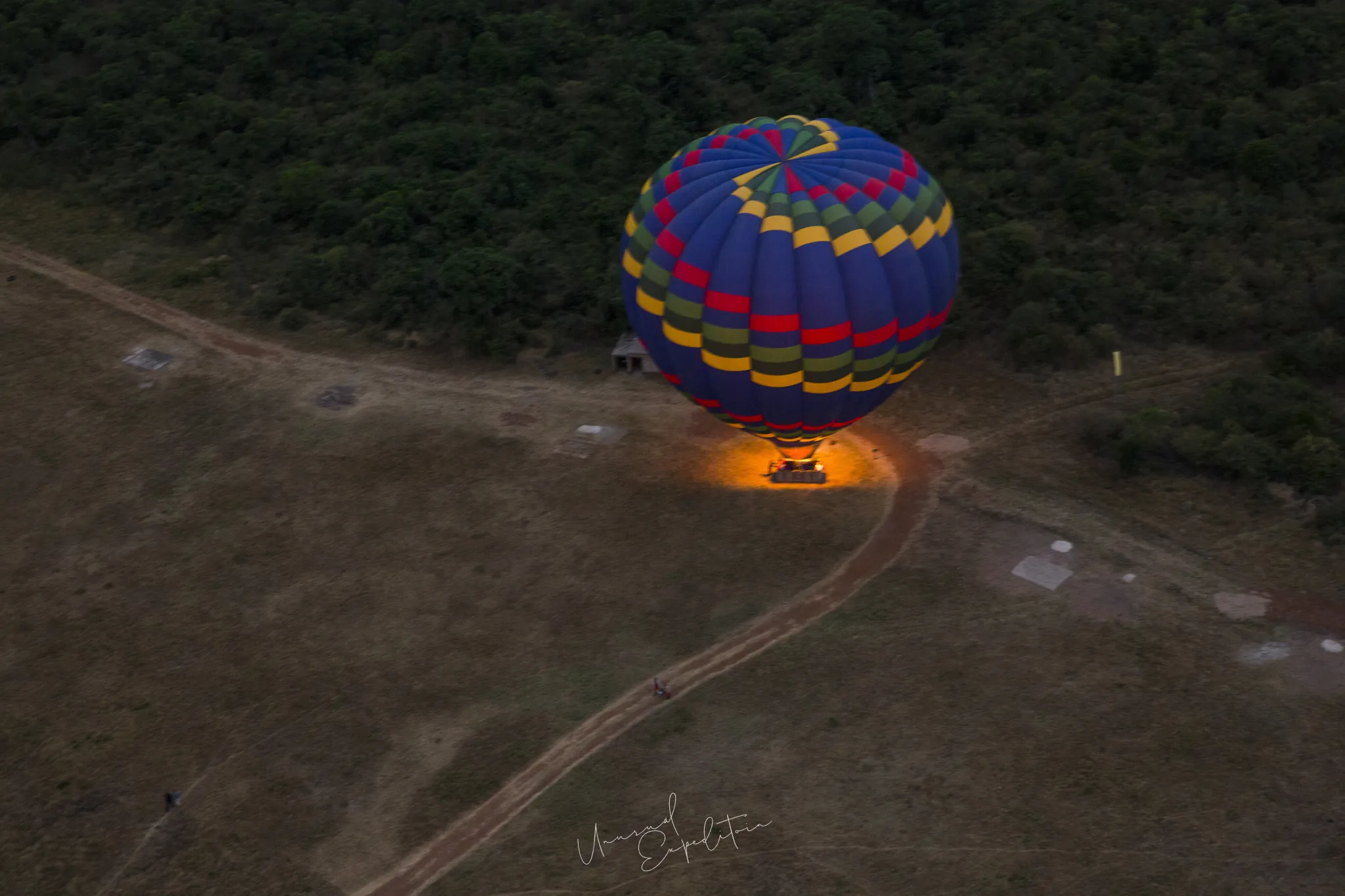
Balloon operators in the Masai Mara collect guests from their camps in the dark and drive them to the launch site, which depends on where they fly and on the wind. The crew lays out the envelope on the grass, fills it with cold air from a fan, then fires the burners to heat it and stand the balloon up. You climb into a large basket divided into compartments, and when the pilot is ready, the balloon lifts off as the sky turns from blue to orange. The flight follows the wind, so no two are the same. Pilots change height to find different air currents, dropping low over a river or a herd and climbing high for the wide view. After landing, the crew packs up the balloon and a vehicle brings you back to the reserve.
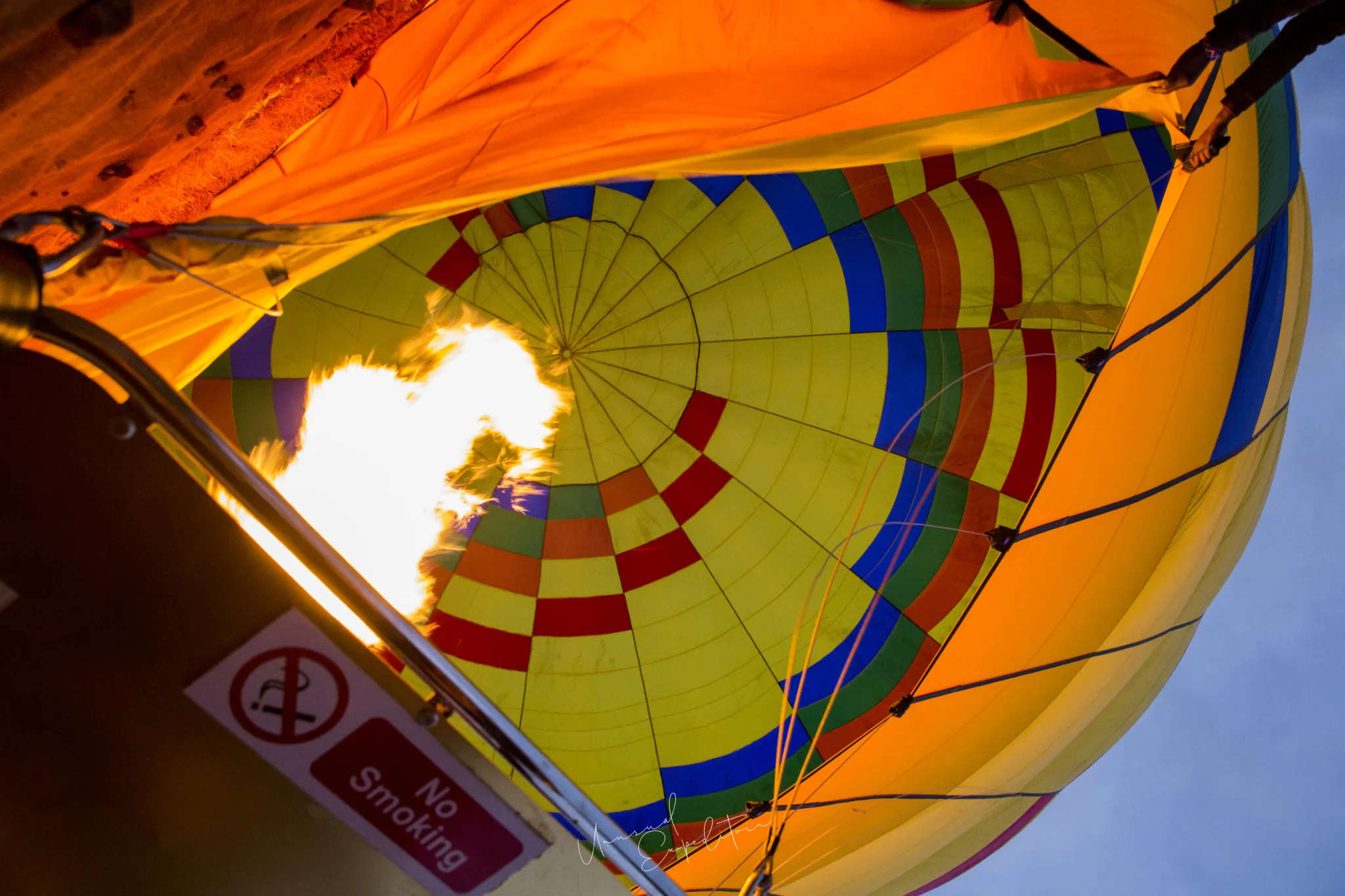
Masai Mara balloon ride: photographing the launch
The launch on a Masai Mara balloon ride is a subject in itself, and many people miss it because they are busy getting into the basket. While the envelope is filled, the burner flames light the fabric from inside in yellow, red and blue; stand at the mouth of the envelope, with the crew's permission, and shoot into it with a 16-35mm or 24-70mm. Expose for the flame and the bright fabric, and let the edges go dark. Once you are in the basket, look up: the burner firing into the envelope above your head is the classic balloon frame. Keep the camera ready, because the moment between inflation and lift-off passes quickly.
Masai Mara sunrise from the balloon
The Masai Mara sunrise from the air is the reason most people take the flight. The sun comes up fast near the equator, and on a dry-season morning it rises as a disc through haze and dust, orange and soft enough to shoot directly. Use the 70-200mm to make the sun large over the horizon, and include a line of trees or the other balloons for scale. A little underexposure keeps the colour. Once the sun is above the haze, the low light starts raking across the plain and every bush and animal casts a long shadow: that is the time to turn the camera downward.
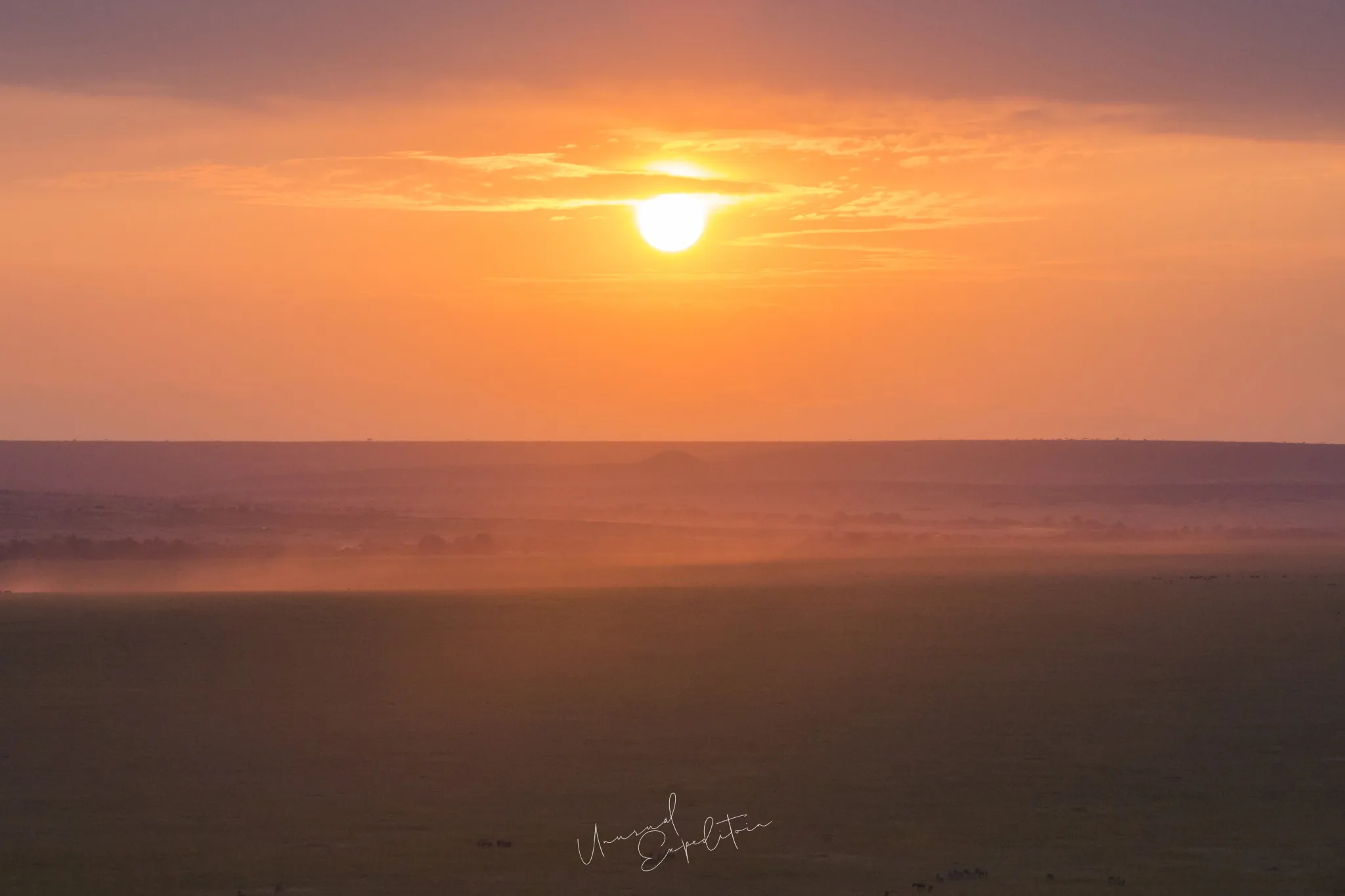
"Everyone looks at the sun, and they should for a minute. Then look down. The shadows stretch right across the grass, the herds are walking out in lines, and you will never see the Mara like that again from the ground."
Joseph Mak, tour leader, Unusual Expedition
What you see from a Masai Mara hot air balloon
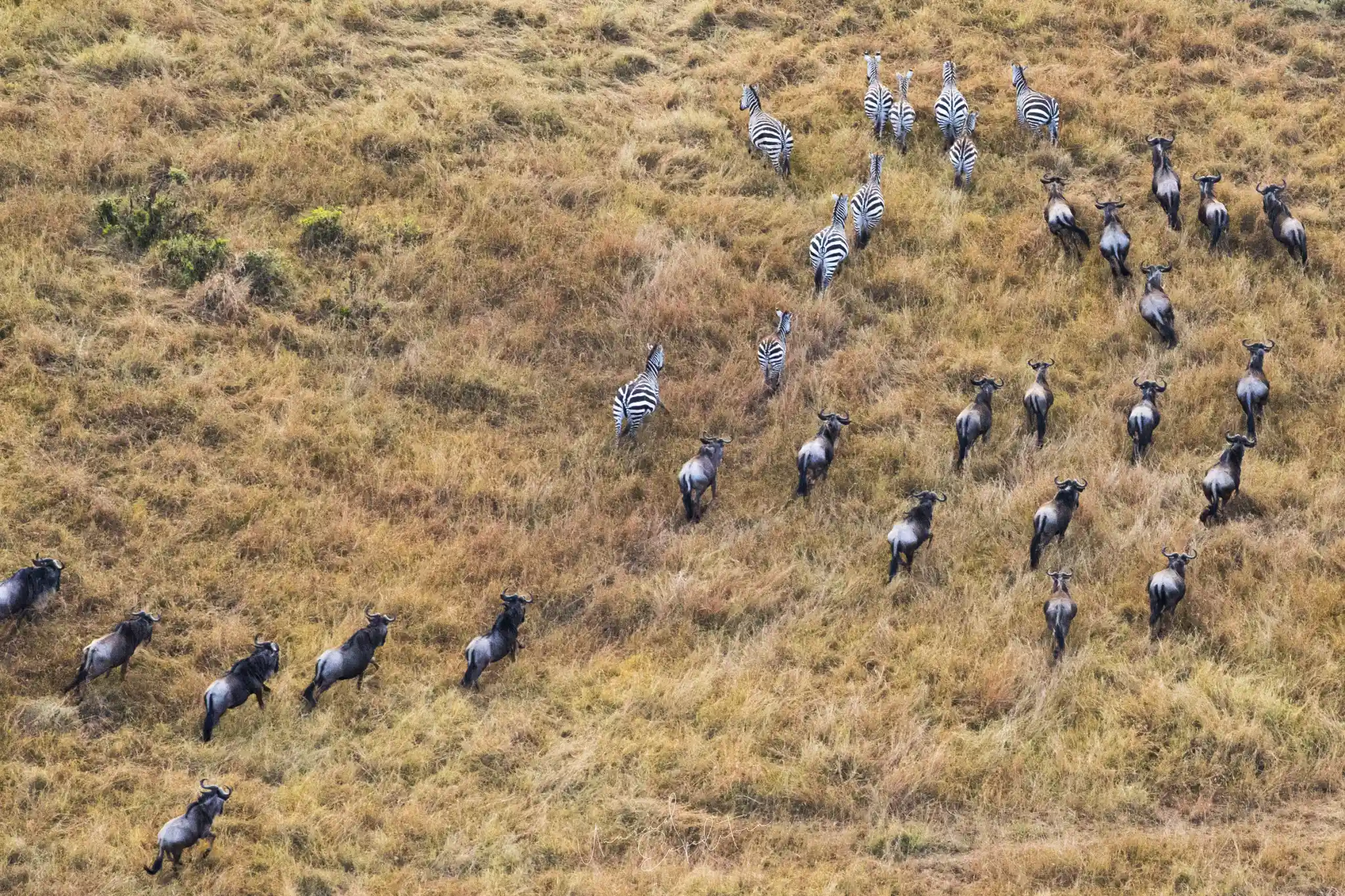
From a Masai Mara hot air balloon, the reserve becomes a map. In the migration months you see the herds as threads and blocks, wildebeest in dark lines, zebra with their stripes clear from above. You see game trails, the green line of forest along the river and, if the wind takes you over it, hippos in the pools. Elephants and giraffes are easy to spot from the basket; the cats are harder. Pilots know where the herds are and try to pass over them, but the wind decides. Read our Masai Mara photos for more frames from the air, and the best time to visit Masai Mara guide for when the herds are in the reserve.
Camera settings in a moving basket
The basket moves and sways, so shutter speed is everything. Keep it at 1/1000 second or faster for aerials with a long lens, and use auto ISO to hold it as the light changes. A 70-200mm is the most useful lens for patterns of animals; a 24-70mm covers the wide view and the other balloons. Tripods are no use in the basket, and changing lenses over the side is a good way to lose one, so carry two bodies if you can, each with its lens on. Bring a lens hood and a strap around your wrist or neck at all times. The pilot will ask you to stow cameras for landing, which can be bumpy.
| Moment | Lens | Setting |
|---|---|---|
| Inflation, flames in the envelope | 16-35mm or 24-70mm | Expose for the flame |
| Sunrise over the plains | 70-200mm | Slight underexposure |
| Herds and trails from above | 70-200mm | 1/1000s or faster, auto ISO |
| Other balloons and the wide view | 24-70mm | Mid aperture, horizon level |
One body with the 70-200mm will cover most of the flight if you can carry only one.
Masai Mara hot air balloon worth it
Is a Masai Mara hot air balloon worth it? For a photographer, yes, once. The aerial frames and the dawn light are unique, and the flight is a highlight even for people who do not care about pictures. It is also expensive, it uses up the best morning light that you would otherwise spend on a game drive, and the wind may take you away from the herds. If you have several days in the Mara, give one dawn to the balloon and the rest to the cats and the river. Book early for the migration months, when flights fill. Check the operator's weight and luggage rules for camera bags. Balloon flights are weather dependent and may be cancelled in strong wind or rain.
Cold, clothes and comfort
Dawn in the Masai Mara is cold, colder still in the air, though the burner overhead gives bursts of heat. Wear layers, a hat and gloves you can operate a camera with. The pick-up from your camp is in the dark, so pack the night before. For the rest of the season's practical notes, see how to get to Masai Mara.
Fly over the Mara with us
We run the Masai Mara as a private trip on request, and we can include a balloon flight on the morning that suits you. We arrange all logistics to your needs, and a photographer or photography coaching can be added at extra cost. Ask at least two months ahead, especially for the migration; last-minute can be arranged. See the Kenya photography tours page and our private tours.
Ask us about a balloon flight over the Masai Mara
Masai Mara photography tours
The next Masai Mara departure is announced on the Masai Mara photography tours page, with previous expeditions and all the planning guides.
Explore Masai Mara in depth
- Masai Mara Photography Tour: The Complete Guide to Photographing the MaraKenya
- Masai Mara Wildlife Photography: Techniques for the Plains and the RiverKenya
- Masai Mara National Reserve: What It Is, Where It Is and What It Looks LikeKenya
- Birds of Masai Mara: Photos and Names of the Birds You Will SeeKenya
- How to Get to Masai Mara, and Is It Worth ItKenya
- Masai Mara Animals: Big Cats, Elephants, Hippos and BirdsKenya
- Maasai Village Visit: Photographing the Maasai with RespectKenya
- Mara River Crossing: How to Photograph the Wildebeest at the RiverKenya
- Best Time to Visit Masai Mara for the Great MigrationKenya
- Masai Mara Photos: What the Reserve Really Looks LikeKenya
Upcoming Photo Tours
- Egypt Photo Tour – EgyptEgypt 12 Dec 2026 To 20 Dec 2026
- Inner Mongolia Winter Owl Photo Tour – ChinaChina 01 Jan 2027 To 04 Jan 2027
- Inner Mongolia Winter Photo Tour – ChinaChina 05 Jan 2027 To 11 Jan 2027
- Mekong And Central Highland Vietnam Photo Tour - VietnamVietnam 16 Jan 2027 To 24 Jan 2027