
Masai Mara National Reserve: What It Is, Where It Is and What It Looks Like
What Masai Mara National Reserve is, where it lies, the Mara Triangle and conservancies, photos, and how it compares with Serengeti.
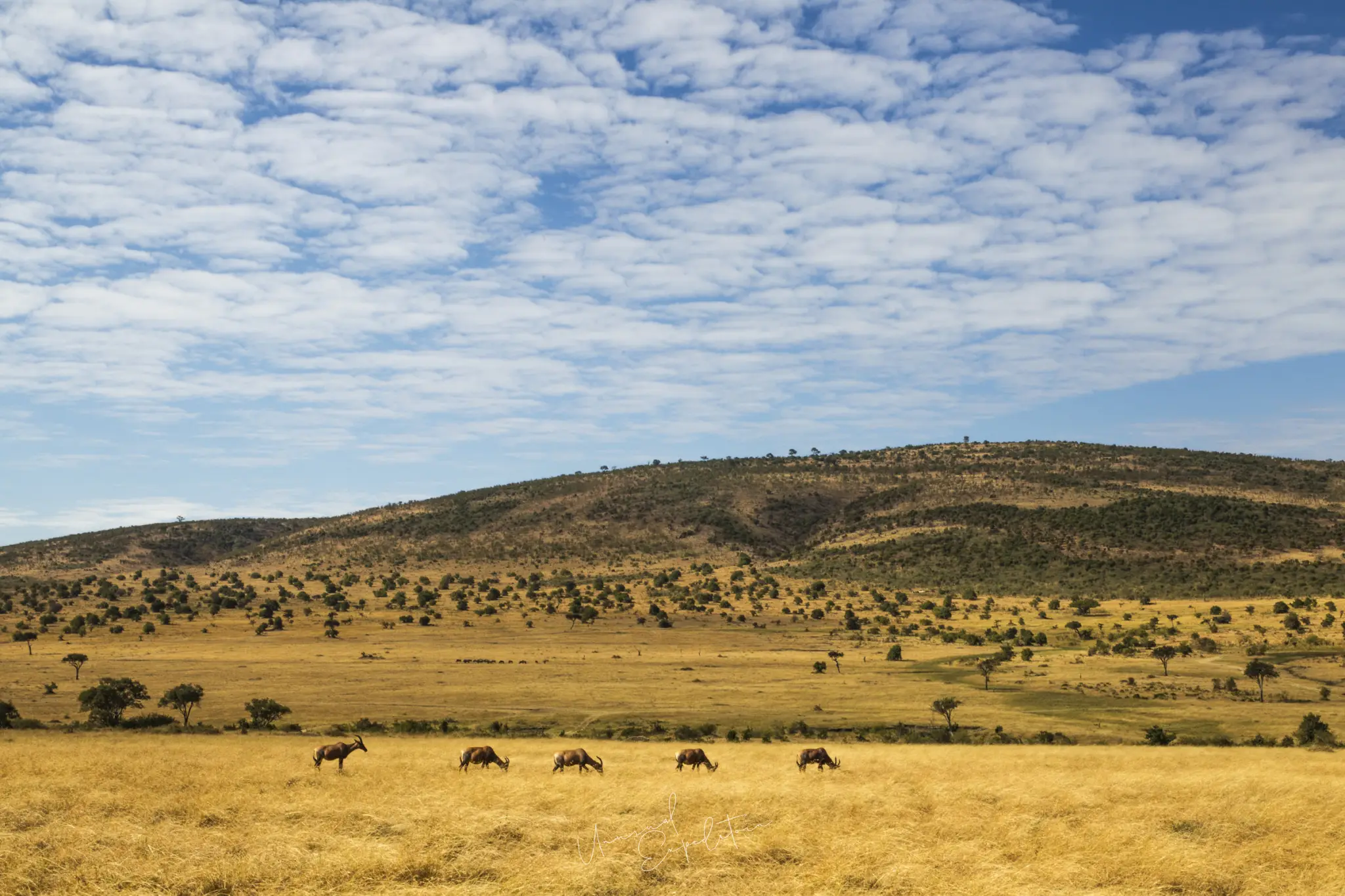
Masai Mara National Reserve is a protected savanna of about 1,510 square kilometres in Narok County, south-west Kenya, where it meets Tanzania's Serengeti National Park and forms the northern end of the same ecosystem. It is a national reserve, not a national park: the county runs the larger eastern side and the non-profit Mara Conservancy runs the Mara Triangle west of the Mara River. Rolling grass plains, scattered acacias, low hills and the Mara River make up its landscape, with community conservancies wrapped around its northern and eastern edges.
For the photography itself, start with our Masai Mara photography tour guide. This destination guide explains the reserve as a place: what it is, where it lies, how it is run, and what it looks like through a lens.
What is Masai Mara National Reserve?
Masai Mara National Reserve is Kenya's best-known wildlife area, named after the Maasai people who live around it and the Mara River that runs through it. Its history explains its odd status. The area became a game reserve under the Narok County Council in 1961, and part of it was given national reserve status in 1974, with later boundary changes leaving the reserve at about 1,510 square kilometres, according to the reserve's history as summarised by Wikipedia and Live Science. Because it is a national reserve, it belongs to the county, not to the Kenya Wildlife Service, which runs the national parks. In practice that means two management authorities, two sets of gate fees and slightly different rules on each side of the river.
Where is Masai Mara National Reserve?
Masai Mara National Reserve lies in the far south-west of Kenya, on the Tanzanian border, west of Nairobi and north of Tanzania's Serengeti. There is no fence on the border. The wildebeest, zebras and predators move freely between the two countries, which is why the Mara and the Serengeti are treated as one ecosystem and why the great migration spends part of each year on each side. The Oloololo escarpment forms the western wall of the reserve above the Mara Triangle, and the Mara River crosses the reserve from north to south before entering Tanzania. On the eastern side the Talek River joins it. Getting there from Nairobi is by road through Narok or by light aircraft to one of the airstrips; the how to get to Masai Mara guide covers both.
The Narok side and the Mara Triangle
The Masai Mara is split by the Mara River into two parts that feel quite different. The Mara Triangle, about a third of the reserve, lies west of the river under the Oloololo escarpment and has been managed by the Mara Conservancy, a non-profit, since 2001 under an agreement with the county. The larger eastern part, including the Talek and Sekenani areas, is managed by the Narok County Government. The Triangle is known for its well-maintained roads, its ranger patrols and its strict vehicle rules; the eastern side has more camps and more vehicles, and covers the larger share of the plains. Our Masai Mara trip came in through the Mara Triangle gate, which put the river and the escarpment within easy reach.
The conservancies around the reserve
Around the northern and eastern edges of Masai Mara National Reserve lies a ring of community conservancies, land owned by Maasai families and leased to tourism partners for wildlife. The Maasai Mara Wildlife Conservancies Association, which represents them, describes about 180,000 hectares of conservancy land around the reserve in its current strategic plan, which is larger than the reserve itself. Each conservancy sets its own rules, and they often limit the number of vehicles at a sighting. For photography the difference is real: fewer vehicles, quieter sightings, and activities the reserve does not allow, which vary by conservancy. The wildlife moves freely between the reserve and the conservancies, so the same lions may be in either. Ask your camp what its own conservancy allows before you travel.
Masai Mara national reserve Kenya photos: the landscape
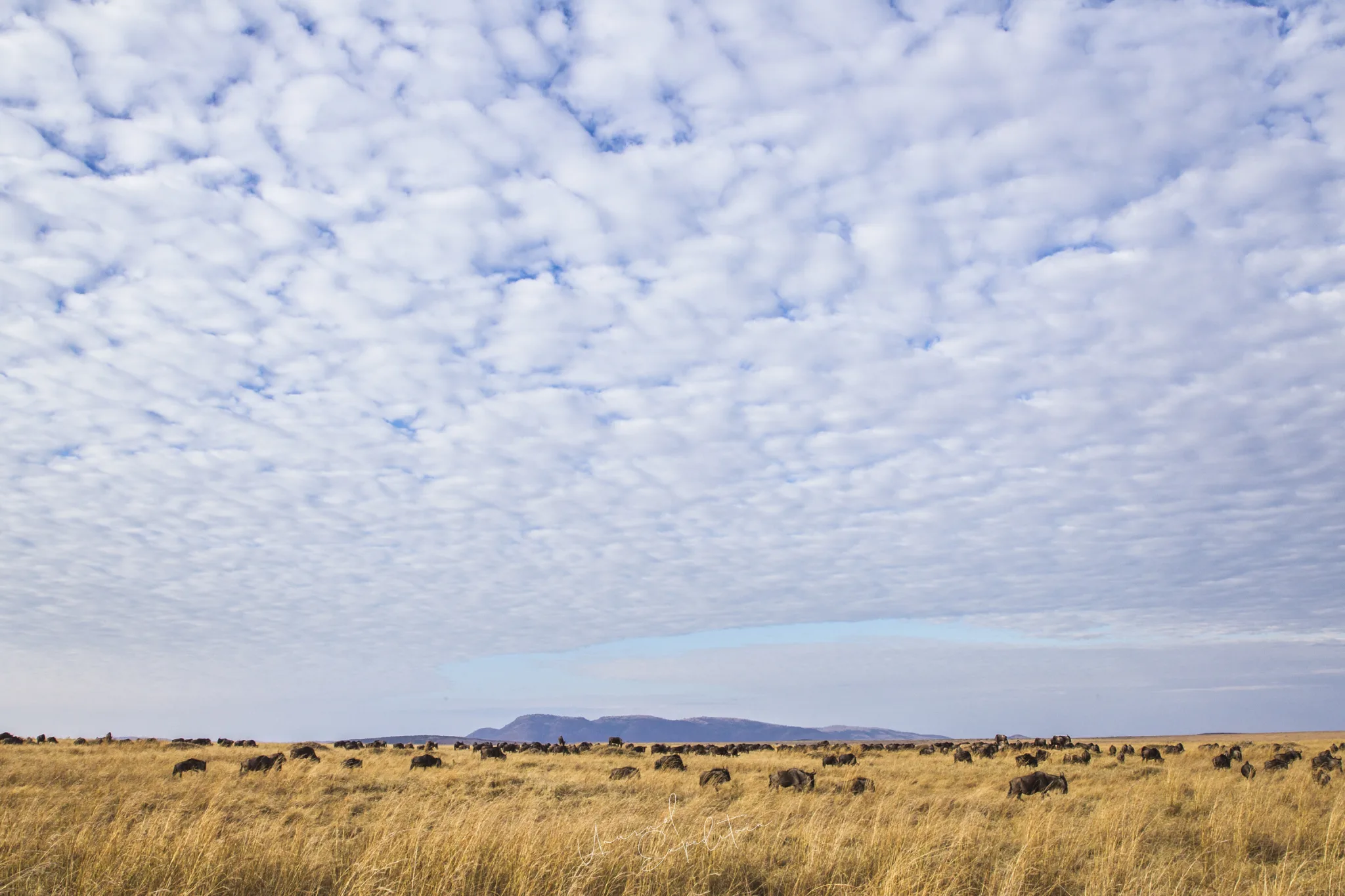
Masai Mara national reserve Kenya photos are mostly pictures of grass and sky, and that is a compliment. The reserve's plains roll gently towards low hills, dotted with single acacias and croton thickets, under some of the biggest skies in Africa. In the dry season the grass turns gold; after the rains it is green and short. Cloud makes the pictures: rows of small fair-weather cloud, towering cumulus in the afternoon, and storm fronts dragging rain across the hills. A wide lens with the horizon low gives the sky most of the frame, with herds as small dark marks in the grass. The photographs in this guide are our own, taken on our Masai Mara trip; we hold the rights to them, and the notes come from knowing the reserve first hand.
The Mara River inside the reserve
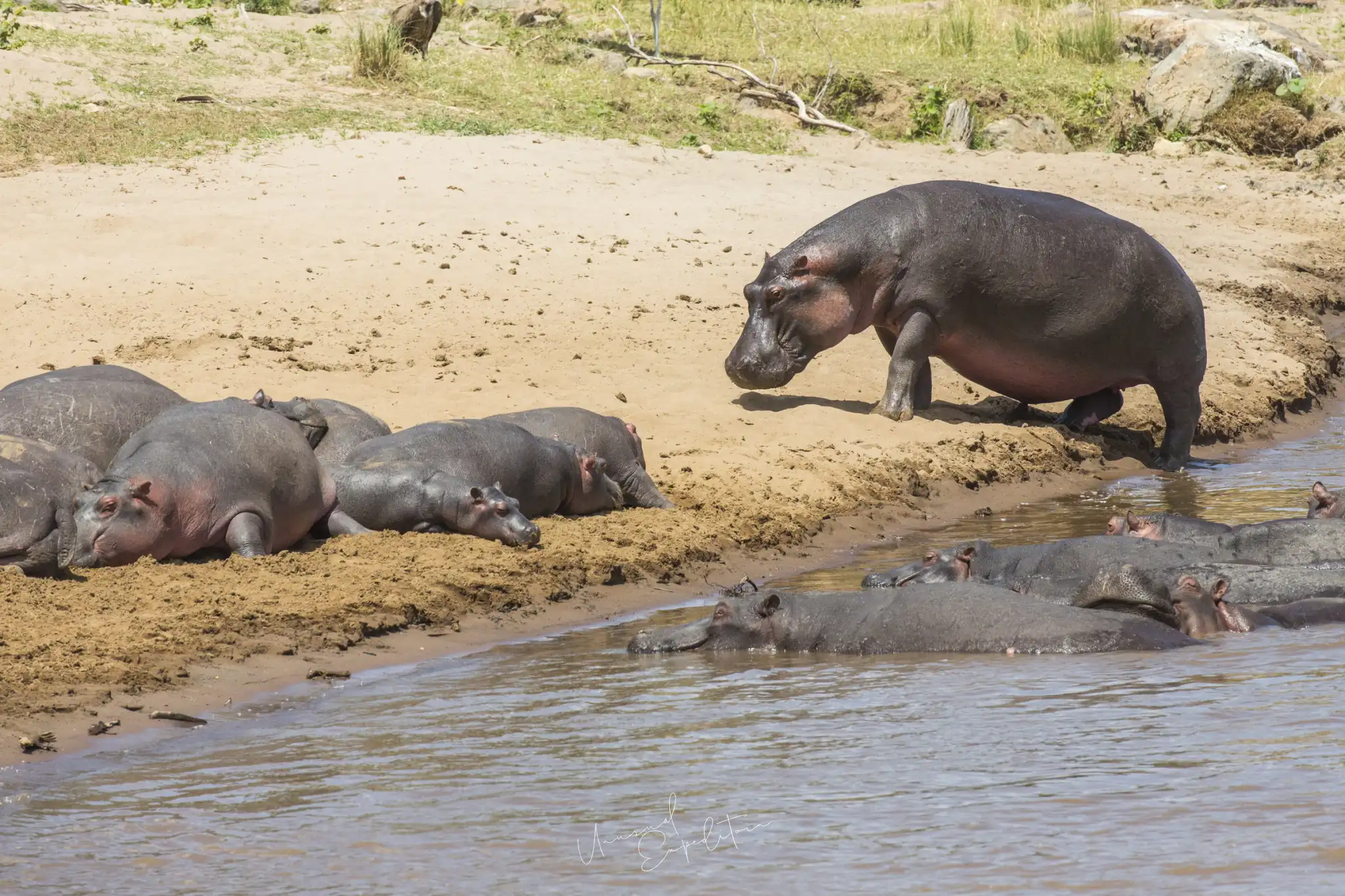
The Mara River is the reserve's lifeline and its most photographed place. It winds through the plains in a deep, muddy channel lined with riverine forest, with sandbanks and rock bars at the bends. Hippos spend the day in its pools in tight groups, coming out onto the sand on cool or cloudy days, and Nile crocodiles bask on the same banks. During the migration months the river becomes the stage for the crossings, when herds gather on the bank and finally plunge in. Outside those months it is a quieter place to photograph hippos, crocodiles and the birds that feed along the water. Keep a long lens ready: vehicles stay back from the edge.
Masai Mara national reserve photos from the air
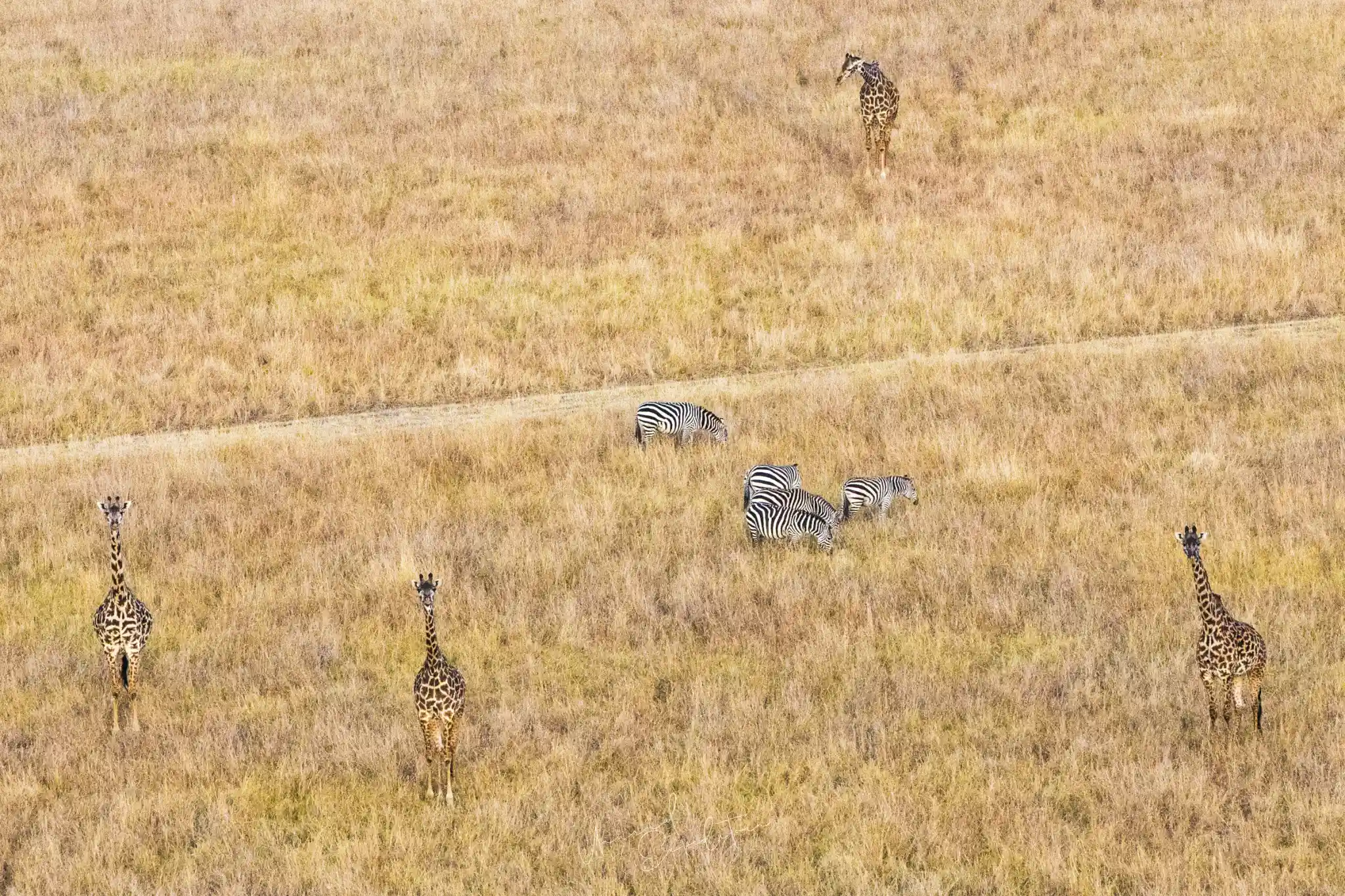
From the air, Masai Mara National Reserve looks like a map of animal paths. Tracks run across the grass in straight lines, and giraffes, zebras and wildebeest become small shapes spread across the plain, with long shadows early in the morning. The only way most visitors see this view is from a hot air balloon at dawn, which drifts low over the plains with the wind. Shoot with a 24-70mm for the landscape and a 70-200mm to pick out animals, and keep the shutter fast because the basket moves. The Masai Mara hot air balloon safari guide explains how a flight works and what it is like to photograph from the basket.
Masai Mara national reserve vs Serengeti National Park
Masai Mara national reserve vs Serengeti National Park is a common question, and the two are really halves of one system. The table sets out the main differences for a photographer.
| Masai Mara National Reserve | Serengeti National Park | |
|---|---|---|
| Country | Kenya | Tanzania |
| Size | About 1,510 square km | About 14,763 square km |
| Run by | Narok County and the Mara Conservancy | Tanzania National Parks (TANAPA) |
| Migration herds | Usually about July to October | All year, moving around the park |
| Feel | Compact, busy, many vehicles in peak season | Vast, more spread out, quieter away from the river |
| Surroundings | Community conservancies | Ngorongoro, game reserves, the Mara |
The Mara packs more animals into a smaller space; the Serengeti gives more room and more variety of season. Our Serengeti photography tour guide covers the Tanzanian side.
Reserve rules that shape your pictures
The rules of Masai Mara National Reserve matter to a photographer because they decide where the vehicle can go. Visitors stay in the vehicle except at designated points. In the Mara Triangle, the Mara Conservancy's rules keep vehicles away from the crossing points while herds gather, because vehicles pushing too close have caused herds to cross at dangerous places, and rangers can fine and remove drivers who break the rules. Park fees are charged per person per day by the county and are higher in the second half of the year; check the current schedule before you travel. For when to come, see the best time to visit Masai Mara.
On a map the Mara looks small next to the Serengeti, and it is. But stand on a rise in the Triangle with the escarpment behind you and the plains running all the way into Tanzania, and you stop thinking about borders. It is one landscape, and the animals know it.
Joseph Mak, tour leader, Unusual Expedition
See the reserve with us
We run the Masai Mara as a private trip on request, for individuals, couples, families and photographers who want their own pace. We arrange all logistics to your needs, and the cost can be lower than our group tours because no tour leader travels; a photographer or photography coaching can be added at extra cost. Ask at least two months ahead. See the Kenya photography tours page and our private tours.
Ask us about the Masai Mara National Reserve
Masai Mara photography tours
The next Masai Mara departure is announced on the Masai Mara photography tours page, with previous expeditions and all the planning guides.
Explore Masai Mara in depth
- Masai Mara Photography Tour: The Complete Guide to Photographing the MaraKenya
- Masai Mara Wildlife Photography: Techniques for the Plains and the RiverKenya
- Birds of Masai Mara: Photos and Names of the Birds You Will SeeKenya
- How to Get to Masai Mara, and Is It Worth ItKenya
- Masai Mara Animals: Big Cats, Elephants, Hippos and BirdsKenya
- Maasai Village Visit: Photographing the Maasai with RespectKenya
- Masai Mara Hot Air Balloon Safari: Photographing the Sunrise FlightKenya
- Mara River Crossing: How to Photograph the Wildebeest at the RiverKenya
- Best Time to Visit Masai Mara for the Great MigrationKenya
- Masai Mara Photos: What the Reserve Really Looks LikeKenya
Upcoming Photo Tours
- Egypt Photo Tour – EgyptEgypt 12 Dec 2026 To 20 Dec 2026
- Inner Mongolia Winter Owl Photo Tour – ChinaChina 01 Jan 2027 To 04 Jan 2027
- Inner Mongolia Winter Photo Tour – ChinaChina 05 Jan 2027 To 11 Jan 2027
- Mekong And Central Highland Vietnam Photo Tour - VietnamVietnam 16 Jan 2027 To 24 Jan 2027