
Maasai Village Visit: Photographing the Maasai with Respect
Maasai village visit near the Masai Mara: the welcome, the jumping dance, the houses, fire making and photographing with respect.
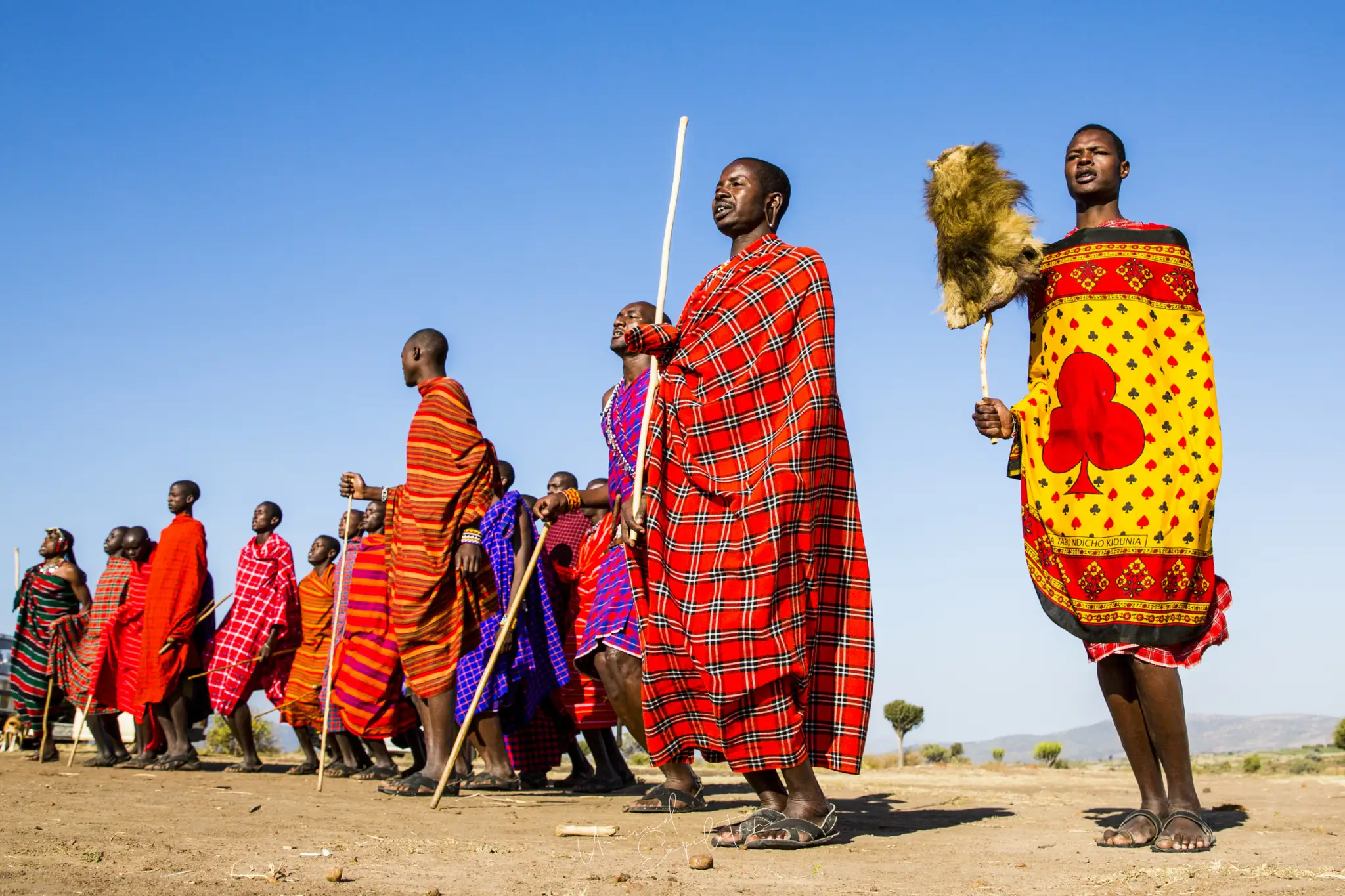
A Maasai village visit near the Masai Mara is a short welcome to a Maasai homestead: the men sing and perform the jumping dance, the women sing and show their beadwork, and families show you their houses of sticks, mud and dung and how fire is made with two sticks. You pay a fee to the community, usually arranged by your guide, and photography is usually welcome during the visit, though it is still right to ask each person. Go with respect and time to talk.
The Maasai are part of the Mara's story, and this visit is one of the set pieces in our Masai Mara photography tour guide. Here is what happens, how we photograph it and what to keep in mind.
Maasai people of Kenya and Tanzania
The Maasai people are semi-nomadic herders who live on both sides of the border between Kenya and Tanzania, including the land around the Masai Mara, which takes its name from them. Cattle are at the centre of their life and wealth. Their society is organised in age sets, and young men pass through a period as moran, or warriors, which is marked by their dress and their role in dances. Many Maasai today combine herding with schooling, work in tourism and life in town, and the conservancies around the reserve are on Maasai land, leased to tourism partners. A village visit is a glimpse of one part of that life, staged for visitors but run by the families who live there.
Maasai village visit: what happens
A typical Maasai village visit near the Mara starts at the gate of the homestead, an enkang, a ring of houses inside a fence of thornbush that keeps cattle safe at night. The men greet you with a song, lines of them in red and patterned shukas moving toward you, then the women join with their own songs and wide beaded collars. A young man who speaks English explains the village and the customs, and invites you inside a house. Near the end there is a market of beadwork laid out on the ground. The visit is paid for, and the fee goes to the community; your guide arranges it and tells you the current amount. It is a performance for visitors, and also a real home: children, cattle, smoke and daily chores carry on around you.
Maasai jumping dance
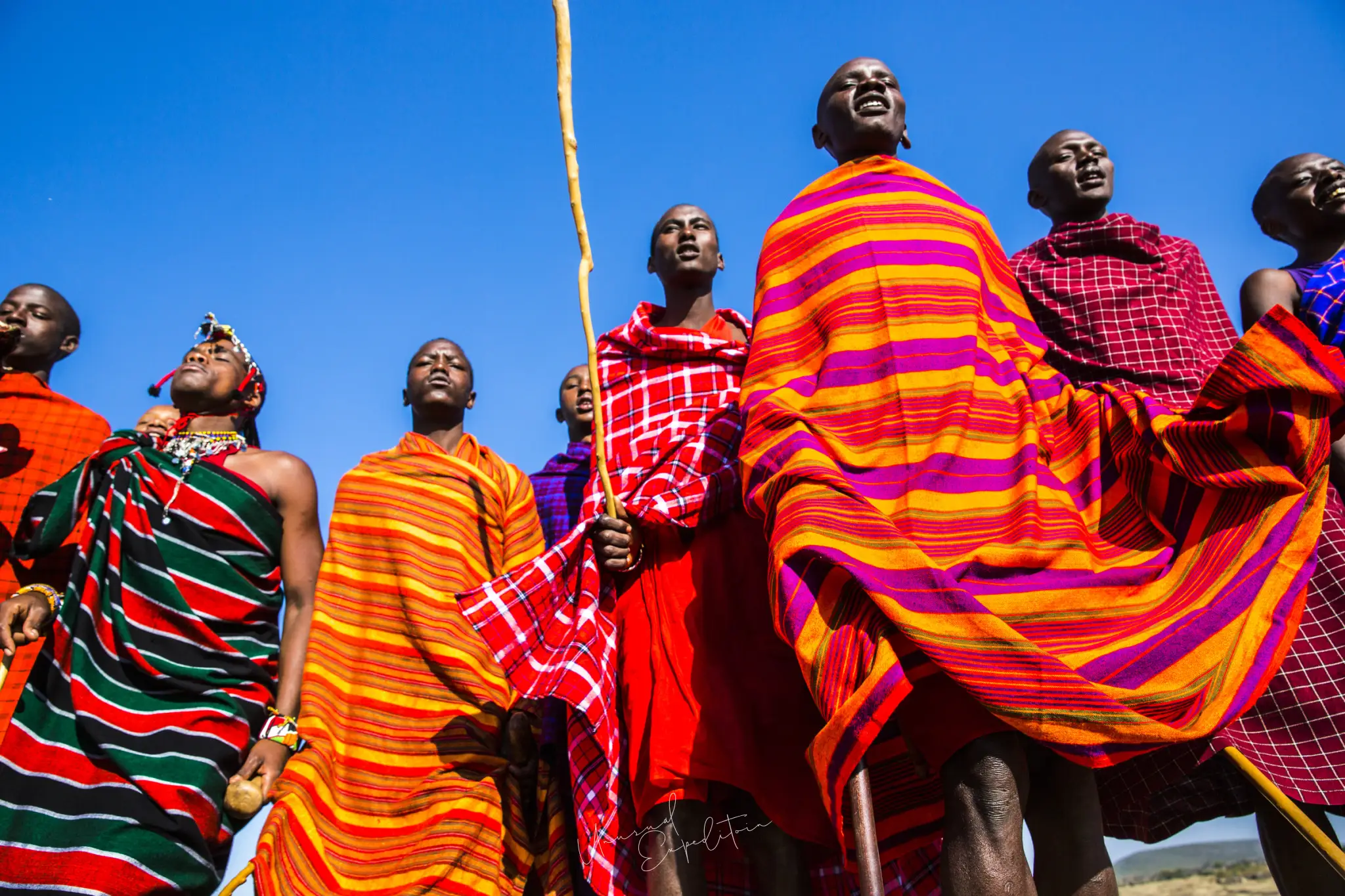
The Maasai jumping dance, known as adumu, is performed by the young men. They stand in a semicircle and sing, a deep rhythmic chant with one voice leading, and one or two at a time step into the middle and jump straight up, again and again, keeping their bodies upright and their heels together. As Google Arts and Culture describes it, the height and grace of the jump are what is admired. For photographs, the jump works from a low angle with the sky behind, a 24-70mm, and a fast shutter speed of 1/1000 second or more to freeze the dancer at the top. Watch the faces in the line as well; the singing men are often the better picture.
Maasai village Kenya: the houses
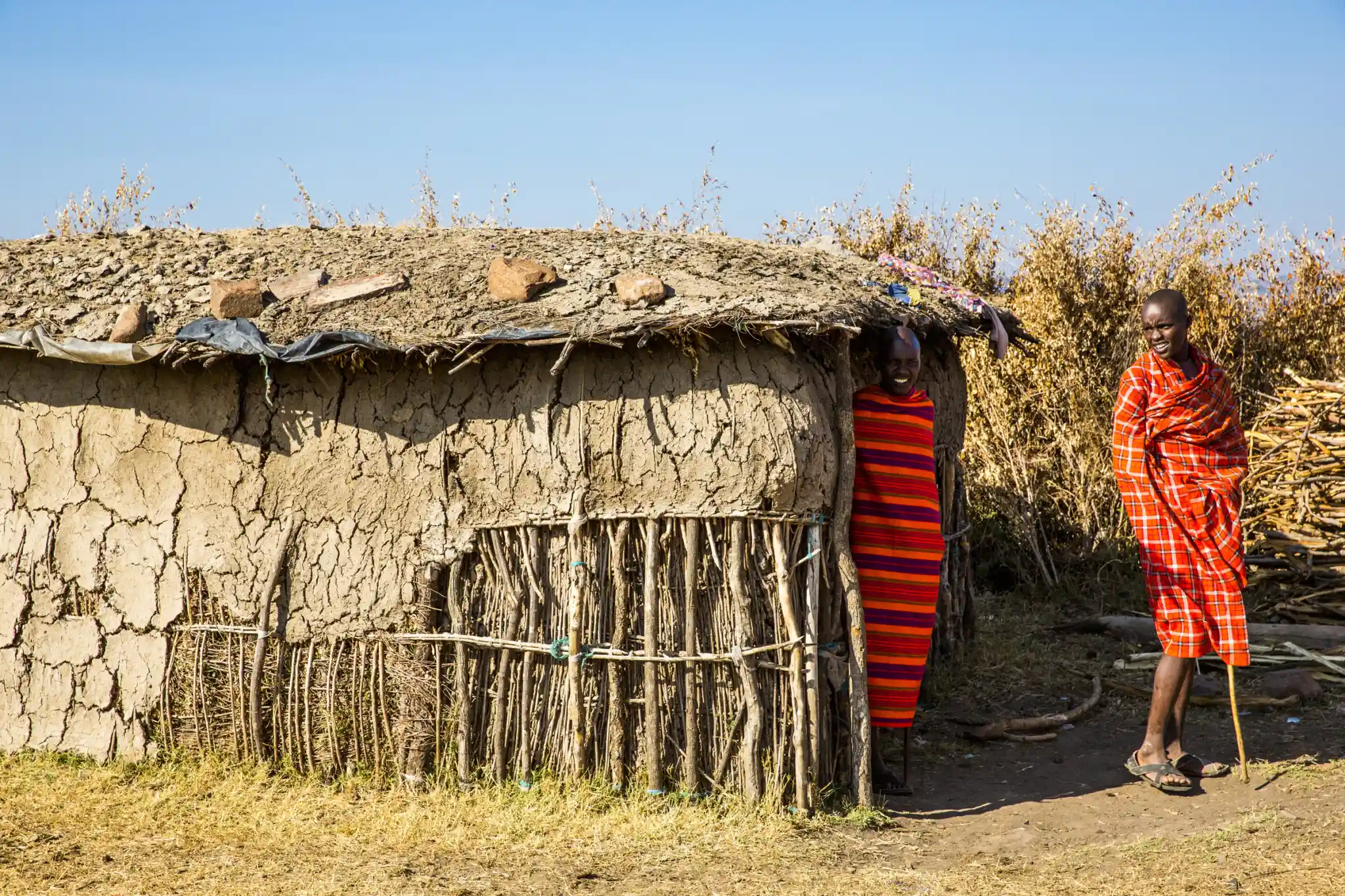
The houses in a Maasai village in Kenya are built by the women, from a frame of timber poles set into the ground and woven with smaller branches, then plastered with mud and cow dung and roofed with grass and more dung. They are low, dark inside and close to each other around the central cattle enclosure. Inside there is a small hearth, sleeping places and room for young animals. Photographing inside is hard: there is almost no light, and smoke from the fire hangs in the air. Outside, the texture of the walls and roofs in low sun, with a figure in a red shuka in the doorway, makes the strongest picture of the homestead.
"Talk first, then photograph. Ask their names, ask about the cattle, laugh at yourself when you try the jump. The pictures change the moment people decide you are a guest and not just a camera."
Joseph Mak, tour leader, Unusual Expedition
Maasai people: making fire and daily life
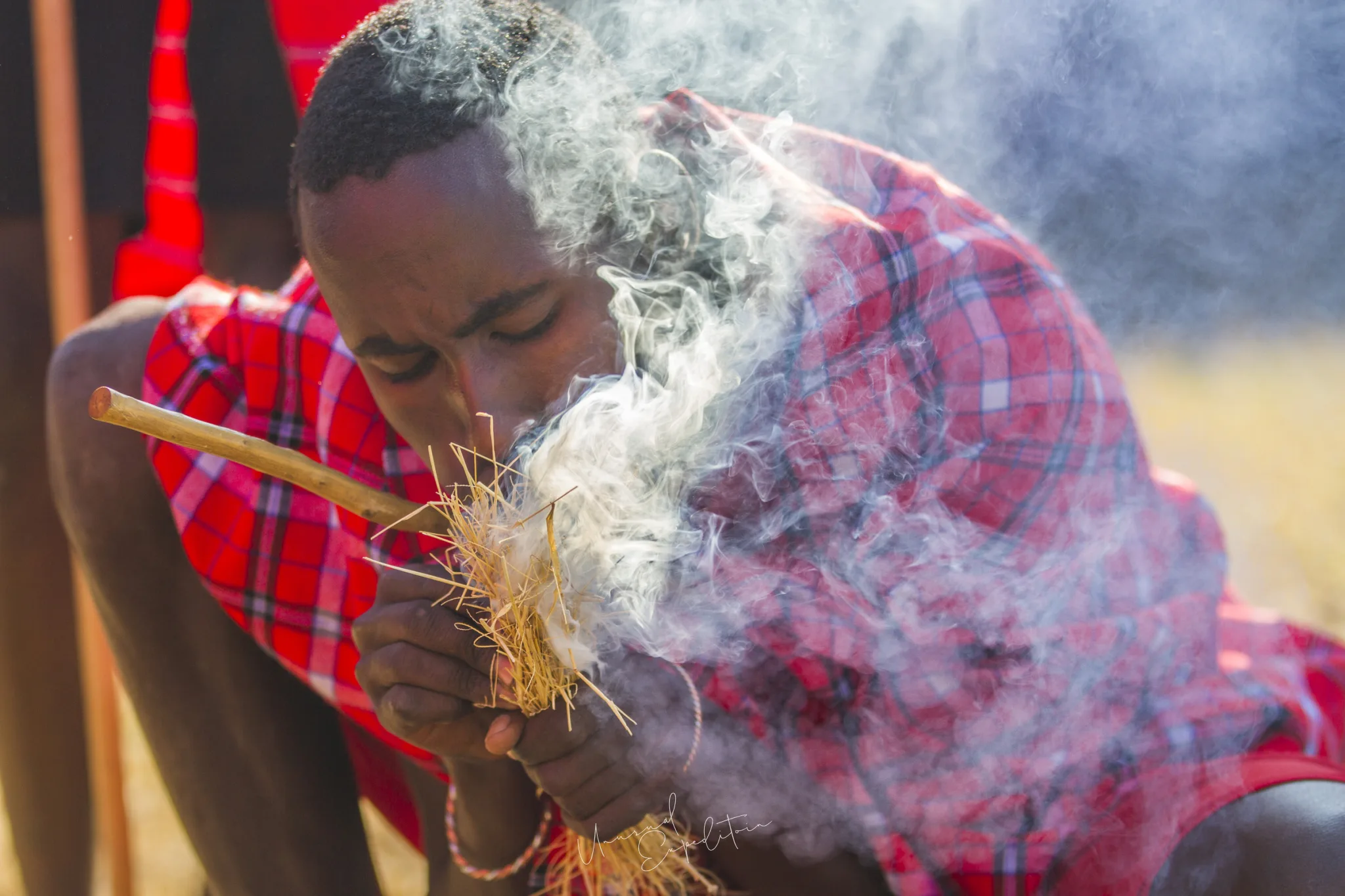
One of the moments Maasai people show visitors is how they make fire without matches. A man holds a flat piece of soft wood on the ground with his foot and spins a hard stick between his palms until the dust smoulders, then tips the ember into dry grass and blows it into flame. It takes skill and a few attempts. The smoke and the concentration make a strong close portrait with a 70-200mm; get low, and expose for the face so the smoke glows. Beyond the demonstration, look for the ordinary: a woman repairing a roof, a herder bringing cattle in, beadwork in progress. Ask before each portrait.
How to photograph the Maasai with respect
A village visit gives you permission to photograph, but each person still has the right to say no. We ask before every portrait, show people the picture on the screen, and avoid close photographs of children unless a parent is there and agrees. Do not hand out sweets or money to children. Buy something from the market if you can; it is how families earn from the visit. Do not photograph people outside the visit, along the roads or in towns, without asking, and accept that some Maasai do not want to be photographed at all.
| Scene | Lens | Notes |
|---|---|---|
| Welcome song, lines of men | 24-70mm | Shoot from low, sky behind |
| Jumping dance | 24-70mm or 70-200mm | 1/1000s or faster, burst |
| Women in beaded collars | 70-200mm | Open shade if possible, ask first |
| Houses and homestead | 16-35mm | Low sun for wall texture |
| Fire making | 70-200mm | Expose for the face, let smoke glow |
A short lens for the dance and a longer one for the quieter portraits covers the whole visit.
Maasai women and the beadwork
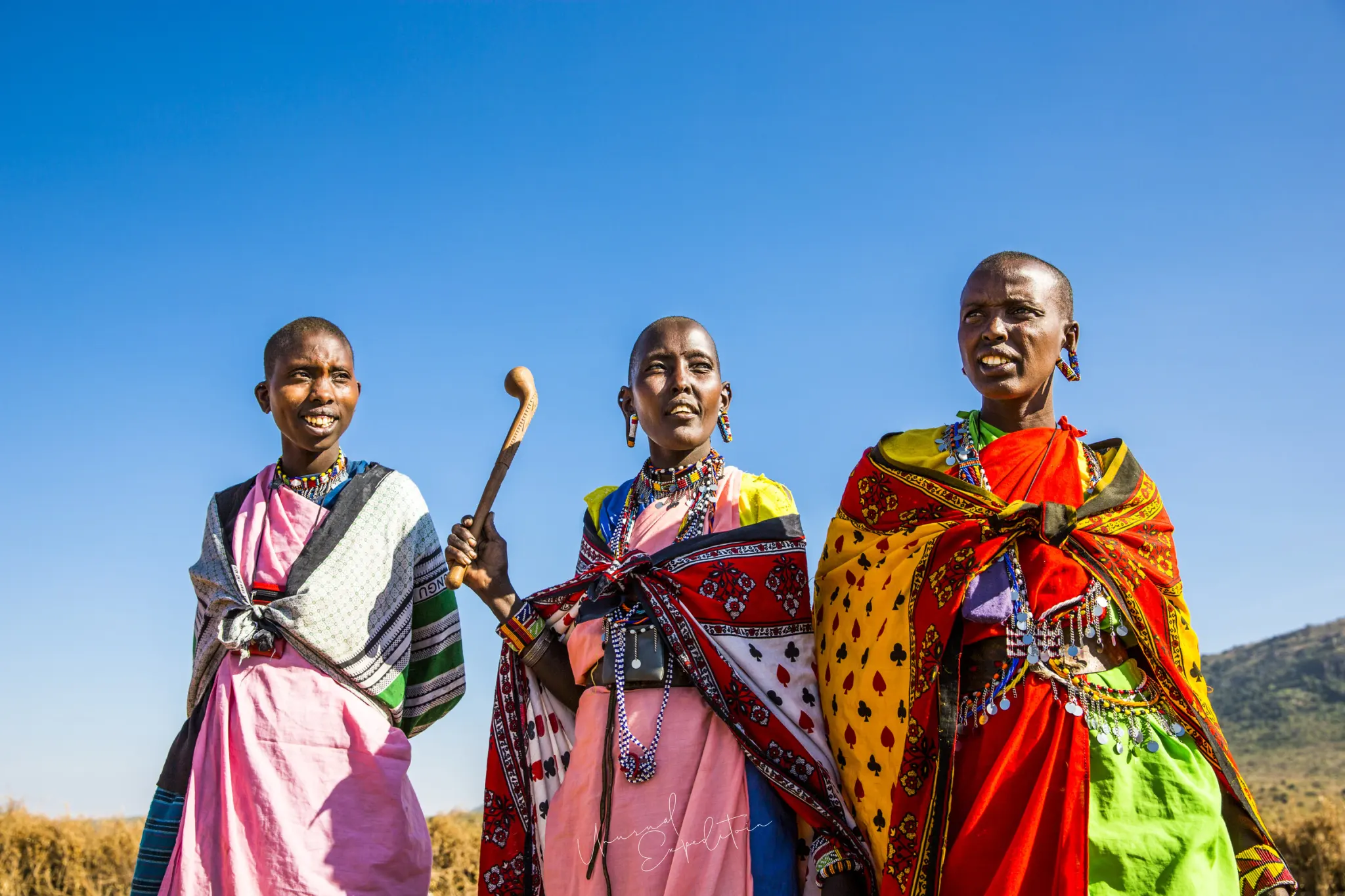
Maasai women wear layers of beaded necklaces, collars, earrings and headbands, and the colours and patterns carry meaning about age, status and occasion. Red is the colour most associated with the Maasai, in beads and in the shuka cloth. The women sing in their own group during the welcome and often pose together for a portrait when asked, which is the time for a frame with their faces and the beadwork in clean light. Bright midday sun is hard on dark skin and white beads, so use the open shade of a house if you can.
Is a Maasai village visit worth it
For most visitors, yes, if you go in the right spirit. It is staged, and some visits feel rushed and commercial. But it is also the only time on most safaris that you meet the people whose land the reserve is, and the pictures can be some of the best of the trip. Combine it with a game drive, and read Masai Mara animals and how to get to Masai Mara for the rest of the trip.
Meet the Maasai with us
We run the Masai Mara as a private trip on request, and a Maasai village visit can be part of it. We arrange all logistics to your needs, and a photographer or photography coaching can be added at extra cost. Ask at least two months ahead; last-minute can be arranged. See the Kenya photography tours page and our private tours.
Ask us about a Maasai village visit
Masai Mara photography tours
The next Masai Mara departure is announced on the Masai Mara photography tours page, with previous expeditions and all the planning guides.
Explore Masai Mara in depth
- Masai Mara Photography Tour: The Complete Guide to Photographing the MaraKenya
- Masai Mara Wildlife Photography: Techniques for the Plains and the RiverKenya
- Masai Mara National Reserve: What It Is, Where It Is and What It Looks LikeKenya
- Birds of Masai Mara: Photos and Names of the Birds You Will SeeKenya
- How to Get to Masai Mara, and Is It Worth ItKenya
- Masai Mara Animals: Big Cats, Elephants, Hippos and BirdsKenya
- Masai Mara Hot Air Balloon Safari: Photographing the Sunrise FlightKenya
- Mara River Crossing: How to Photograph the Wildebeest at the RiverKenya
- Best Time to Visit Masai Mara for the Great MigrationKenya
- Masai Mara Photos: What the Reserve Really Looks LikeKenya
Upcoming Photo Tours
- Egypt Photo Tour – EgyptEgypt 12 Dec 2026 To 20 Dec 2026
- Inner Mongolia Winter Owl Photo Tour – ChinaChina 01 Jan 2027 To 04 Jan 2027
- Inner Mongolia Winter Photo Tour – ChinaChina 05 Jan 2027 To 11 Jan 2027
- Mekong And Central Highland Vietnam Photo Tour - VietnamVietnam 16 Jan 2027 To 24 Jan 2027