
Best Time to Visit Masai Mara for the Great Migration
Best time to visit Masai Mara for the great migration: the months, river crossings, weather by month and the quiet green season.
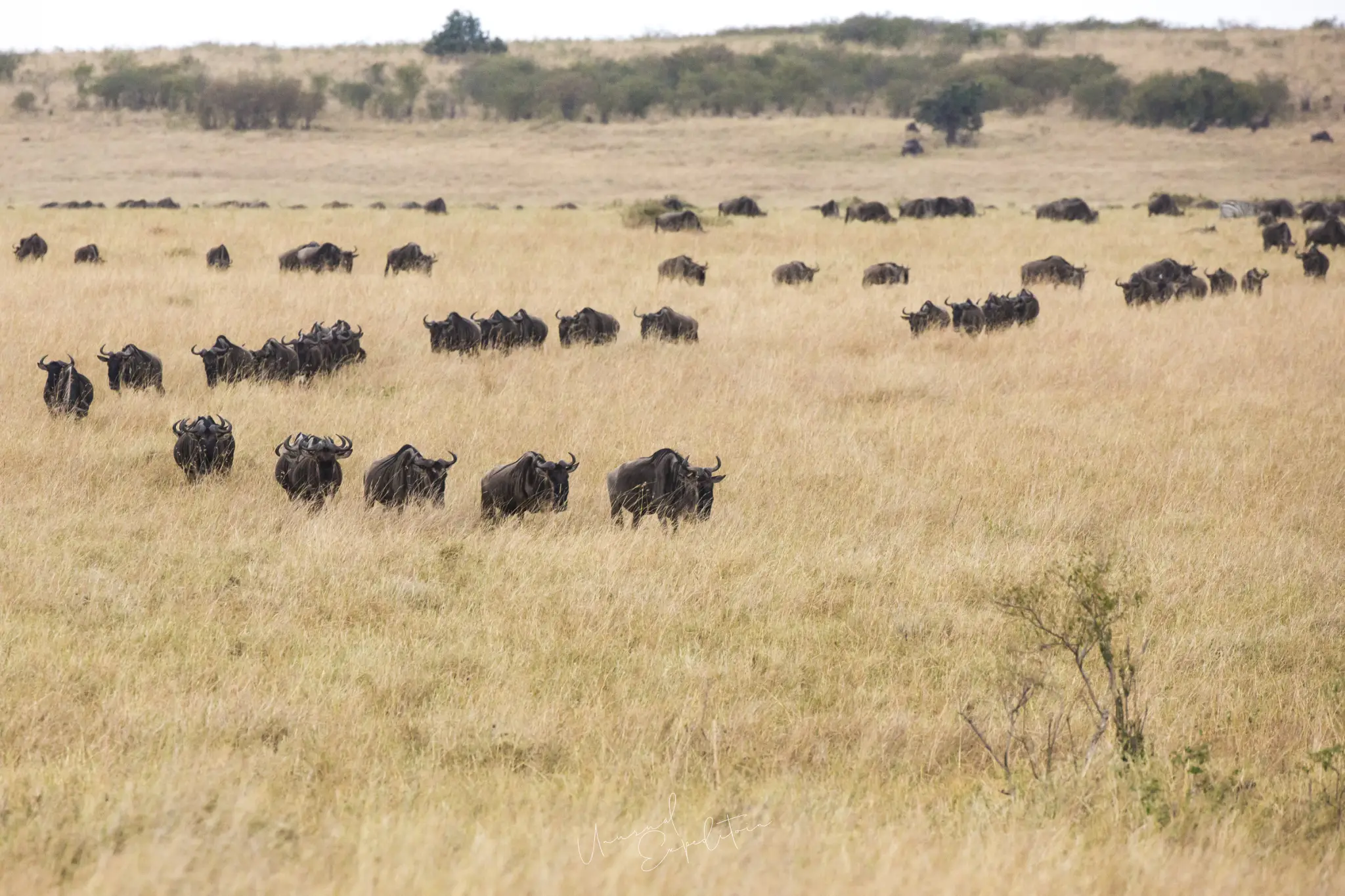
The best time to visit Masai Mara for the great migration is from July to October, when the wildebeest and zebra herds come north from the Serengeti and cross the Mara River, with August and September usually the strongest months. The exact timing shifts each year with the rains. For big cats without the crowds, January and February are excellent, dry and green. March to May is the long rainy season, beautiful but wet, and November brings the short rains and quiet plains.
This season guide is part of our Masai Mara photography tour guide. It explains the migration months, the weather and what each season looks like through a lens.
Best time to visit Masai Mara for great migration
The great migration is one movement of animals around the Serengeti and Masai Mara ecosystem, following rain and fresh grass. The herds spend the early months of the year calving in the southern Serengeti in Tanzania, move west and north through the middle of the year, and reach the Masai Mara in the dry season. Most sources, from safari operators to National Geographic, put the herds in the Mara from about July to October, with river crossings most frequent from late July into September. In a dry year they may arrive early; after late rains, they may not come in strength until August. Plan for the middle of the window, stay long enough to wait at the river, and treat the first and last weeks as a gamble.
Great migration Masai Mara months
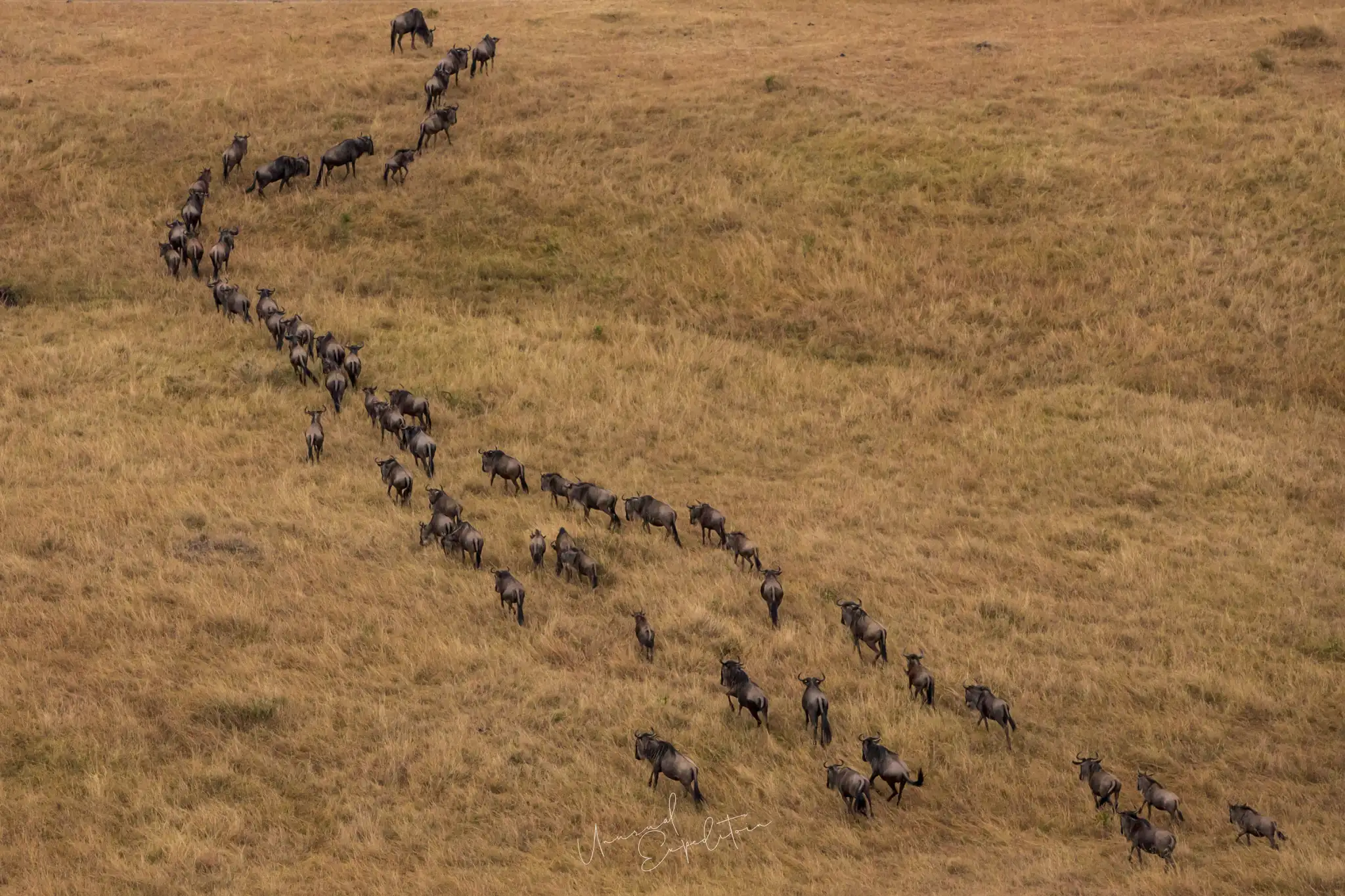
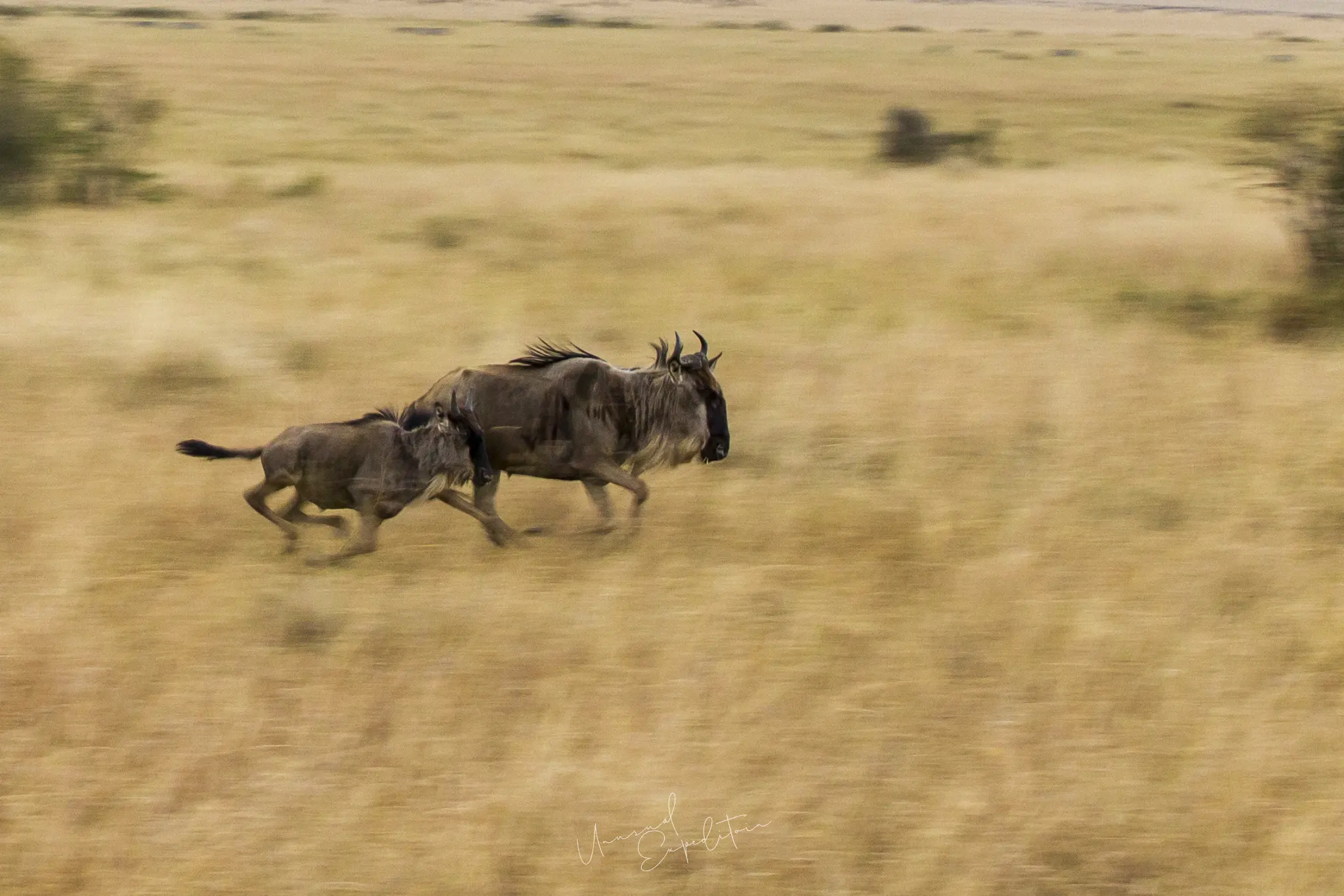
The great migration Masai Mara months break into three stages. In July the first big columns cross from the Serengeti and spread over the plains of the Mara Triangle and the central reserve; the grass is still long. In August and September the herds are at their largest, the grass is grazed short, and crossings of the Mara River happen back and forth, sometimes several in a day, sometimes none for days. In October the herds begin to drift south, the first short rains arrive, and the plains empty again. Each stage gives different pictures: long lines walking in July, massed herds and crossings at the peak, and dust and storm light at the end.
| Months | Herds | Weather | What to photograph |
|---|---|---|---|
| January to February | Resident animals only | Dry, warm, green | Cats, young animals, clean light |
| March to May | Resident animals | Long rains, wettest in April | Storm skies, green plains |
| June | First herds in some years | Dry season begins, cool | Cats in long grass, early herds |
| July | Migration arrives | Dry, cool mornings | Columns of wildebeest, first crossings |
| August to September | Migration peak | Dry, dusty | River crossings, massed herds |
| October | Herds head south | Short rains begin late | Last crossings, dust and storms |
| November to December | Resident animals | Short rains, then clearing | Green plains, quiet sightings |
Lions, leopards and cheetahs live in the reserve through every month of the table, which is why the Mara is worth a visit in any season.
Masai Mara weather by month
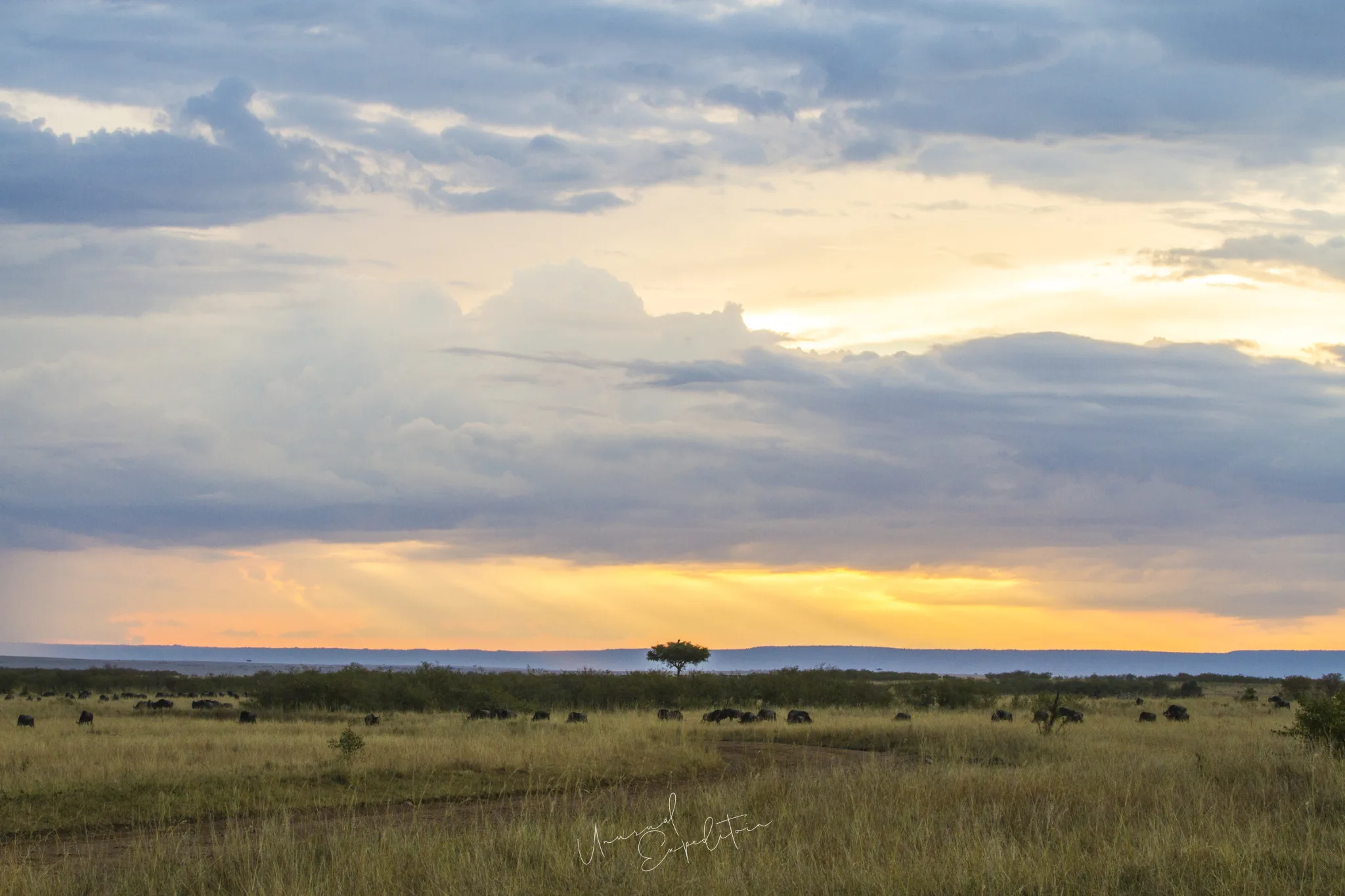
Masai Mara weather by month follows Kenya's two rainy seasons, which the Kenya Meteorological Department names the long rains, March to May, and the short rains, October to December. The reserve stands on a high plateau, so mornings are cool all year and can be cold in July and August, especially in an open vehicle or a balloon at dawn. Days are warm to hot, and the dry season brings haze and dust that soften distant hills. In the rains, the showers usually come in the afternoon and evening, and mornings are often clear. For photography the transition months, late October, November and early June, can give the best skies: cumulus building to storms over plains that are still bright.
"Do not plan the Mara around one crossing. Plan it around enough days at the river. When the herd finally goes, you want to be the car that is already there, not the one that hears about it on the radio."
Joseph Mak, tour leader, Unusual Expedition
Is May a good time to visit Masai Mara
May is the end of the long rains in the Masai Mara, and for some photographers it is a very good time to visit. The plains are deep green, the light after rain is clean, and you will share sightings with very few vehicles. Lions, cheetahs and leopards are all present. The drawbacks are tall grass that hides animals, the chance of a wet morning, and tracks that can be muddy or closed in places. The reserve's daily conservation fee is also lower in the first half of the year than from July to December. If you have seen the migration and want the Mara quiet, May and early June are worth considering.
Masai Mara in the green season: January and February
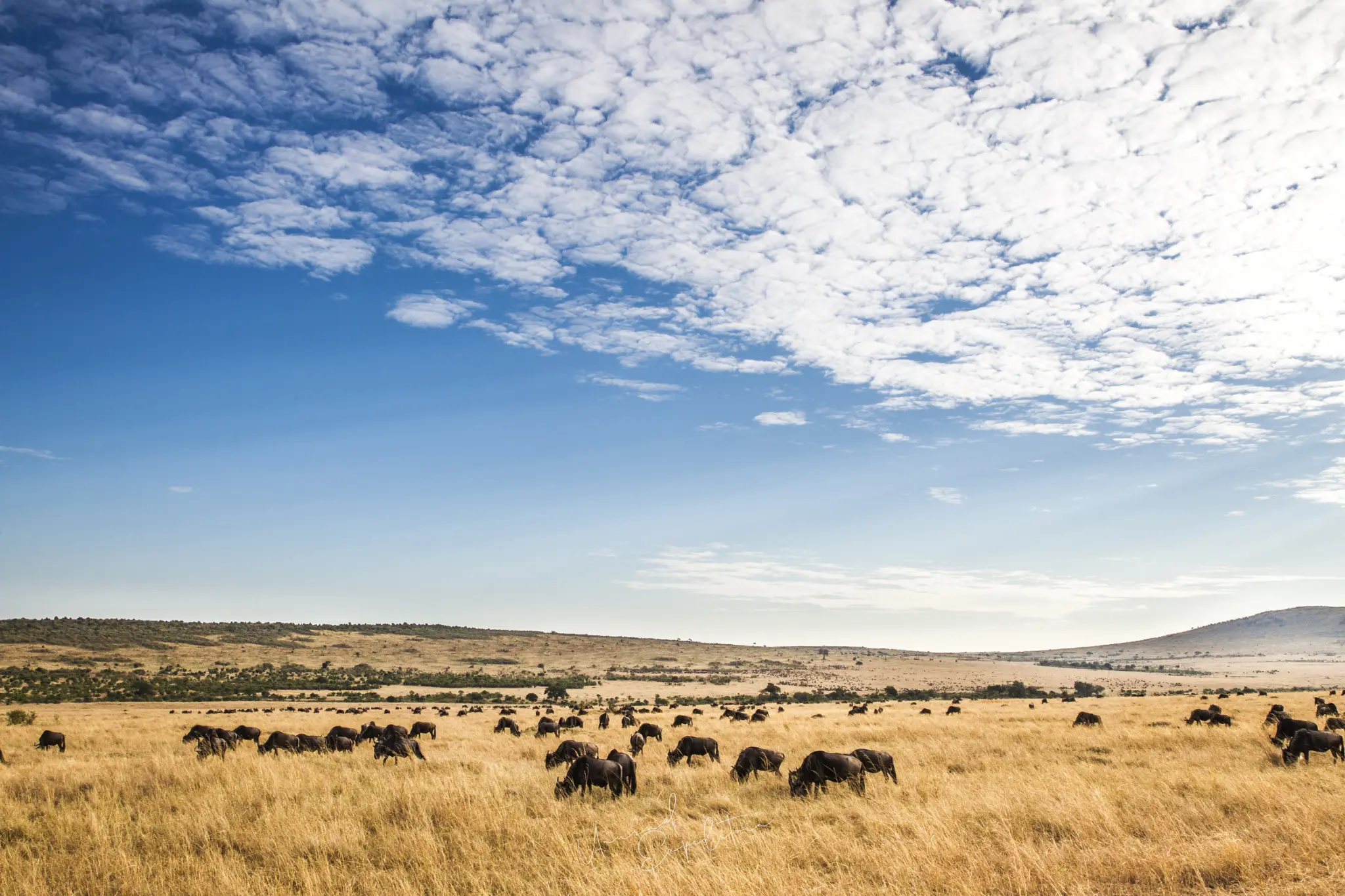
January and February are the short dry season in the Masai Mara, between the short rains and the long rains. The grass is green but short, many antelope have young, and the predators are busy. This is the time we suggest for photographers who want cats in good light without a ring of vehicles. The migration is far away in the southern Serengeti, calving, so the Mara has only its resident herds. Our guide to Masai Mara animals covers the cats and the rest of the wildlife you can expect all year.
Best time to visit Masai Mara and Serengeti together
The Masai Mara and the Serengeti are one ecosystem divided by a border. If you want both on one trip, from about July to October the herds are in the Mara and the northern Serengeti, and the two can be combined along the Mara River. If you want the calving in the southern Serengeti, early in the year, that is a separate trip. Our sister destination guides cover the Serengeti side.
Light and weather through the day
Whatever the month, the light in the Masai Mara follows the same daily pattern because it lies close to the equator. The first hour after sunrise is soft and warm; by mid-morning it is bright and overhead; the last hour before sunset turns gold again, often under building cloud. Crossings do not wait for good light, so be ready to shoot in hard sun at the river. Storm light in the rains can arrive at any time of the afternoon. For the visual side of the seasons, see our Masai Mara photos, and for the river itself, the Mara River crossing guide.
Choose your Masai Mara season with us
We run the Masai Mara as a private trip on request, timed to the season you want: the migration, the quiet green months or the rains. We arrange all logistics to your needs, and a photographer or photography coaching can be added at extra cost. For the migration months, ask at least two months ahead; last-minute can be arranged. See the Kenya photography tours page and our private tours.
Ask us about the best time for the Masai Mara
Masai Mara photography tours
The next Masai Mara departure is announced on the Masai Mara photography tours page, with previous expeditions and all the planning guides.
Explore Masai Mara in depth
- Masai Mara Photography Tour: The Complete Guide to Photographing the MaraKenya
- Masai Mara Wildlife Photography: Techniques for the Plains and the RiverKenya
- Masai Mara National Reserve: What It Is, Where It Is and What It Looks LikeKenya
- Birds of Masai Mara: Photos and Names of the Birds You Will SeeKenya
- How to Get to Masai Mara, and Is It Worth ItKenya
- Masai Mara Animals: Big Cats, Elephants, Hippos and BirdsKenya
- Maasai Village Visit: Photographing the Maasai with RespectKenya
- Masai Mara Hot Air Balloon Safari: Photographing the Sunrise FlightKenya
- Mara River Crossing: How to Photograph the Wildebeest at the RiverKenya
- Masai Mara Photos: What the Reserve Really Looks LikeKenya
Upcoming Photo Tours
- Egypt Photo Tour – EgyptEgypt 12 Dec 2026 To 20 Dec 2026
- Inner Mongolia Winter Owl Photo Tour – ChinaChina 01 Jan 2027 To 04 Jan 2027
- Inner Mongolia Winter Photo Tour – ChinaChina 05 Jan 2027 To 11 Jan 2027
- Mekong And Central Highland Vietnam Photo Tour - VietnamVietnam 16 Jan 2027 To 24 Jan 2027