
Mara River Crossing: How to Photograph the Wildebeest at the River
Mara River crossing: what happens, when, the crossing points, crocodiles, lens and shutter settings, and crossing etiquette.
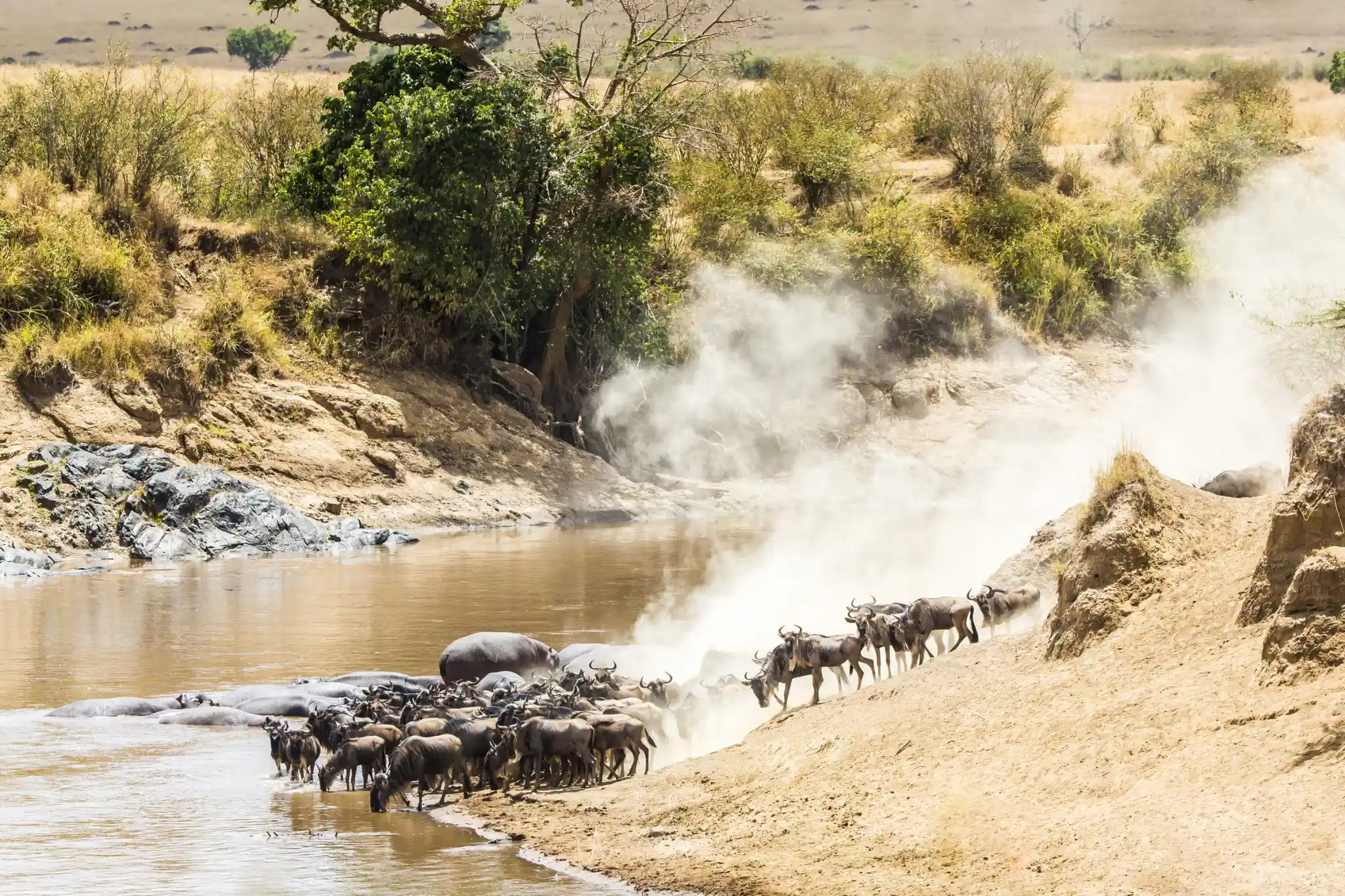
A Mara River crossing is the moment when a wildebeest herd of the great migration plunges down a steep bank into the Mara River and swims for the far side, past crocodiles and hippos, in the Masai Mara of Kenya or the northern Serengeti of Tanzania. Crossings happen mostly from late July to September, at known crossing points, but never to a timetable. To photograph one, you wait at the river, sometimes for hours, with a long lens, a fast shutter speed and the engine off.
This is the most dramatic scene in our Masai Mara photography tour guide, and the one most people come for. Here is how a crossing unfolds, where the crossing points are and how to photograph it well.
Mara River crossing: what actually happens
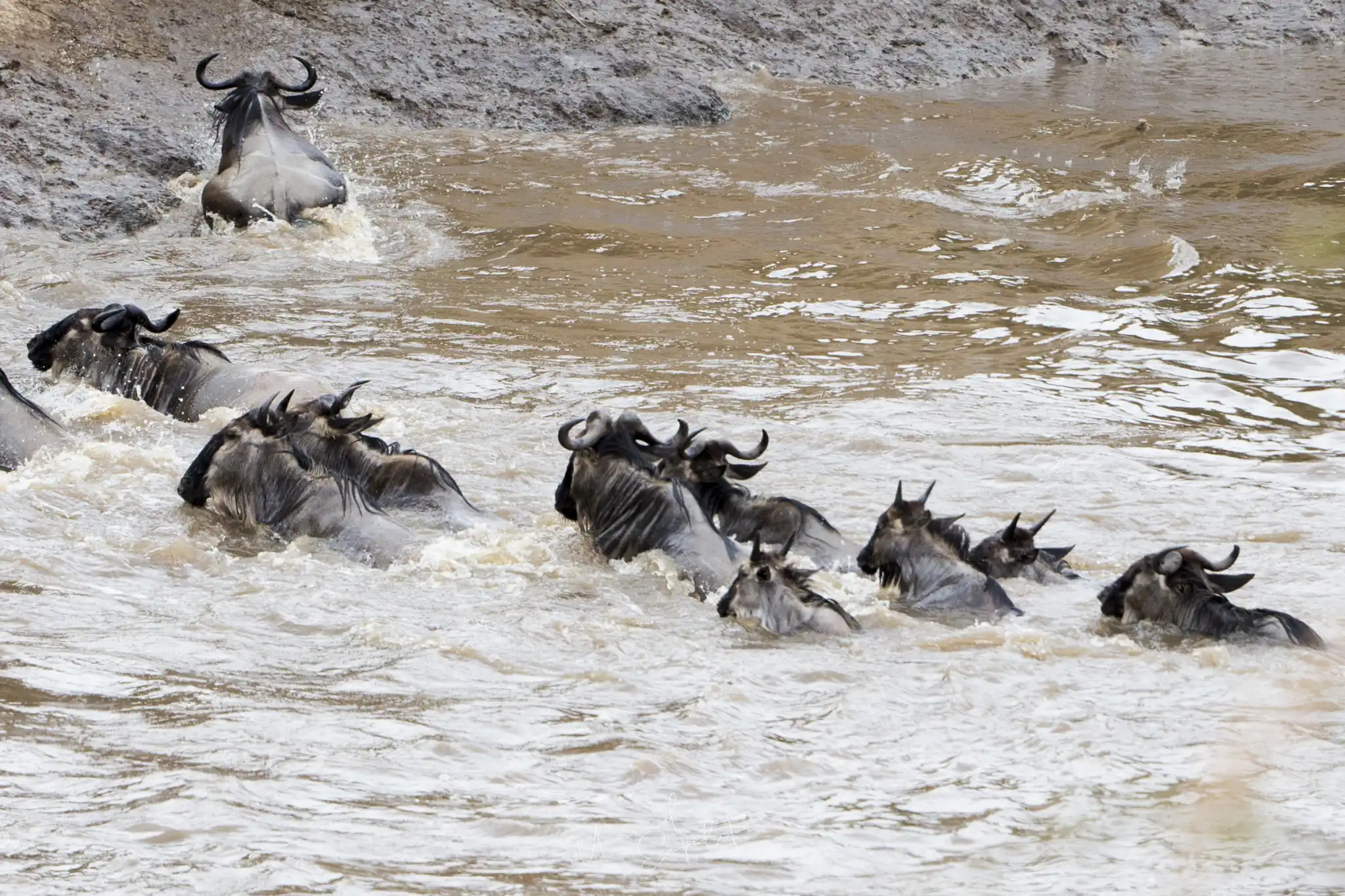
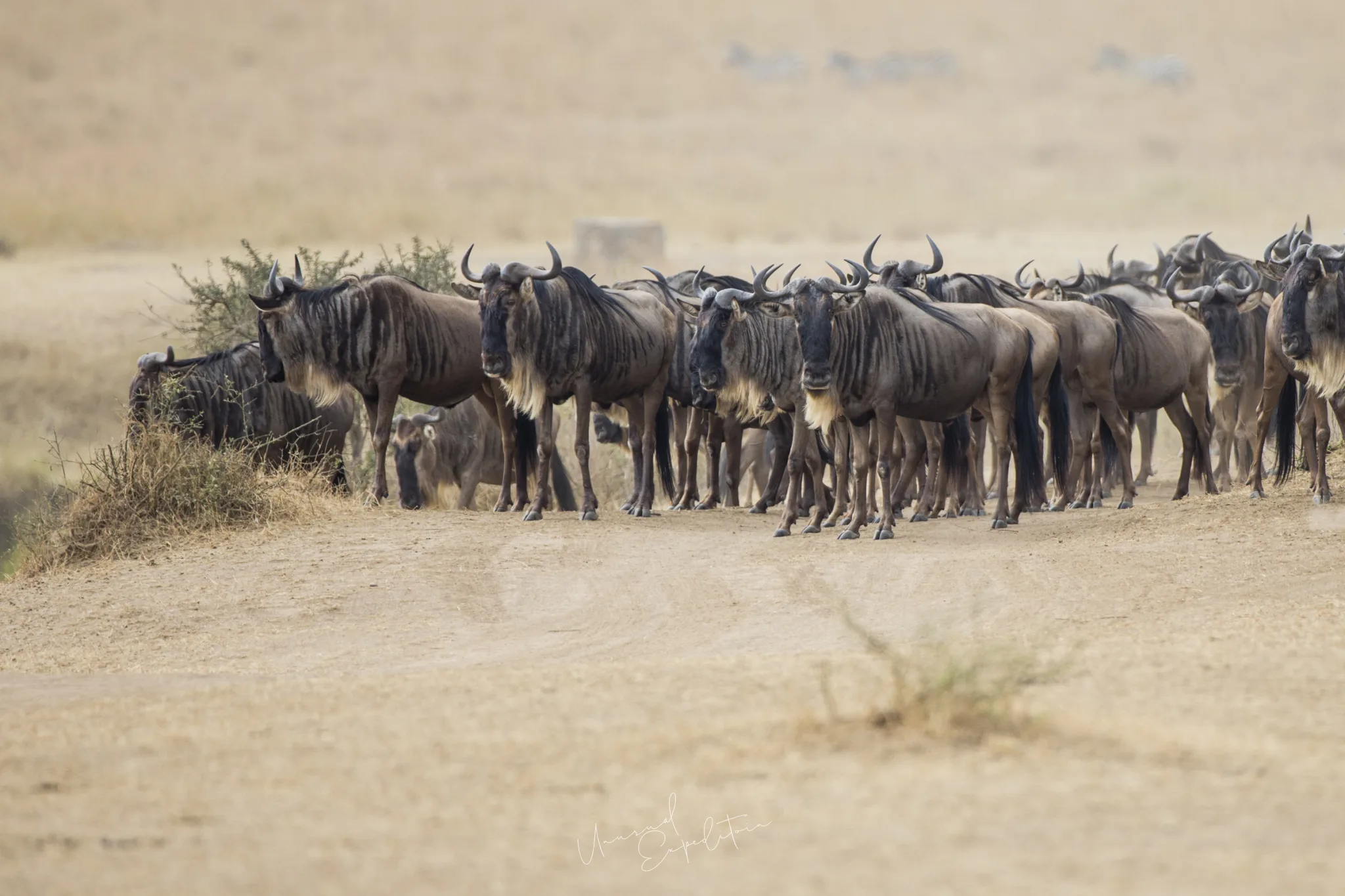
The Mara River runs from the Mau Forest highlands through the Masai Mara and into Tanzania, cutting a winding channel with steep earth and rock banks. During the migration, the herds need to cross it to reach fresh grass, and they do so in both directions, more than once. A crossing begins long before anything moves. Wildebeest and zebra gather on the plain above the bank, sometimes in their thousands, and drift toward the water and back again. Zebras often test first. Then one animal jumps, and the rest follow in a rush, down the bank in a cloud of dust and into the current. A big crossing can go on for a long time; a small one is over in minutes. The herd may also lose its nerve and turn back, and then the waiting starts again.
Masai Mara great migration river crossing: when to go
The Masai Mara great migration river crossing season is the core of the dry season, with most crossings from late July into September and some into October, according to safari operators and National Geographic's migration planning guide. Which week is best changes every year with the rain, and the herds can sit on one side for days. This is why time matters more than timing: three or four days near the river give you a fair chance, one day gives you a lottery. Our best time to visit Masai Mara guide explains the migration months in more detail.
Mara River crossing points
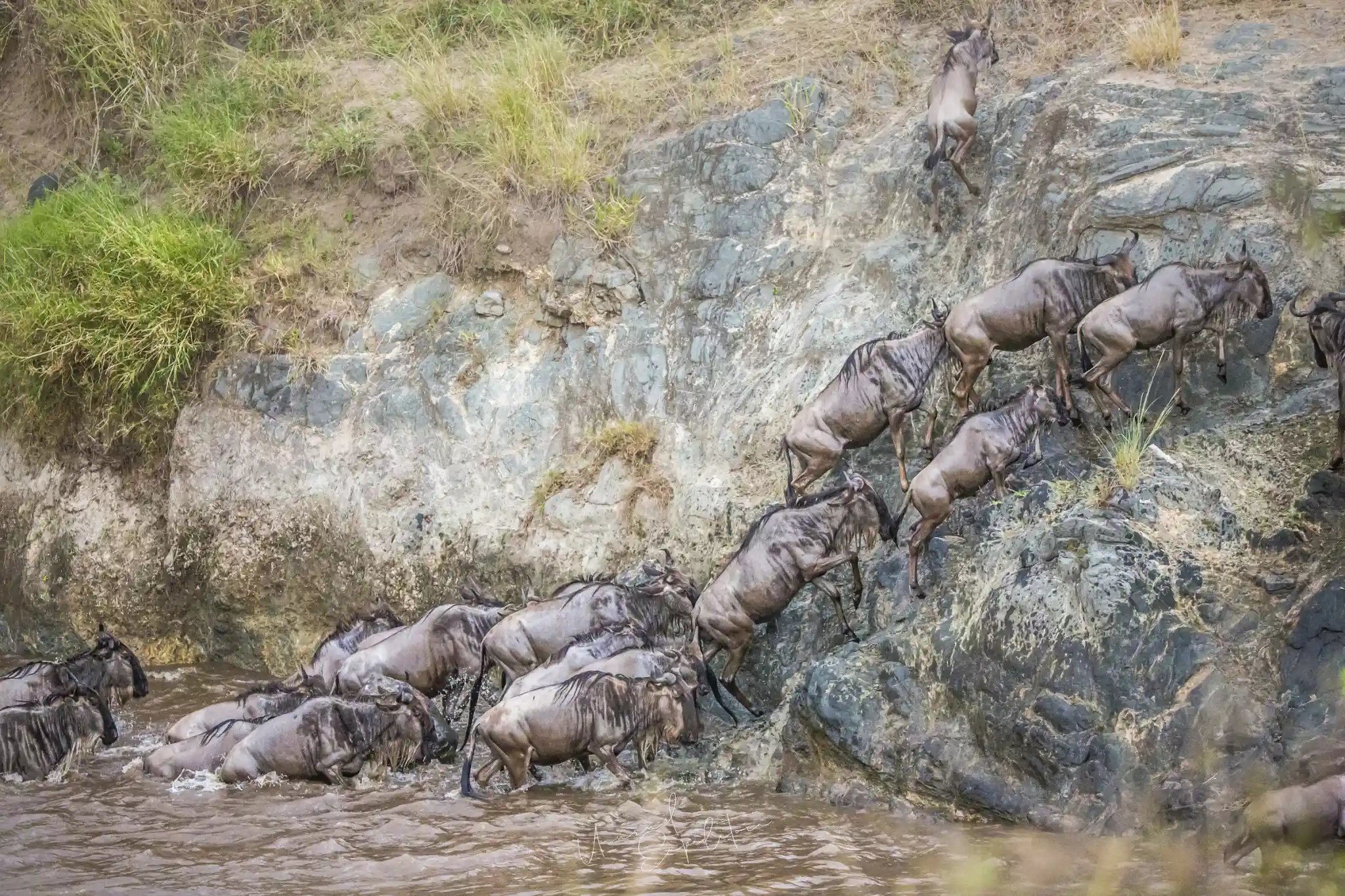
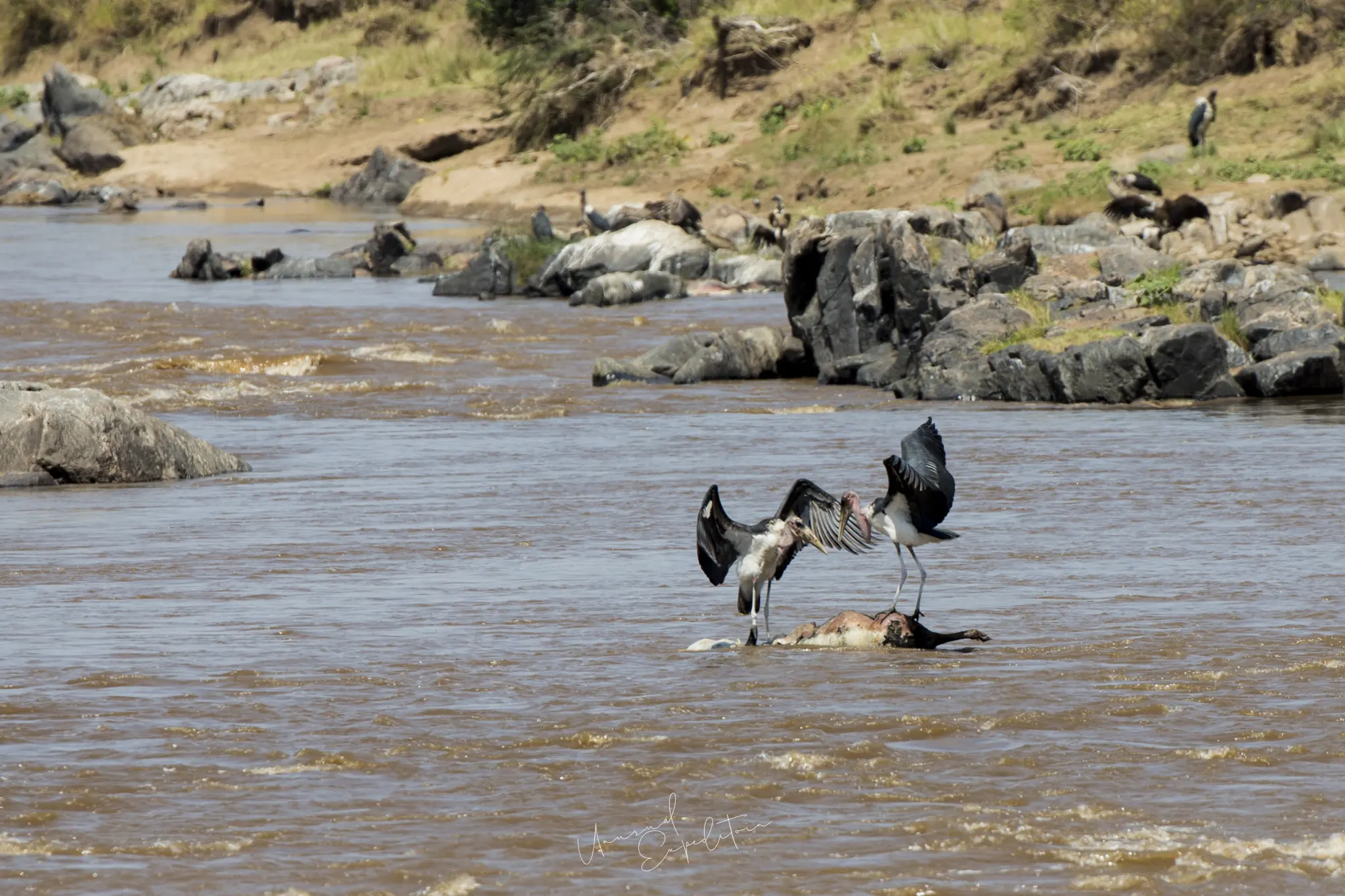
The Mara River crossing points are well known to guides, and most have names, often taken from nearby landmarks or lodges. Several of the busiest are on the stretch where the Mara Triangle meets the main reserve, and others lie downstream toward the Tanzanian border, where the river flows into the northern Serengeti. Points differ in the height and steepness of the bank, the width of the river and where vehicles can stand. A steep bank gives the classic leap; a rocky one gives scrambles like the one below; a sandy beach gives long lines of animals walking in. Your guide watches where the herds gather and listens to the radio, and the choice of which point to wait at is a judgement call that depends on years of experience.
"At the river you learn to be still. The herd can feel the vehicles. When everyone is quiet and the engines are off, the first one jumps, and you have to be ready, because the best seconds are the first."
Joseph Mak, tour leader, Unusual Expedition
Mara River crossing crocodile attack
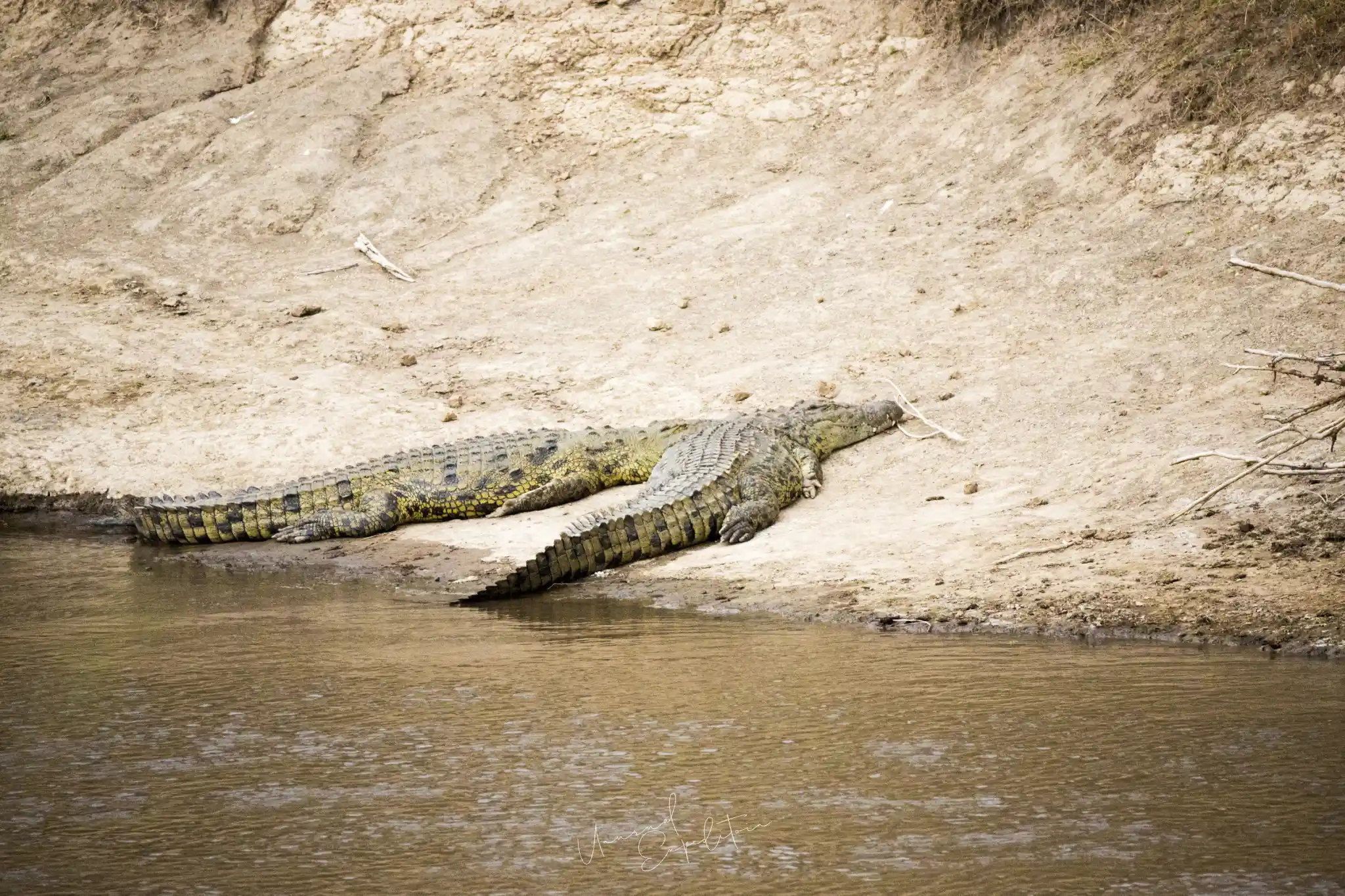
The Mara River crossing crocodile attack is the scene in every documentary, and it does happen. Large Nile crocodiles live in the Mara River and wait near the crossing points during the migration. Many crossings pass without a kill, and many animals die in other ways: crushed in the rush, drowned in the current, or trapped against the far bank. Hippos share the river, and they are dangerous to the herd too when it lands among them. Whether you photograph a kill is your choice; it is part of the crossing, and a respectful picture of it can tell the story better than a hundred frames of swimming. Vultures and storks clean up the carcasses downstream for days afterwards, another subject for the long lens.
How to photograph a Mara River crossing
Use two bodies if you have them. A 200-400mm or 100-400mm picks out single animals in the leap and faces in the water, and a 70-200mm or 24-70mm shows the whole line pouring down the bank. Shutter speed of at least 1/1000 second freezes spray and legs; drop to 1/30 with a panning motion for a sense of rush. Burst mode is essential. The dust in the air at a busy crossing can make the light soft and golden even at midday; expose for it and do not fight it. Shoot the build-up too: herds gathering on the bank tell the story before the jump.
| Moment | Lens | Settings | What to watch |
|---|---|---|---|
| Herd gathering above the bank | 70-200mm | Mid-range aperture, steady shutter | Leaders moving toward the water |
| The leap down the bank | 200-400mm | 1/1000s or faster, burst | The first animals to jump |
| Swimming the current | 200-400mm | 1/1000s, focus on the eyes | Faces, spray, crocodiles |
| The whole line, dust and banks | 24-70mm or 70-200mm | Expose for the bright dust | Shape of the line |
| Climbing out | 70-200mm | 1/500s or faster | Animals scrambling up rocks |
The leap and the climb out are the frames people remember; the swim fills the gap.
Crossing rules and etiquette
Vehicles are a real risk to the migration. The Mara Conservancy, which runs the Mara Triangle, warns that wildebeest have died in the hundreds when vehicles pushed them to cross at unsafe places, and rangers can fine or remove vehicles that break the rules. In the reserve and the Triangle you may only leave your vehicle at designated points, and at crossings rangers manage where cars stand. The good guides hold back from the bank, keep engines off and let the herd choose. It is better for the animals, and it is better for pictures too, because a calm herd crosses and a stressed herd turns back.
Mara River crossing in the Serengeti or the Mara
The same river is crossed in Tanzania's northern Serengeti, near Kogatende, and the scenes are similar. The Kenyan side has more vehicles at peak season and more lodges close by; the Tanzanian side is remoter. Which you choose depends on what else you want on the trip. Our sister guides cover the Serengeti, and for the animals that are not crossing, see Masai Mara animals.
Wait at the river with us
We run the Masai Mara as a private trip on request, and a private trip is the best way to photograph the crossings because you decide how long to wait. We arrange all logistics to your needs, and a photographer or photography coaching can be added at extra cost. Ask at least two months ahead for the migration season; last-minute can be arranged. See the Kenya photography tours page and our private tours.
Ask us about the Mara River crossings
Masai Mara photography tours
The next Masai Mara departure is announced on the Masai Mara photography tours page, with previous expeditions and all the planning guides.
Explore Masai Mara in depth
- Masai Mara Photography Tour: The Complete Guide to Photographing the MaraKenya
- Masai Mara Wildlife Photography: Techniques for the Plains and the RiverKenya
- Masai Mara National Reserve: What It Is, Where It Is and What It Looks LikeKenya
- Birds of Masai Mara: Photos and Names of the Birds You Will SeeKenya
- How to Get to Masai Mara, and Is It Worth ItKenya
- Masai Mara Animals: Big Cats, Elephants, Hippos and BirdsKenya
- Maasai Village Visit: Photographing the Maasai with RespectKenya
- Masai Mara Hot Air Balloon Safari: Photographing the Sunrise FlightKenya
- Best Time to Visit Masai Mara for the Great MigrationKenya
- Masai Mara Photos: What the Reserve Really Looks LikeKenya
Upcoming Photo Tours
- Egypt Photo Tour – EgyptEgypt 12 Dec 2026 To 20 Dec 2026
- Inner Mongolia Winter Owl Photo Tour – ChinaChina 01 Jan 2027 To 04 Jan 2027
- Inner Mongolia Winter Photo Tour – ChinaChina 05 Jan 2027 To 11 Jan 2027
- Mekong And Central Highland Vietnam Photo Tour - VietnamVietnam 16 Jan 2027 To 24 Jan 2027