
Masai Mara Photos: What the Reserve Really Looks Like
Masai Mara photos: plains and big skies, storms, giraffes on the horizon, aerials from the balloon, birds and sunset light.
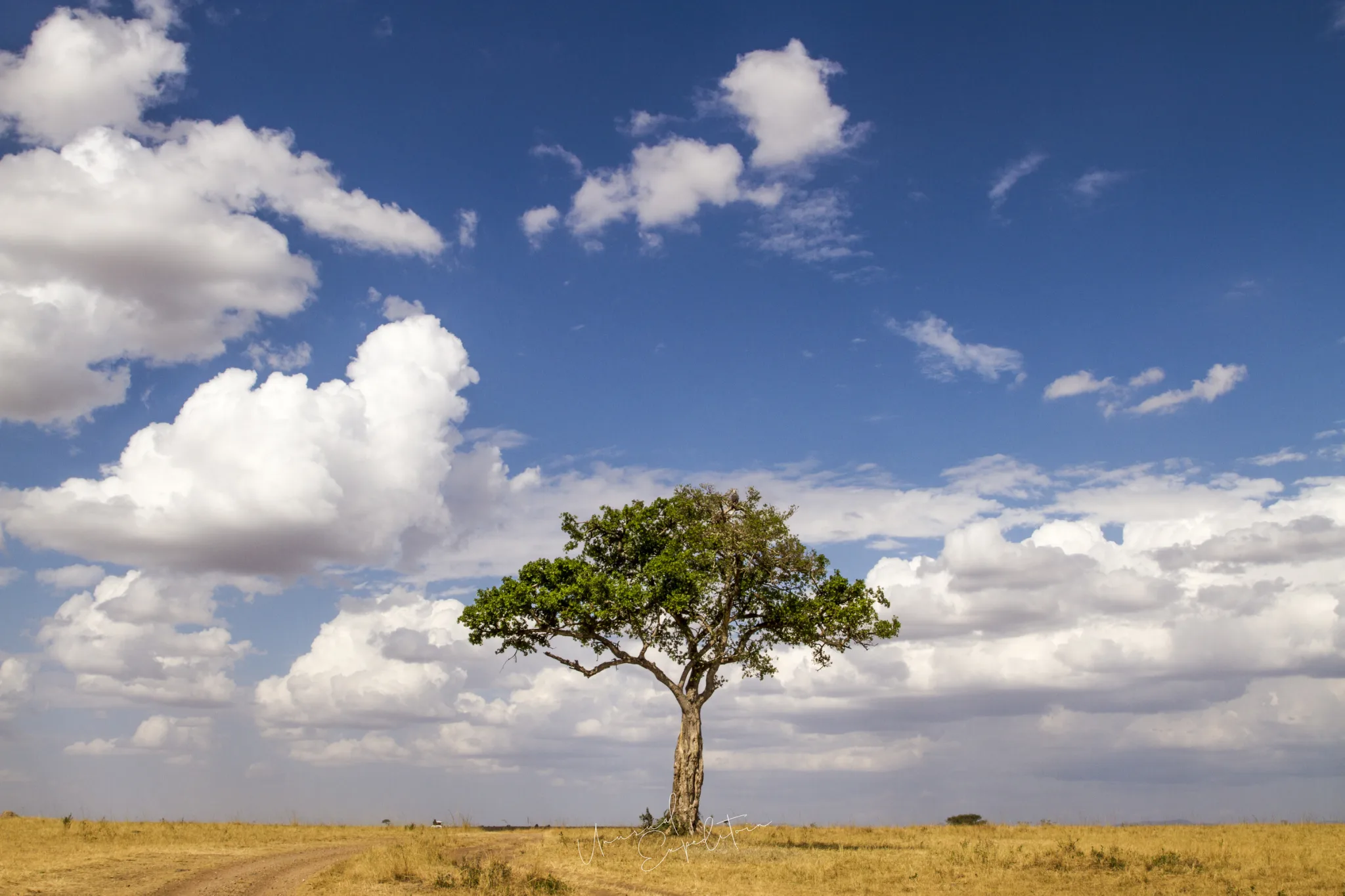
Masai Mara photos at their best show three things: a huge sky, gold grass that runs to the horizon, and animals small or large within it. The reserve is rolling savanna with scattered acacias, river forest and low hills, and the weather does as much as the wildlife: cumulus in the dry months, storm walls and rain curtains when the rains come. These are our own pictures from the Mara, grouped by what you will see, with notes on how each was made.
For the reserve as a whole, the seasons and how a trip works, read our Masai Mara photography tour guide. Every photograph here is our own, taken on our trip to the Mara; we hold the rights to them, and we know these plains first hand.
Masai Mara photos: the plains and the sky
The first thing people notice in the Masai Mara is the space. The plains of the Mara Triangle and the central reserve roll in long swells of grass, with an acacia here and there and the Oloololo escarpment as a dark line on the western horizon. In the dry season the grass bleaches to gold and the sky fills with cumulus by late morning, which is why so many Masai Mara photos are mostly sky. A lone tree is the classic subject: put it low in the frame, give the clouds two thirds of the picture, and use a 16-35mm or 24-70mm. The tree at the top of this guide was photographed under a full sky of cumulus, with the grass flat and the clouds doing the work.
Masai Mara photo: storms and rain
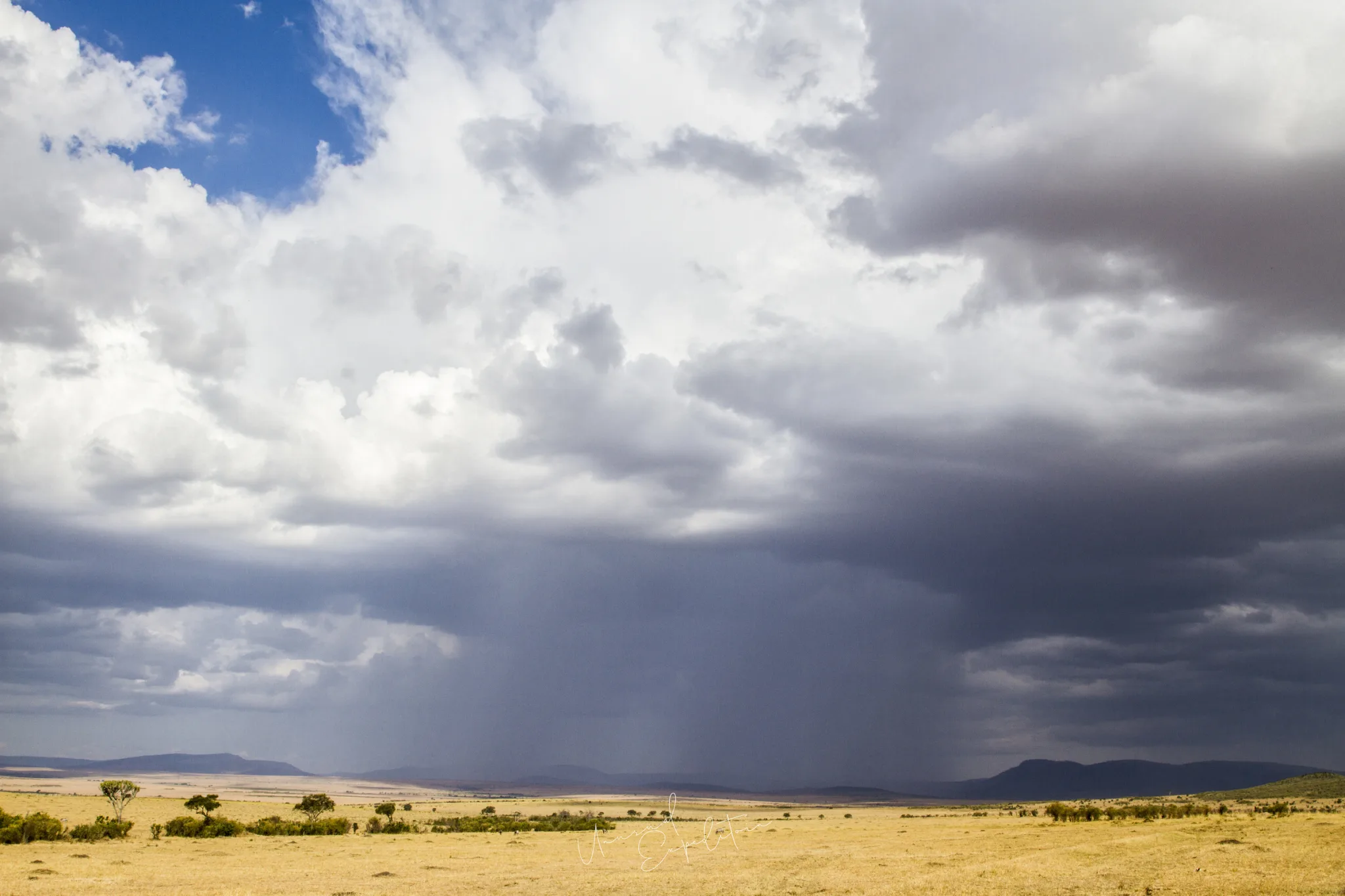
If you photograph in the Masai Mara around the rains, the storms will give you the strongest landscapes of the trip. Rain falls in visible curtains from single clouds, the plains stay lit in front, and the contrast between dark sky and bright grass is something the clear dry season cannot match. Look for a storm that has the sun behind you; that is when the grass glows against the black. A polariser deepens the sky but darkens it unevenly at wide angles, so take it off below 24mm. Storms move fast across the Mara, and your guide will want to be back on a good track before the rain arrives, so shoot quickly.
Masai Mara photo ideas: animals small in the frame
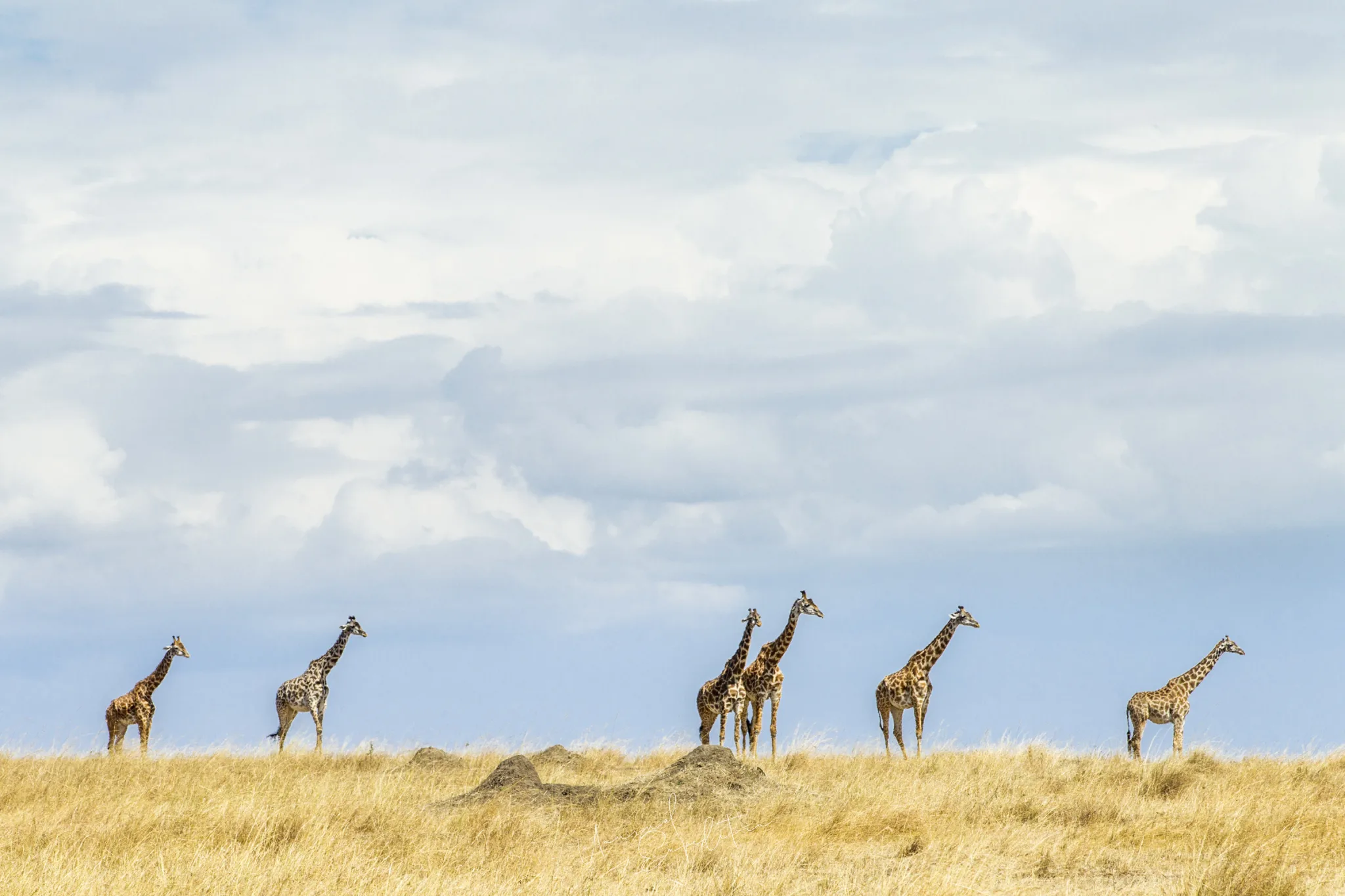
The habit in wildlife photography is to fill the frame. In the Masai Mara, try the opposite. A line of giraffes along the horizon, a single topi on a slope or a herd strung across a plain tell you more about the place than a close-up. Use a 70-200mm and keep the horizon level. These frames work best in the morning and late afternoon, when the animals throw shadows and the grass has texture. They also work in haze, when the background falls away to pale blue. Watch the edges: one wildebeest half out of the frame ruins the pattern. Our guide to Masai Mara animals covers the close-ups.
Masai Mara photos from the air
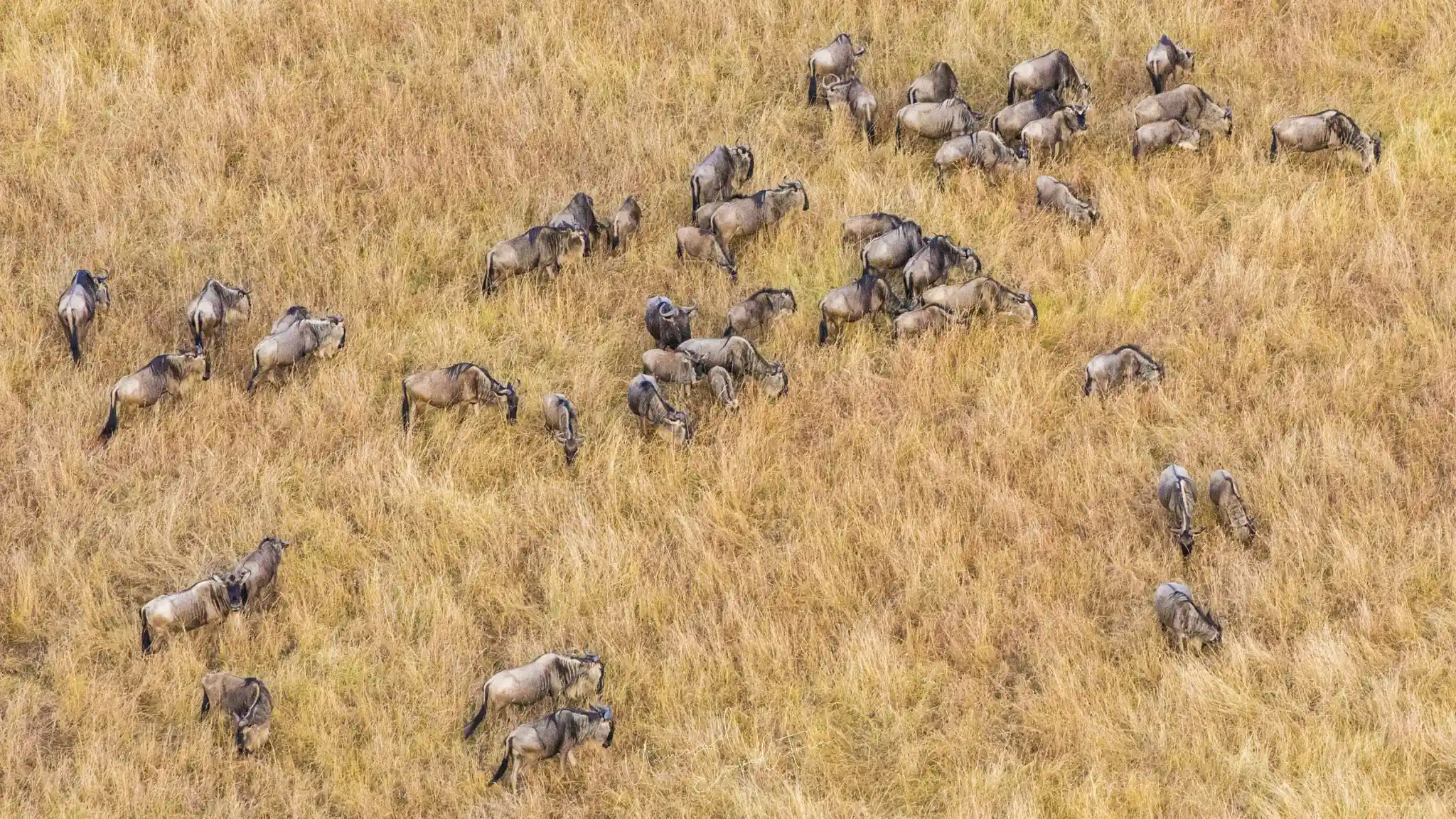
From a hot air balloon, the Masai Mara looks like a map. The herds become dots and lines, game trails cross the grass in fine threads, and zebra stripes read clearly from the basket. Aerial frames are only possible at dawn, because that is when the balloons fly, so the light is low and the shadows long, which helps. Shoot at a fast shutter speed because the basket moves, and use the 70-200mm for patterns and the 24-70mm for the wider view with the other balloons. We describe the whole flight in the Masai Mara hot air balloon safari guide.
"In the Mara the sky is half the picture. People come for lions and go home with a folder of clouds, and those are often the frames they print."
Joseph Mak, tour leader, Unusual Expedition
Birds in Masai Mara photos
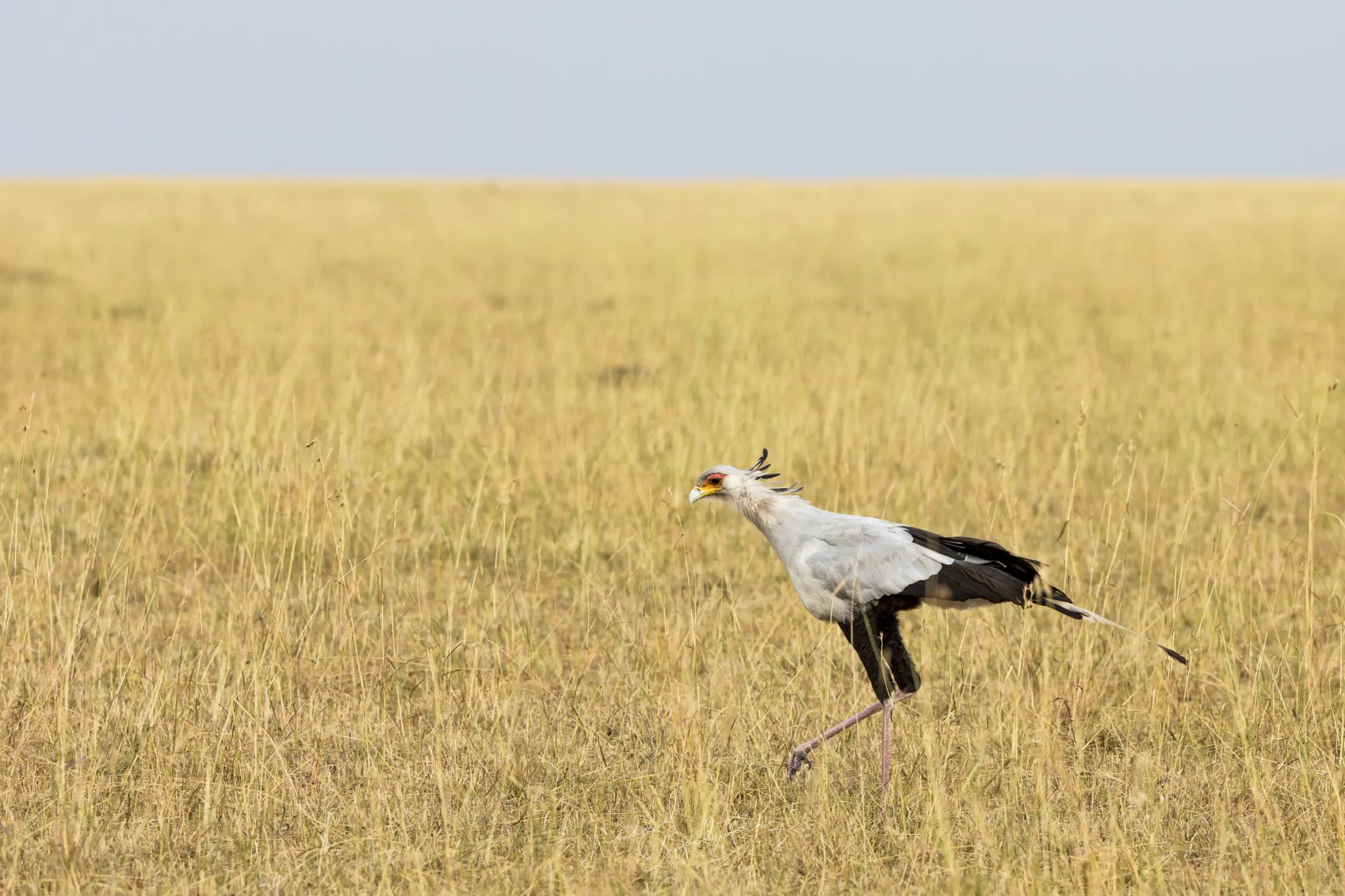
The Masai Mara has hundreds of bird species, and some make the best photographs of a slow afternoon. The secretary bird, which hunts snakes and insects on foot in the long grass, is a Mara favourite: long legs, a crest of quills and a purposeful stride. Kori bustards, ground hornbills, crowned cranes and lilac-breasted rollers are common. A bird walking through grass reads best from a low angle with the grass soft in front and behind, so ask the driver to stop with the engine off and shoot through the window. A 200-400mm and a fast shutter speed are the tools.
Masai Mara photos of the antelope
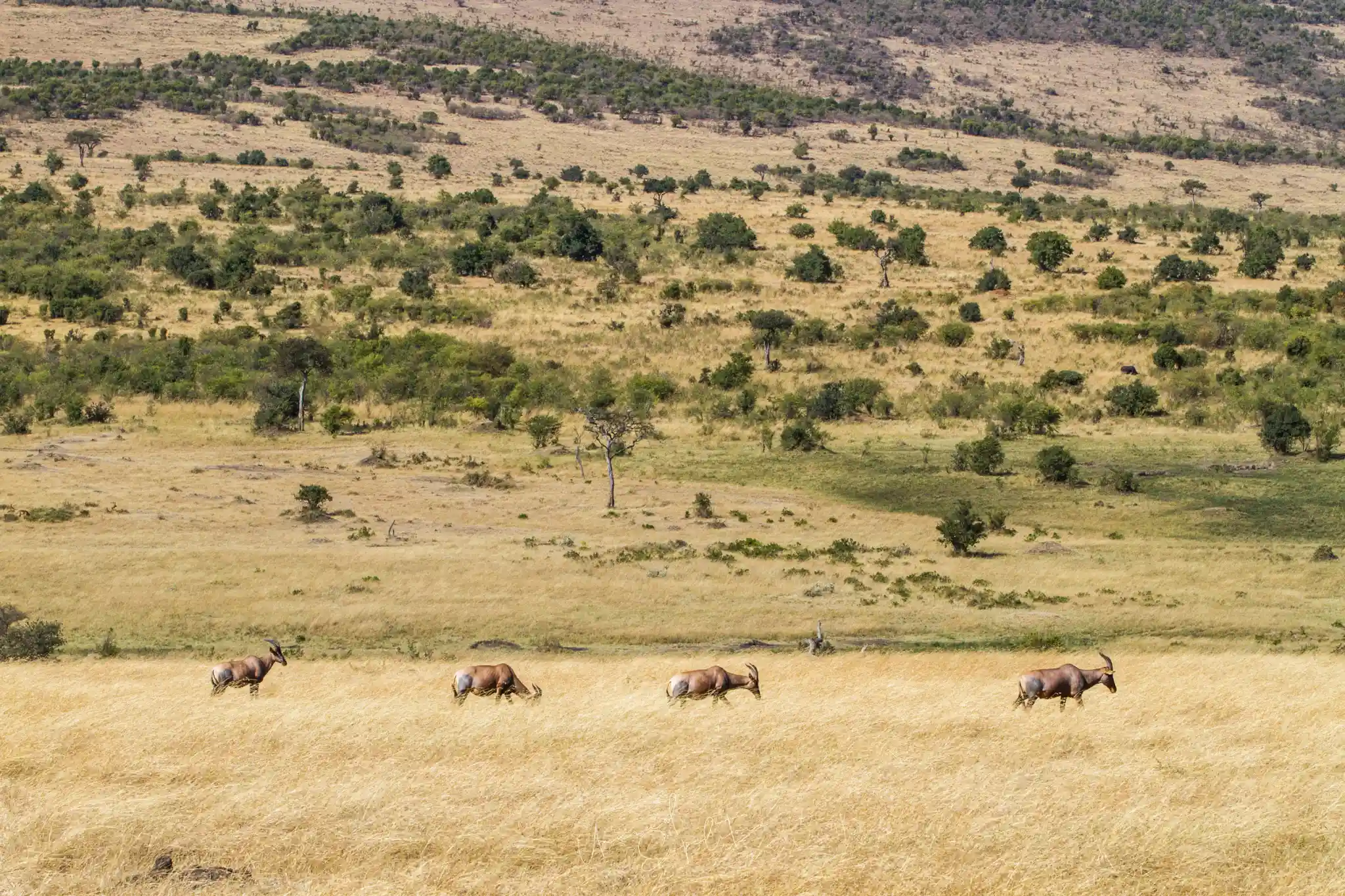
Topi, impala, Thomson's gazelle, eland and hartebeest share the plains of the Masai Mara with the wildebeest. Topi are the most photogenic: chestnut coats with dark patches on the legs, and a habit of standing on termite mounds as lookouts. They are good subjects for the bush-dotted slopes where the reserve rises toward the hills, a landscape quite different from the open grass. Herds of topi or impala in the middle distance, with green shrubs around them, give scale to a wide frame.
Masai Mara Kenya sunset and changing light
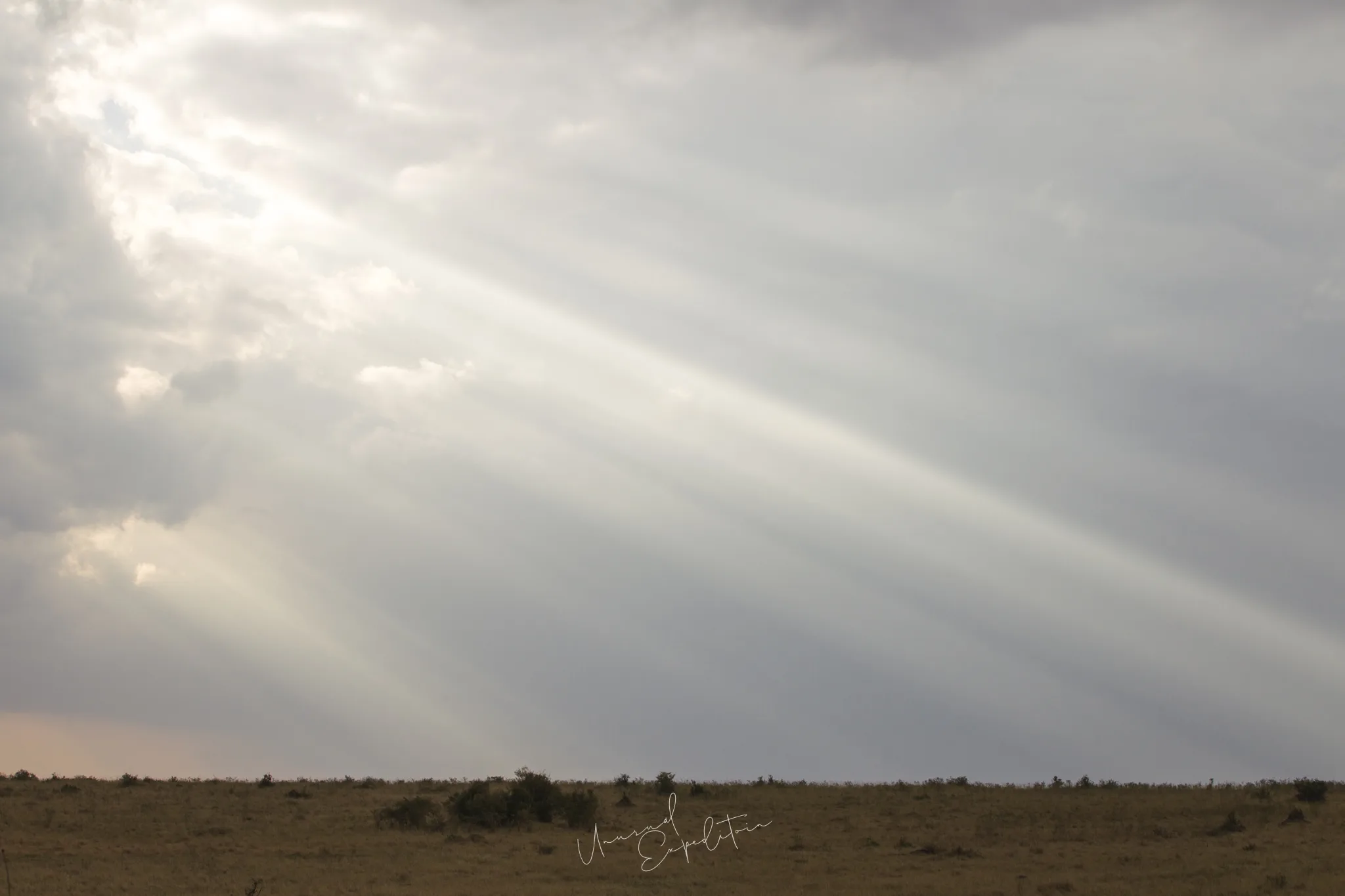
A Masai Mara Kenya sunset is fast. The sun drops quickly near the equator, and on a hazy dry-season evening it turns orange well before the horizon. The strongest light often comes just before, when the sun breaks through cloud and throws rays across the plain. Look for a subject to put under the rays, a tree or a herd, and expose for the bright sky so the land goes dark. Sunsets need you to be in place early; reserve rules require vehicles back at camp or out of the park by the evening deadline, so your guide will choose a spot near the route home. The best time to visit Masai Mara guide covers how the weather changes the light through the year.
See the Masai Mara with us
We run the Masai Mara as a private trip on request, at your pace and for the pictures you want, whether that is the plains, the cats or the sky. We arrange all logistics to your needs, and a photographer or photography coaching can be added at extra cost. Ask at least two months ahead; last-minute trips can be arranged. See the Kenya photography tours page and how our private tours work.
Ask us about photographing the Masai Mara
Masai Mara photography tours
The next Masai Mara departure is announced on the Masai Mara photography tours page, with previous expeditions and all the planning guides.
Explore Masai Mara in depth
- Masai Mara Photography Tour: The Complete Guide to Photographing the MaraKenya
- Masai Mara Wildlife Photography: Techniques for the Plains and the RiverKenya
- Masai Mara National Reserve: What It Is, Where It Is and What It Looks LikeKenya
- Birds of Masai Mara: Photos and Names of the Birds You Will SeeKenya
- How to Get to Masai Mara, and Is It Worth ItKenya
- Masai Mara Animals: Big Cats, Elephants, Hippos and BirdsKenya
- Maasai Village Visit: Photographing the Maasai with RespectKenya
- Masai Mara Hot Air Balloon Safari: Photographing the Sunrise FlightKenya
- Mara River Crossing: How to Photograph the Wildebeest at the RiverKenya
- Best Time to Visit Masai Mara for the Great MigrationKenya
Upcoming Photo Tours
- Egypt Photo Tour – EgyptEgypt 12 Dec 2026 To 20 Dec 2026
- Inner Mongolia Winter Owl Photo Tour – ChinaChina 01 Jan 2027 To 04 Jan 2027
- Inner Mongolia Winter Photo Tour – ChinaChina 05 Jan 2027 To 11 Jan 2027
- Mekong And Central Highland Vietnam Photo Tour - VietnamVietnam 16 Jan 2027 To 24 Jan 2027