
Masai Mara Wildlife Photography: Techniques for the Plains and the River
Masai Mara wildlife photography: panning herds, crossings, long grass, behaviour, light and the settings we start from.
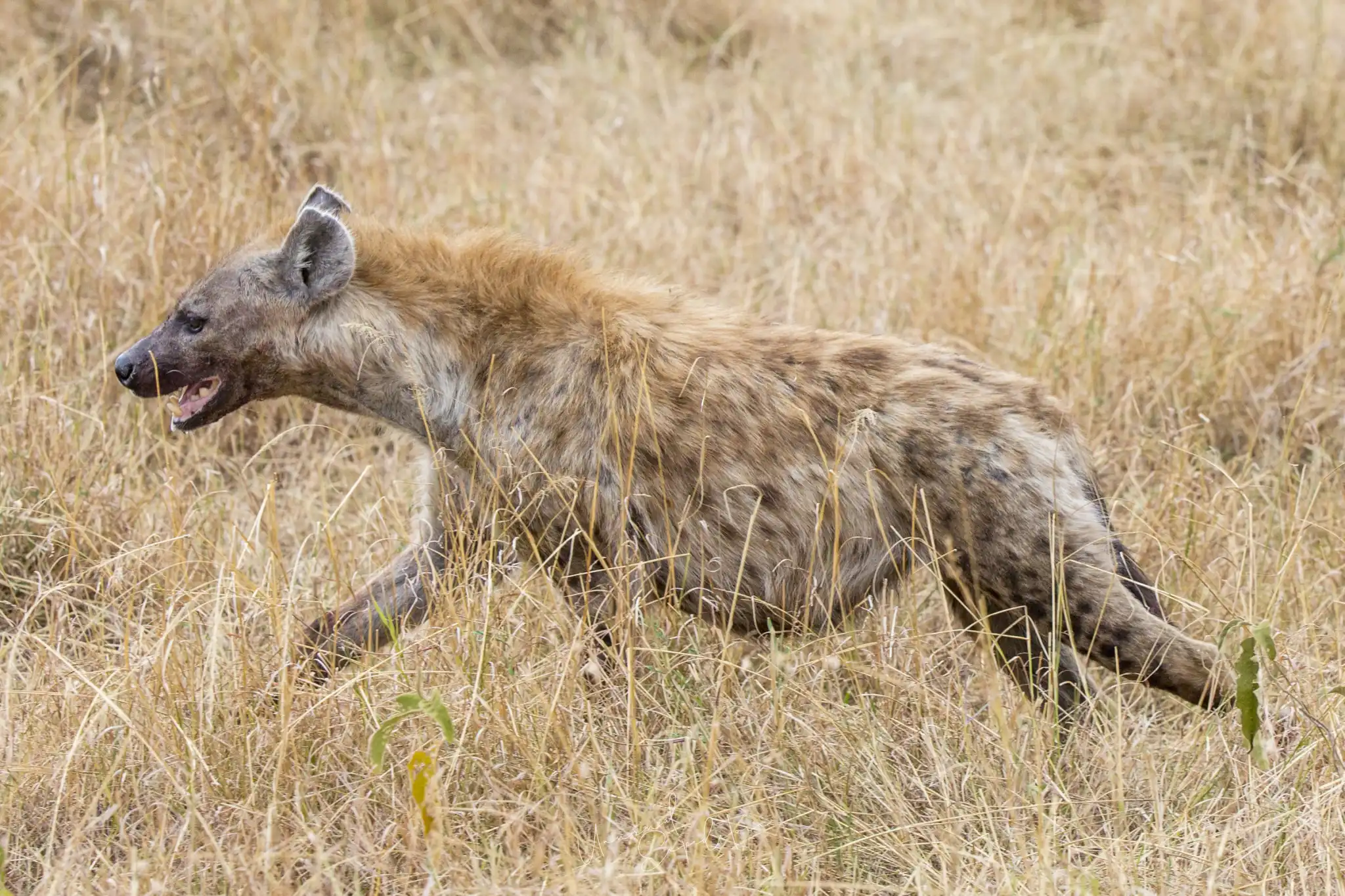
Masai Mara wildlife photography rewards technique more than luck: the animals are many and used to vehicles, so a strong picture depends on how you handle movement, long grass, light and behaviour. Pan with running herds at a slow shutter speed, get low to the animal's eye level, focus through the grass on the eye, turn the camera vertical for crossings, and leave room in the frame for an animal to move into. The edges of the day give the light; midday gives the river.
Our Masai Mara photography tour guide introduces the reserve and its subjects. This destination guide goes deeper into the techniques we use on the plains, one problem at a time.
Masai Mara wildlife photography: what makes the Mara different
Masai Mara wildlife photography happens almost entirely from a vehicle, on open plains, with animals that have grown up around safari traffic. That changes how you work. You rarely need to hide; you need to be ready, because a lion that has ignored vehicles all morning can stand and walk in a second. The grass is often long, which hides legs and throws autofocus off. The sky is huge and bright, which tricks exposure. And during the migration months the number of animals is so high that the challenge becomes choosing, not finding. The Mara Conservancy, which runs the Mara Triangle, asks visitors to stay in their vehicles and keep to the tracks except where rules allow, so every technique here is about making the most of the position the driver guide can give you.
Read behaviour before it happens
The strongest Masai Mara wildlife photos come from watching an animal long enough to guess what it will do next. A hyena that lifts its head and stares across the plain is about to move; vultures dropping out of the sky mean a carcass, and the hyenas will run to it. Lions yawn and stretch before they get up. Wildebeest that bunch at a riverbank and push forward are close to crossing. When you see the signal, set the shutter speed for movement, check the focus mode and frame with space ahead of the animal. A running hyena in long grass, mouth open and body stretched, is a better picture than a resting one, and you only get it by being ready before it starts.
Panning the herds
Panning turns the endless wildebeest of the Masai Mara into a picture of speed. Pick a small group running across the frame, not towards you, set a shutter speed between 1/15s and 1/60s, and swing the camera smoothly with the animals, firing as they pass and following through after. The grass and the trees behind blur into streaks while the heads stay sharp enough to read. Expect most frames in a burst to fail and a few to work. Use a 70-200mm or 100-400mm with image stabilisation set to panning mode if your lens has it, and rest your elbows on the window frame. Dry gold grass gives the best streaks; dust kicked up by the herd adds to it.
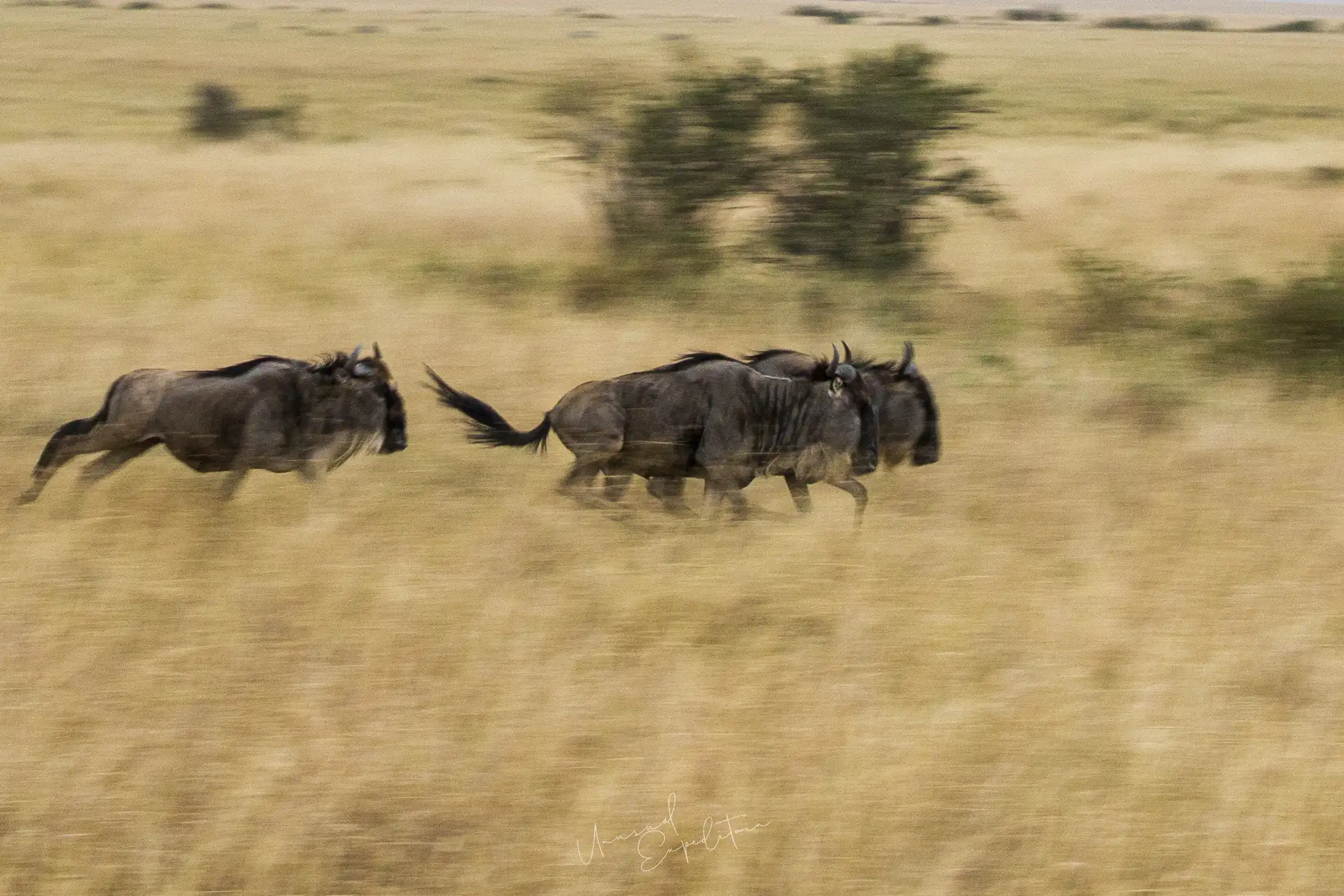
Turn the camera for a crossing
At the Mara River, the herds often come down a steep bank in a single winding line, and a horizontal frame cuts it in half. Turn the camera vertical and the whole column fits, from the top of the bank to the splash in the water. It is the shape of the event: a long, thin line of animals pouring into the river. Use a zoom so you can change the framing as the line thickens, and keep the shutter at 1/1000s or faster to freeze the jumps. When the crossing peaks, switch back to horizontal for the river full of swimming heads. Vehicles must wait back from the crossing points under the reserve rules, so a 100-400mm or 200-400mm is the working lens. The Mara River crossing guide explains how a crossing unfolds.
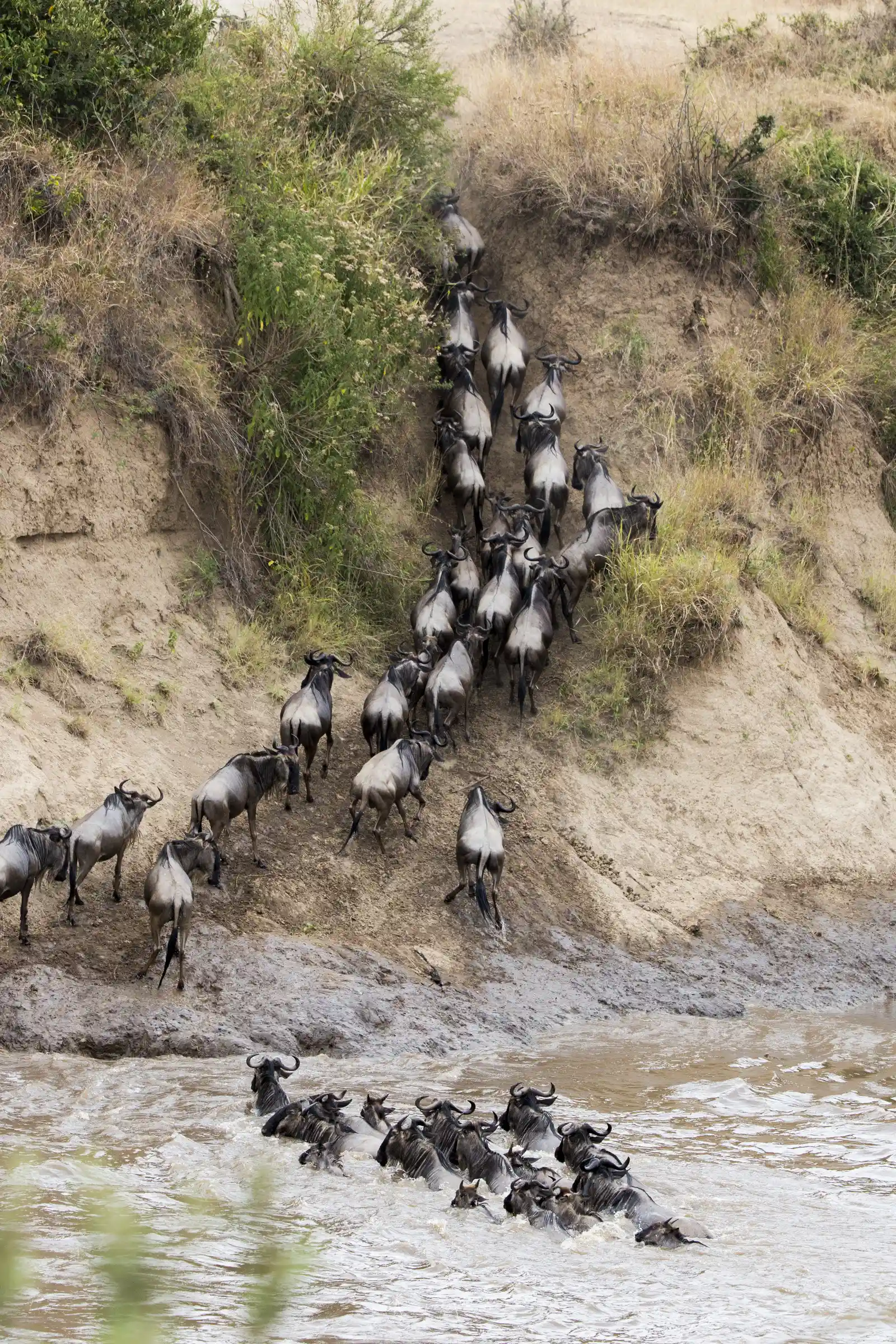
Long grass and the eye
Long grass is the Masai Mara's beauty and its biggest autofocus problem. A cheetah walking through the grass can disappear behind a few stems, and a camera set to a wide focus area will lock onto the grass in front. Switch to a single point or eye detection, place it on the head and track. A wide aperture, f/4 to f/5.6 on a long lens, softens the grass in front and behind so it frames the cat. Lower your position in the vehicle if you can: shooting from the roof hatch looks down on the animal and puts more grass between you, while shooting from a window brings the lens closer to eye level. Wait for the animal to step into a gap; it usually will.
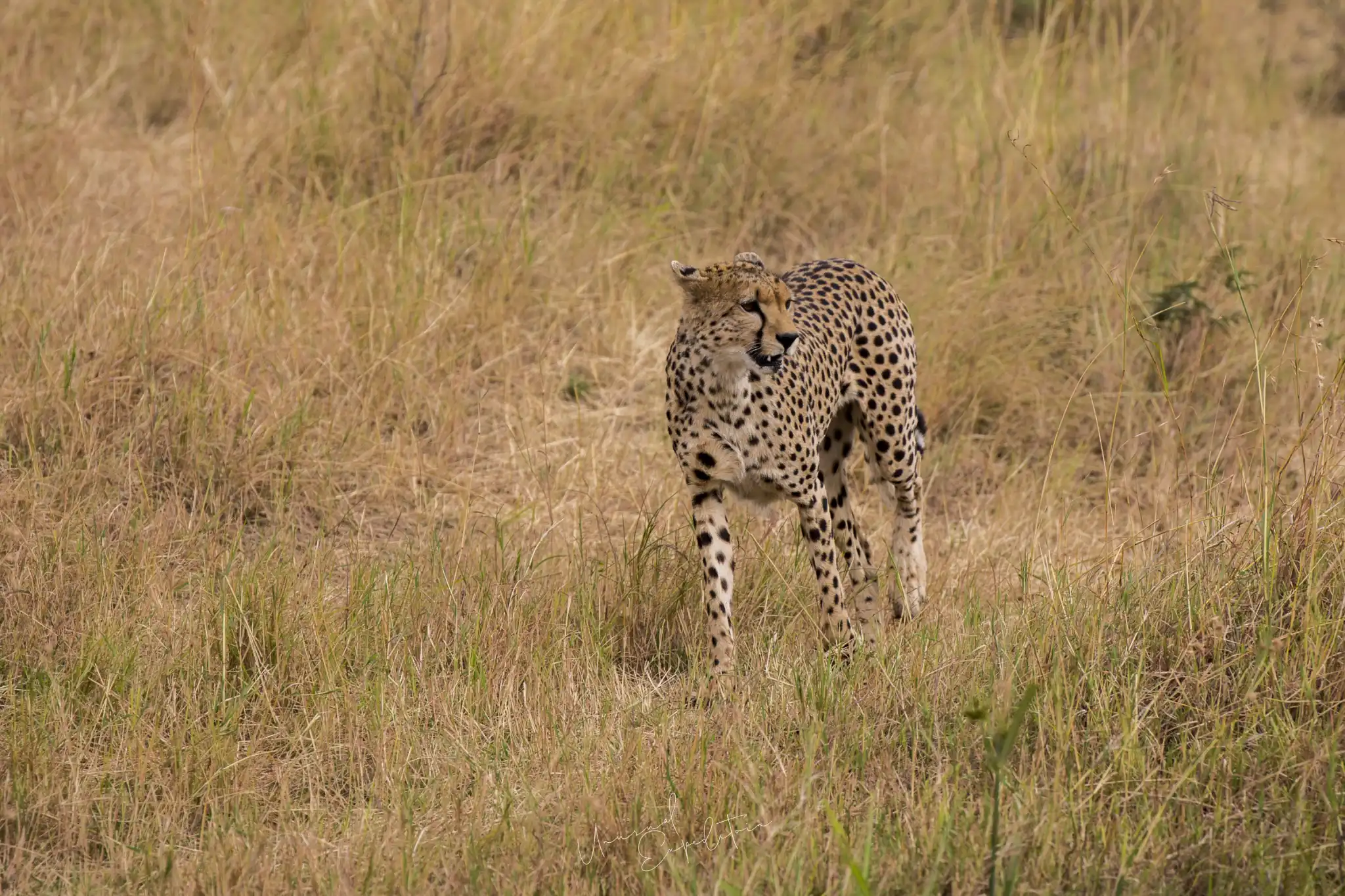
Give big animals room
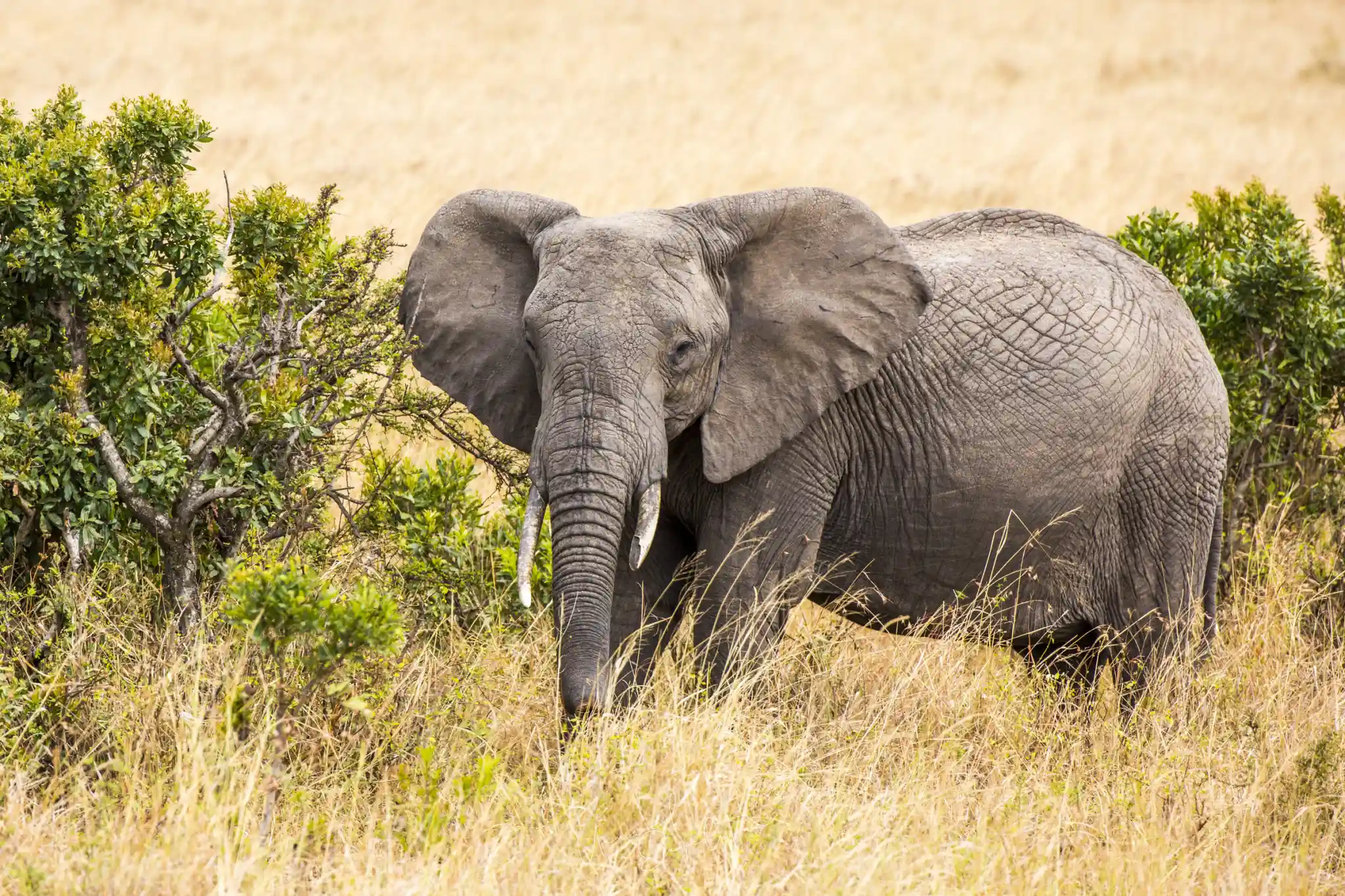
Elephants in the Masai Mara often stand in front of croton thickets and acacia bush, which gives a natural frame of green and gold. Do not fill the frame with the whole animal every time. Leave space on the side the elephant is facing, include the bush, and let the ears and trunk tell you when to fire: ears spread and trunk lifted look very different from a resting animal. A 70-200mm is often enough because elephants come close to vehicles. Watch for any sign of stress, ears flapping hard or a mock charge, and let the driver move off. The pictures are not worth upsetting the animal, and in the Mara the next elephant is rarely far away.
Masai Mara wildlife photos: settings by subject
These are the starting settings we use for Masai Mara wildlife photos. Adjust from them, and let the ISO float in auto.
| Subject | Shutter | Lens | Note |
|---|---|---|---|
| Resting cats | 1/500s | 100-400mm | Wait for a head lift or a yawn |
| Running hyena or cheetah | 1/2000s or faster | 100-400mm | Space in front, continuous focus |
| Panned herds | 1/15s to 1/60s | 70-200mm | Animals moving across the frame |
| River crossing | 1/1000s or faster | 100-400mm, 200-400mm | Vertical for the column |
| Elephants | 1/500s | 70-200mm | Include the bush |
| Landscape with animals | 1/250s | 24-70mm | Horizon low, sky big |
Two bodies, one long and one shorter, save more pictures than any single setting.
Light, heat and the seasons
Light on the Masai Mara is soft and warm for a short time after sunrise and before sunset, and hard from mid-morning to mid-afternoon. Plan the cats and the landscapes for the edges of the day and the river for the middle, when the herds often cross in full sun. Heat haze rises off the plains by late morning and softens anything far away, so get closer or shoot wider. Season changes the picture too: the Kenya Meteorological Department gives the long rains from March to May and the short rains from October to December, and the grass is green and short after them and gold and long in the dry months. For the full picture, read the best time to visit Masai Mara.
The Mara teaches you to stop chasing. Find one animal doing something, stay with it, and set the camera for what comes next. Many of my best frames from the Mara came after a long wait that looked like nothing was happening.
Joseph Mak, tour leader, Unusual Expedition
Learn the Mara with us
We run the Masai Mara as a private trip on request, at your pace, with as long at each sighting as you want. We arrange all logistics to your needs, and a photographer or photography coaching can be added at extra cost, which suits anyone who wants to work on these techniques in the field. Ask at least two months ahead; last-minute can be arranged. See the Kenya photography tours page and our private tours.
Ask us about wildlife photography in the Masai Mara
Masai Mara photography tours
The next Masai Mara departure is announced on the Masai Mara photography tours page, with previous expeditions and all the planning guides.
Explore Masai Mara in depth
- Masai Mara Photography Tour: The Complete Guide to Photographing the MaraKenya
- Masai Mara National Reserve: What It Is, Where It Is and What It Looks LikeKenya
- Birds of Masai Mara: Photos and Names of the Birds You Will SeeKenya
- How to Get to Masai Mara, and Is It Worth ItKenya
- Masai Mara Animals: Big Cats, Elephants, Hippos and BirdsKenya
- Maasai Village Visit: Photographing the Maasai with RespectKenya
- Masai Mara Hot Air Balloon Safari: Photographing the Sunrise FlightKenya
- Mara River Crossing: How to Photograph the Wildebeest at the RiverKenya
- Best Time to Visit Masai Mara for the Great MigrationKenya
- Masai Mara Photos: What the Reserve Really Looks LikeKenya
Upcoming Photo Tours
- Egypt Photo Tour – EgyptEgypt 12 Dec 2026 To 20 Dec 2026
- Inner Mongolia Winter Owl Photo Tour – ChinaChina 01 Jan 2027 To 04 Jan 2027
- Inner Mongolia Winter Photo Tour – ChinaChina 05 Jan 2027 To 11 Jan 2027
- Mekong And Central Highland Vietnam Photo Tour - VietnamVietnam 16 Jan 2027 To 24 Jan 2027