
Camera Gear for Antarctica Photography
Antarctica photography gear for a fly-cruise: two bodies, 24-70mm plus a long zoom, batteries, spray, condensation and the 25 kg limit.
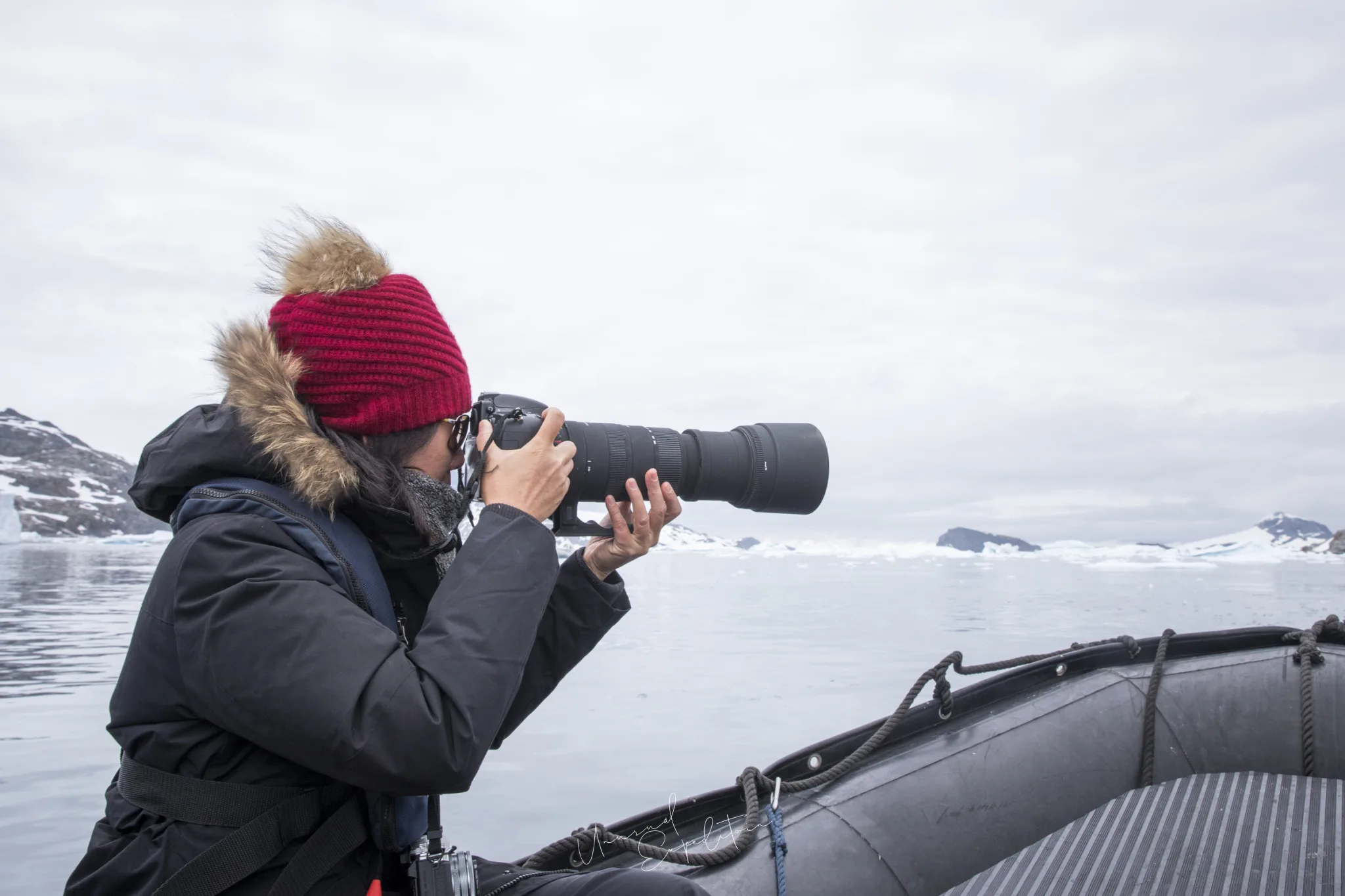
Camera gear for Antarctica photography comes down to two bodies, a 24-70mm, a long zoom of 70-200mm or 100-400mm, more batteries than feels reasonable, and a plan for salt spray and condensation. On a fly-cruise the 25 kg flight allowance, hand luggage included, decides everything else. This kit list is built for the Antarctic Peninsula in March and sits alongside our complete guide to an Antarctica photography tour.
Which lenses to bring to Antarctica
For Antarctica photography gear, two zooms cover almost every frame. The 24-70mm is the deck and landing lens: icebergs with the ship for scale, glacier fronts, a gentoo colony with the bay behind it, the group walking up a snow slope. The long zoom does the wildlife. A 70-200mm is light and fast and handles penguins at the five metre minimum distance well; a 100-400mm gives you the whale blow across the Gerlache Strait and the leopard seal on a floe the Zodiac driver will not approach. If you own both long lenses, take the 100-400mm and accept the weight. A 16-35mm is a luxury for Zodiac work beside a tall berg. Primes stay at home.
Do you need two camera bodies?
Yes, if the weight allows. A Zodiac is wet, moving and crowded, and a lens change there is how sensors meet salt water. I carry the 24-70mm on one body and the long zoom on the other, both on short straps, and I pick the body, not the lens, when the subject appears. On landings the same pair means I can go from a wide frame of the colony to a tight portrait of a moulting chinstrap without kneeling in guano to swap glass. If a second full body is too heavy, a small mirrorless body with the standard zoom is a fair compromise. What does not work is one body and a bag of lenses.
How the 25 kg flight limit shapes the kit
Antarctica21 sets a 25 kg allowance per person on the charter flight between Punta Arenas and King George Island, and that figure includes hand luggage. Bags are weighed in Punta Arenas. The flight is on a BAe 146 or Avro RJ, a four-engine jet built for short gravel strips, and the limit is a real one. Expedition boots are fitted and supplied, which saves you the heaviest item on a normal cold-weather list. Everything else competes with the camera bag. In practice this means two bodies, two zooms, a compact tripod and the accessories below, with clothing packed by layering plan. Our article on what to pack for an Antarctica cruise works through the clothing side of the same 25 kg.
Antarctica photography gear checklist
| Item | Why it earns its place in Antarctica |
|---|---|
| Two camera bodies | No lens changes in a wet Zodiac; one wide, one long, always ready |
| Standard zoom, 24-70mm | Deck, landings, icebergs with the ship for scale, colonies in context |
| Long zoom, 70-200mm or 100-400mm | Penguins at five metres, seals on floes, whales from the Zodiac and the rail |
| Wide zoom, 16-35mm (optional) | Tall bergs from water level, station interiors if a visit is allowed |
| Four or more batteries per body | Cold cuts capacity hard; a warm spare in an inside pocket is the fix |
| Zip bags large enough for a body with lens | Seal the camera before going from cold deck to warm cabin |
| Dry bag and rain cover | Spray in the Zodiac, snow showers on landings |
| Four or more microfibre cloths | Salt spray dries to a film that one cloth will only smear |
| Compact tripod | Long March evenings on deck and at anchor; not used in the Zodiac |
| Circular polariser | Cuts glare on wet ice and shows the blue below the waterline |
| Liner gloves under shell mitts | Dial control at around freezing with wind chill well below |
| Cards for the whole trip plus a backup drive | Bursts at 1/2000 s fill cards; there is no shop to buy more |
| Binoculars, 8x or 10x | Find the whale or the seal before you raise the lens |
Everything on this table fits a single carry-on camera bag and leaves room under 25 kg for a week of layered clothing.
Salt spray and sealing the camera
Zodiac cruising is where Antarctica photography gear gets hurt. Spray is constant, it is salt, and it dries on the front element in minutes. Weather sealing helps but is not a licence to be careless. Keep a cloth in an outside pocket where you can reach it with a wet glove, and change cloths once one is damp, because a salty cloth spreads the problem. A rain cover over the camera between frames saves most of the trouble; a dry bag in the Zodiac holds the second body until it is needed. On landings the enemy is snow, which melts on a warm camera and runs into dials. Shake it off before it melts and keep the lens hood on. Under IAATO biosecurity rules the bag itself is vacuumed and checked before the first landing, so pack one that empties easily.
Condensation: from the cold deck to the warm cabin
The quietest way to lose a day of shooting is to walk from a deck at minus three into a cabin at twenty with the camera round your neck. Moisture condenses on every cold surface, inside the lens as well as on the front. The fix is a zip bag big enough to hold the body with the lens attached. Seal the camera in the bag while you are still outside, bring it in, and leave it closed until it has reached room temperature. The condensation forms on the outside of the bag instead. The same applies after a Zodiac cruise and after every landing. Take the cards out before sealing if you want to download while the camera warms. I keep two bags per body, because they tear.
"On my December 2018 voyage I watched someone change lenses in the Zodiac off Neko Harbour. One wave later there was salt on the sensor and that camera was finished for the trip. Since then I carry two bodies and I do not open either one until I am back in the cabin and the bag has warmed up."
Joseph Mak, tour leader, Unusual Expedition
Batteries and cards in the cold
Temperatures on the Antarctic Peninsula in March sit around freezing, roughly minus 5 to plus 3 degrees, with wind chill much lower on a moving ship. Lithium batteries lose capacity in the cold and recover when warmed, so carry four or more per body, keep the spares in an inside pocket against your body, and rotate. A battery that shows empty on deck will often show half full after twenty minutes in a warm pocket. Charge everything overnight; a small multi-way charger saves fighting over sockets. Memory cards are less affected by cold but you will shoot more than you expect, especially bursts at 1/2000 s for penguins leaping from the water. Bring cards for the whole trip and a drive to back up each evening. There is nowhere south of Punta Arenas to buy either.
Tripod, filters and the things people ask about
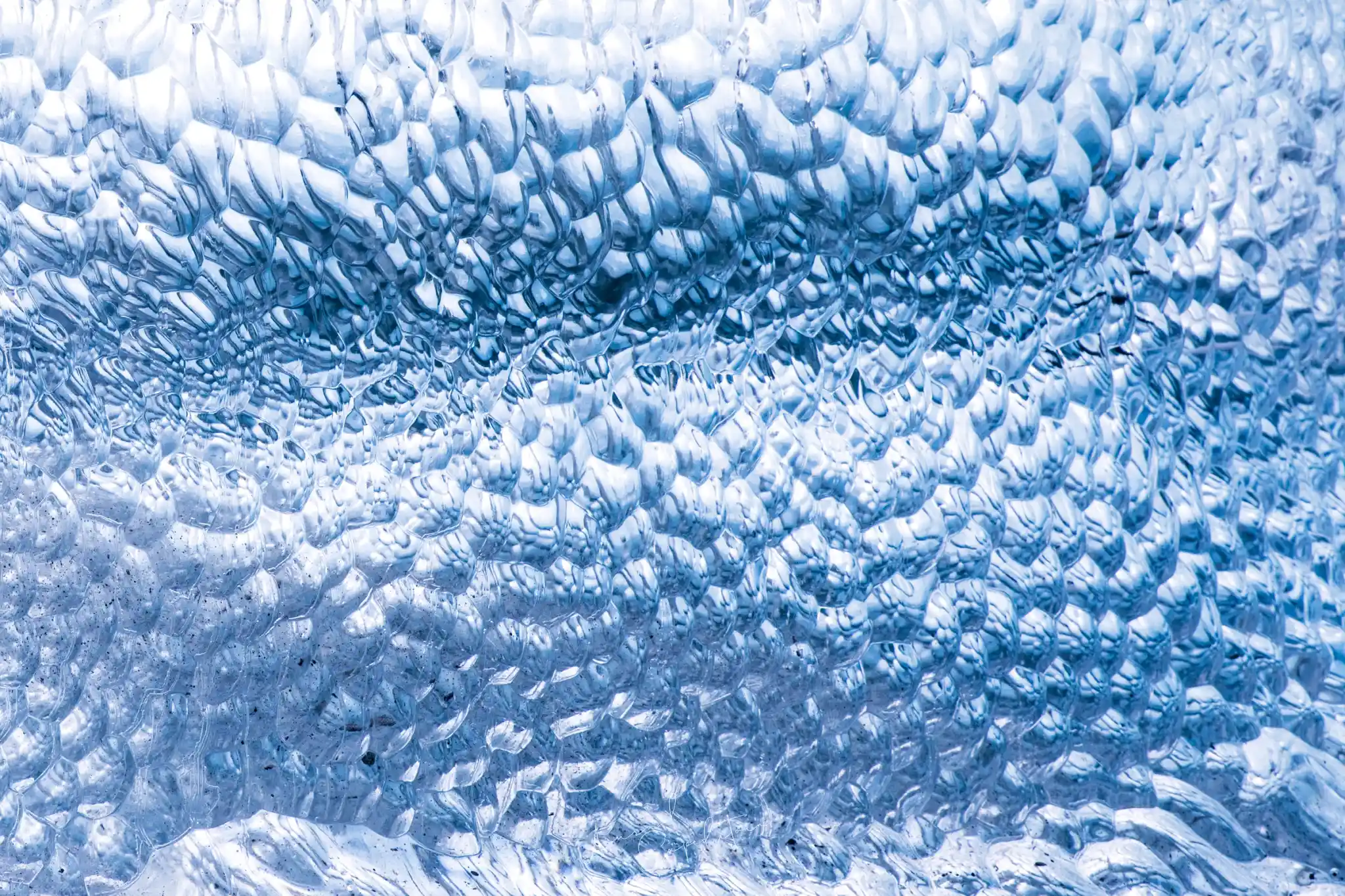
A compact tripod is worth its weight for one reason: March has real sunsets and long twilights, which my four midsummer voyages did not have, and a stable camera on deck at anchor or on a landing turns those evenings into pictures. It is never used in a Zodiac. A circular polariser is the one filter that matters; it cuts the glare off wet ice and shows the blue beneath the waterline of a berg. Our guide to Antarctica photography tips for snow and ice exposure covers settings, which is where most of the gear questions actually resolve. A phone in a waterproof pouch is a fine third camera for video from the Zodiac.
Drones in Antarctica: what the rules allow
No. IAATO, the body that has run Antarctic tourism under the Antarctic Treaty system since 1991, does not permit recreational drones in the coastal wildlife areas where visitors land and cruise, and operators enforce it on board. The reason is the birds, which react to anything overhead as they would to a skua. Leave the drone at home and put the weight into a second battery charger. The pictures you want from above are better taken from the deck of the ship at the top of a bay, with a 24-70mm, as the Zodiacs fan out below.
Bring the kit and we will put it to work
Gear is the easy part; knowing where to point it on a given morning is the rest. Our Antarctica photography tour works the South Shetlands and the Antarctic Peninsula from a small expedition ship in March. Send us your kit list before you book and we will tell you what to leave behind, and what to add.
Join the Antarctica photography tour
Antarctica Express Air-Cruise 2028 - Antarctica departs 10 Mar 2028 To 16 Mar 2028. Small group, photography first. All Antarctica photography tours.
Explore Antarctica in depth
- The Complete Guide to an Antarctica Photography TourAntarctica
- King George Island: Weather by Month, Daylight Hours and PenguinsAntarctica
- Sunset in Antarctica: Does the Sun Set, and What the Light DoesAntarctica
- Antarctica Photos: What It Really Looks Like from an Expedition ShipAntarctica
- What to Pack for an Antarctica Cruise (and the 25 kg Rule)Antarctica
- Photographing the South Shetland IslandsAntarctica
- King George Island, Antarctica: The Airstrip, the Bases and the ChurchAntarctica
- Is Antarctica Worth Visiting? A Photographer's ViewAntarctica
- Crossing the Drake Passage: What to ExpectAntarctica
- Cape Horn and the Beagle Channel: Photographing the End of the WorldAntarctica
- The Best Time to Visit Antarctica for PhotographyAntarctica
- Photographing Whales in AntarcticaAntarctica
Upcoming Photo Tours
- Egypt Photo Tour – EgyptEgypt 12 Dec 2026 To 20 Dec 2026
- Inner Mongolia Winter Owl Photo Tour – ChinaChina 01 Jan 2027 To 04 Jan 2027
- Inner Mongolia Winter Photo Tour – ChinaChina 05 Jan 2027 To 11 Jan 2027
- Mekong And Central Highland Vietnam Photo Tour - VietnamVietnam 16 Jan 2027 To 24 Jan 2027