
King George Island: Weather by Month, Daylight Hours and Penguins
King George Island weather by month in a table, daylight hours through the season, how to get there by air, and which penguins breed there.
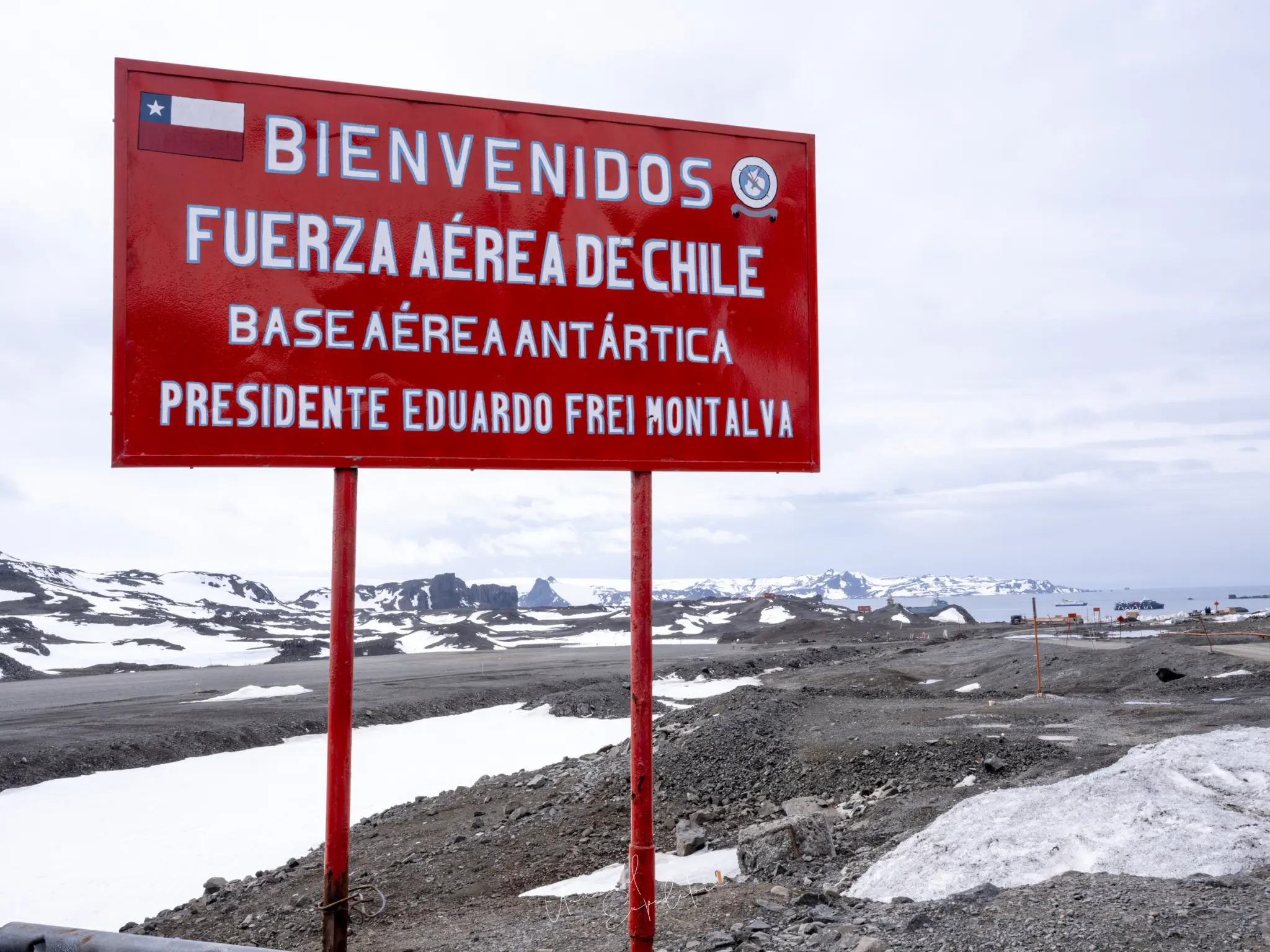
King George Island weather by month follows one rule: it hovers around freezing all summer, it is cloudy far more often than clear, and the wind decides how cold it feels. Mean temperatures at the island's stations sit a little below zero in November, a degree or two above zero in January and February, and back around zero in March, with snow or sleet possible in any month. Daylight runs from about eighteen hours in November to about twenty in December and twelve to thirteen in March.
King George Island is where fly-cruise guests land in Antarctica, so its weather matters twice: once for the flight, which needs visibility to land, and once for the first hours ashore among the research stations. The complete guide to an Antarctica photography tour places the island in the whole route; the King George Island article covers the airstrip, the bases and Trinity Church. This page is the practical layer under both: the weather month by month, the daylight hours, which penguins live on the island, and how to get there.
Where King George Island is
King George Island is the largest of the South Shetland Islands, at about 62 degrees south, roughly 120 kilometres north of the Antarctic Peninsula across the Bransfield Strait. It lies inside the Antarctic Treaty area, so no country owns it, and it holds the densest cluster of research stations on the continent: Chile, Russia, China, Uruguay, Argentina, Brazil, Poland, South Korea and Peru among them, most of them on or near the Fildes Peninsula at the island's south-western end, where the gravel airstrip is. Being north of the Antarctic Circle, the island has a sunrise and a sunset on every day of the year, however short the night in December.
King George Island weather by month
These figures are the long-run averages published for the Chilean and Russian stations on the Fildes Peninsula, rounded. They describe the coast at sea level; the ice cap that covers most of the island is colder and windier. The season column is what the month means for a visitor.
| Month | Mean temperature | Typical sky | Daylight | Season notes |
|---|---|---|---|---|
| October | About minus 3 to minus 2 degrees | Overcast, snow | About 15 to 16 hours | Season opening; sea ice may still block bays |
| November | About minus 2 to minus 1 degrees | Overcast, snow showers | About 17 to 19 hours | Clean snow, penguins courting and laying |
| December | About 0 to plus 1 degrees | Overcast more often than not, some clear days | About 20 hours, no real night | Chicks hatching, peak ship traffic |
| January | About plus 1 to plus 2 degrees | Overcast, rain or sleet possible | About 19 hours | Warmest month, chicks growing, muddy colonies |
| February | About plus 1 to plus 2 degrees | Overcast, fog common | About 15 to 16 hours | Chicks fledging, whales numerous, sunsets return |
| March | About 0 to plus 1 degrees | Overcast, first snow of autumn | About 12 to 13 hours | Our departure: real sunsets, moulting adults, fewer ships |
| April | About minus 2 to minus 1 degrees | Snow, strengthening wind | About 10 hours | Season closed, ships gone |
The spread between the warmest and coldest summer months is only three or four degrees, so the month changes the light and the wildlife far more than it changes the temperature.
King George Island weather in December
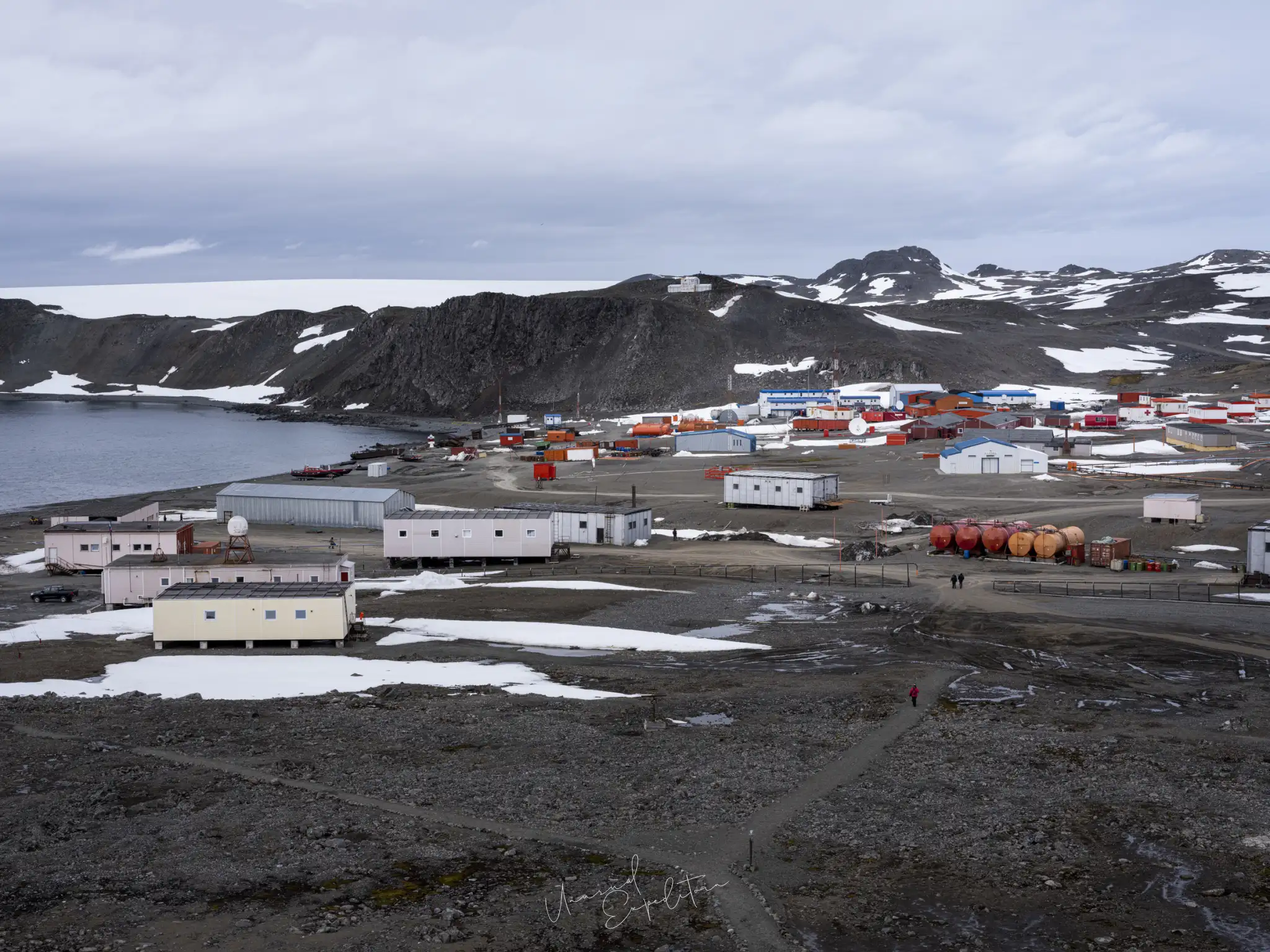
December on King George Island is the first month that averages above freezing, with daily highs a few degrees above zero and the sun above the horizon for twenty hours. It is also the busiest month for flights and ships. Snow still covers most of the low ground early in the month and retreats to patches by the end of it, exposing the black volcanic gravel that the stations are built on. Cloud is the normal sky; a clear December day on the Fildes Peninsula is memorable. My December visits have been grey, windy and a degree or two above zero, with the light flat enough that the orange and red station buildings were the only colour in the frame.
King George Island weather in November and March
November and March bracket the season and feel colder than December despite similar thermometer readings, because the wind is stronger and the sun lower. November is the cleaner month: snow down to the beach, penguins on fresh nests, icebergs at their largest, and about eighteen hours of daylight. March is the month we sail: temperatures around zero, the first autumn snow showers, a shorter day of twelve to thirteen hours with a real sunset in mid evening, penguin colonies full of fledglings and moulting adults, and far fewer ships. March also carries a slightly higher chance that early sea ice or a storm delays the flight, which is why the operator builds a weather margin into the programme.
King George Island daylight hours
At 62 degrees south the day changes fast through the season. In early November the sun is up about seventeen hours; by the December solstice about twenty, with the hours between sunset and sunrise light enough to read on deck; by mid February about fifteen; and by the March equinox twelve, with a full night of darkness that returns the stars and, on a rare clear night, a chance of the aurora australis. There is no midnight sun on King George Island in the strict sense, because the island is north of the Antarctic Circle, but in December the difference is academic. The light is covered in more detail in sunset in Antarctica: does the sun set.
How to get to King George Island
There are two ways to reach King George Island as a visitor. The first is by ship from Ushuaia or Punta Arenas across the Drake Passage, which takes 36 to 48 hours each way. The second is by air: a charter flight of about two hours from Punta Arenas, Chile, to the gravel airstrip beside Chile's Presidente Frei base on the Fildes Peninsula, which is how the Antarctica21 fly-cruises we sell begin. The aircraft are four-engine jets suited to a gravel runway, there is no instrument landing, and the pilots need to see the strip, so flights move earlier or later when the island is fogged in. Operators' published statistics put roughly four in five flights on the scheduled day and most of the rest within a day. Baggage is limited to 25 kg per person including hand luggage. The fly-cruise explainer covers the contingency plan if the weather closes the strip.
King George Island penguins
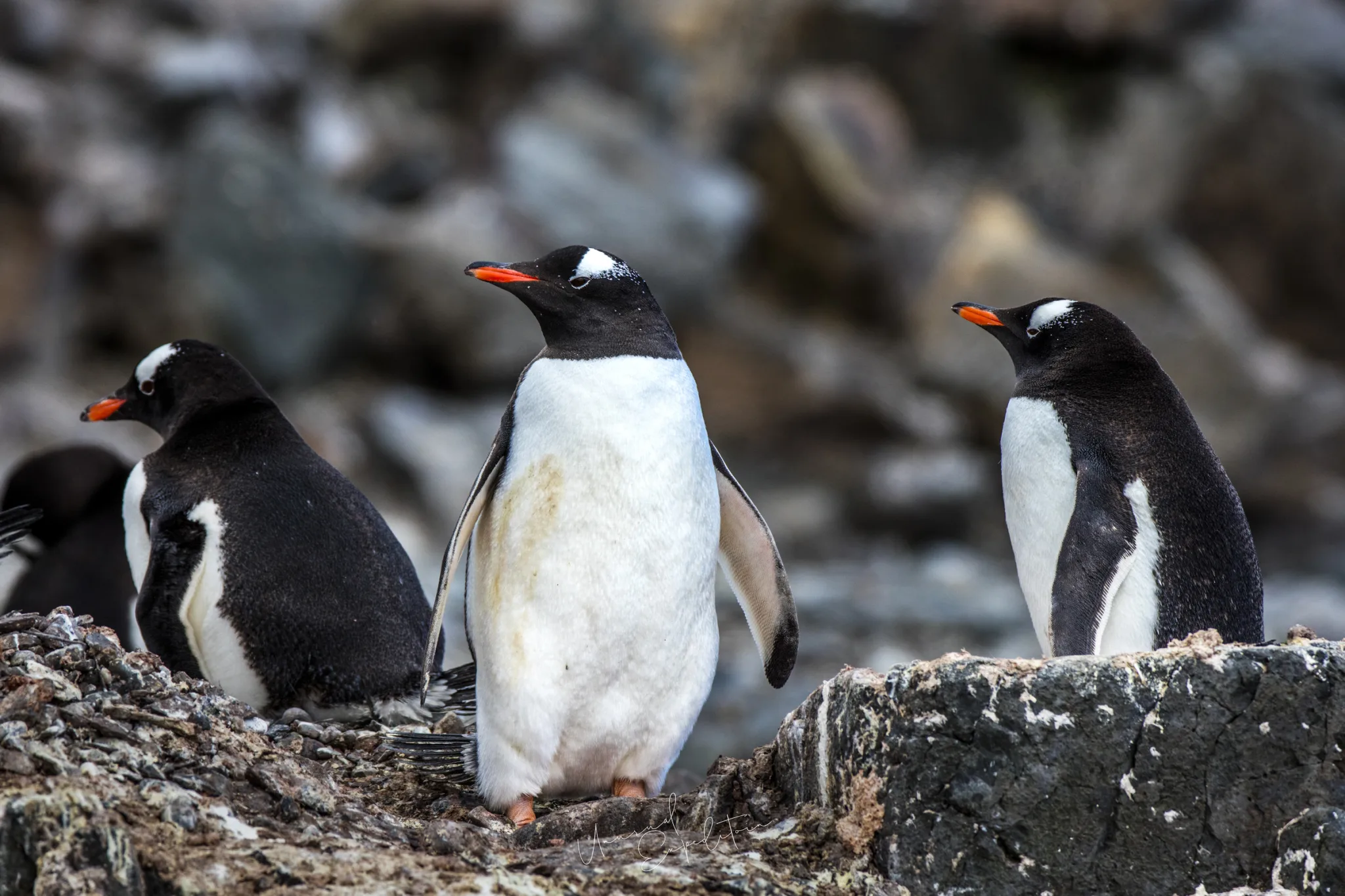
Three penguin species breed on King George Island: gentoo, chinstrap and Adelie. The largest colonies near the airstrip are on Ardley Island, a low island joined to the Fildes Peninsula at low tide, which is a protected area with access controlled by permit, so visitors see it from the shore or by Zodiac rather than walking into it. Gentoos are the birds most often met on the beaches around Maxwell Bay, and single gentoos and chinstraps wander the gravel near the stations. Elephant seals and Weddell seals haul out on the same beaches. No emperor or king penguins live on King George Island or anywhere on the fly-cruise route. The penguin photography guide has the species detail and the settings; the frame below is what a gentoo looks like at the 5 metres the rules allow.
What there is to photograph in the first hours ashore
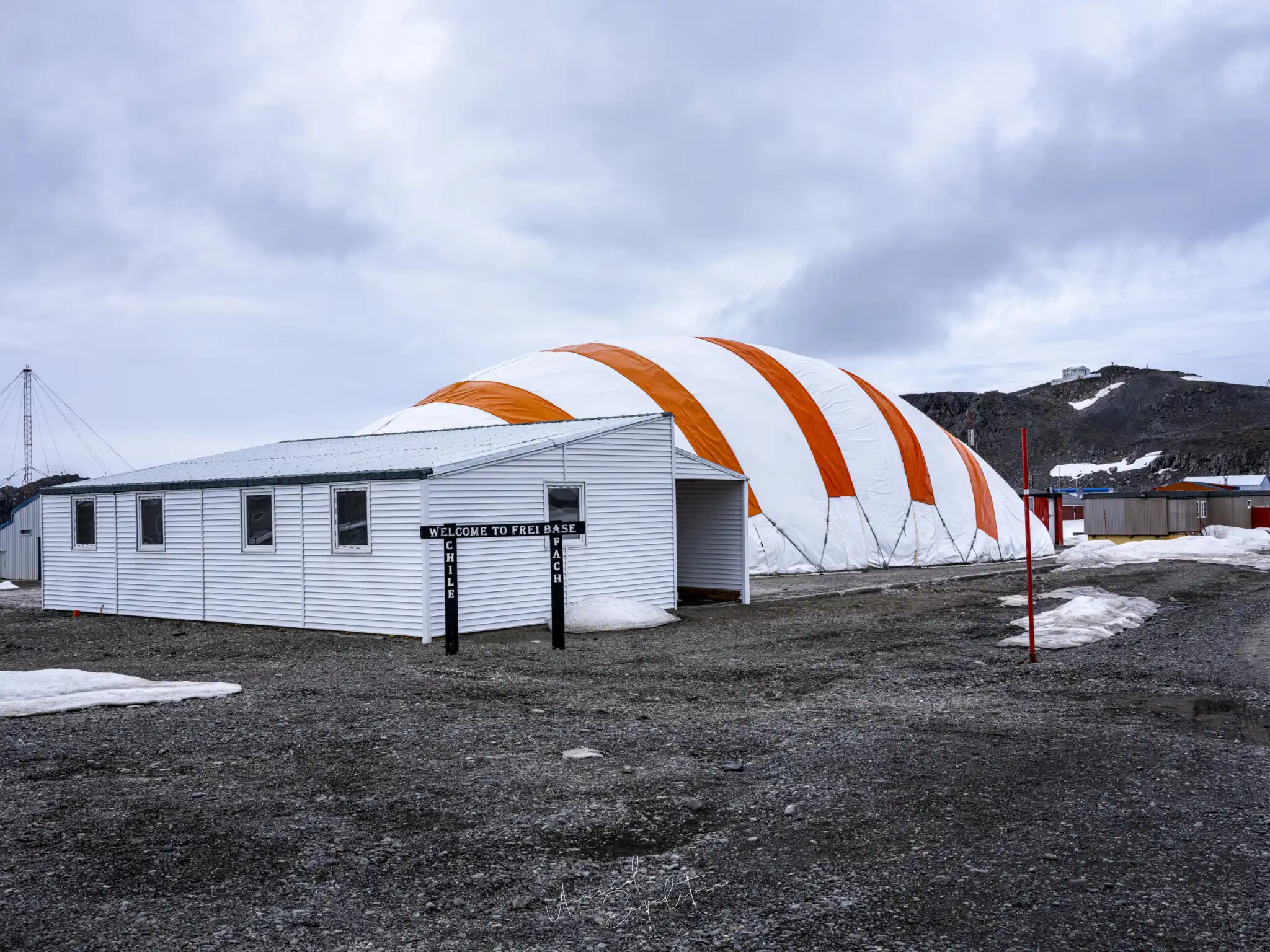
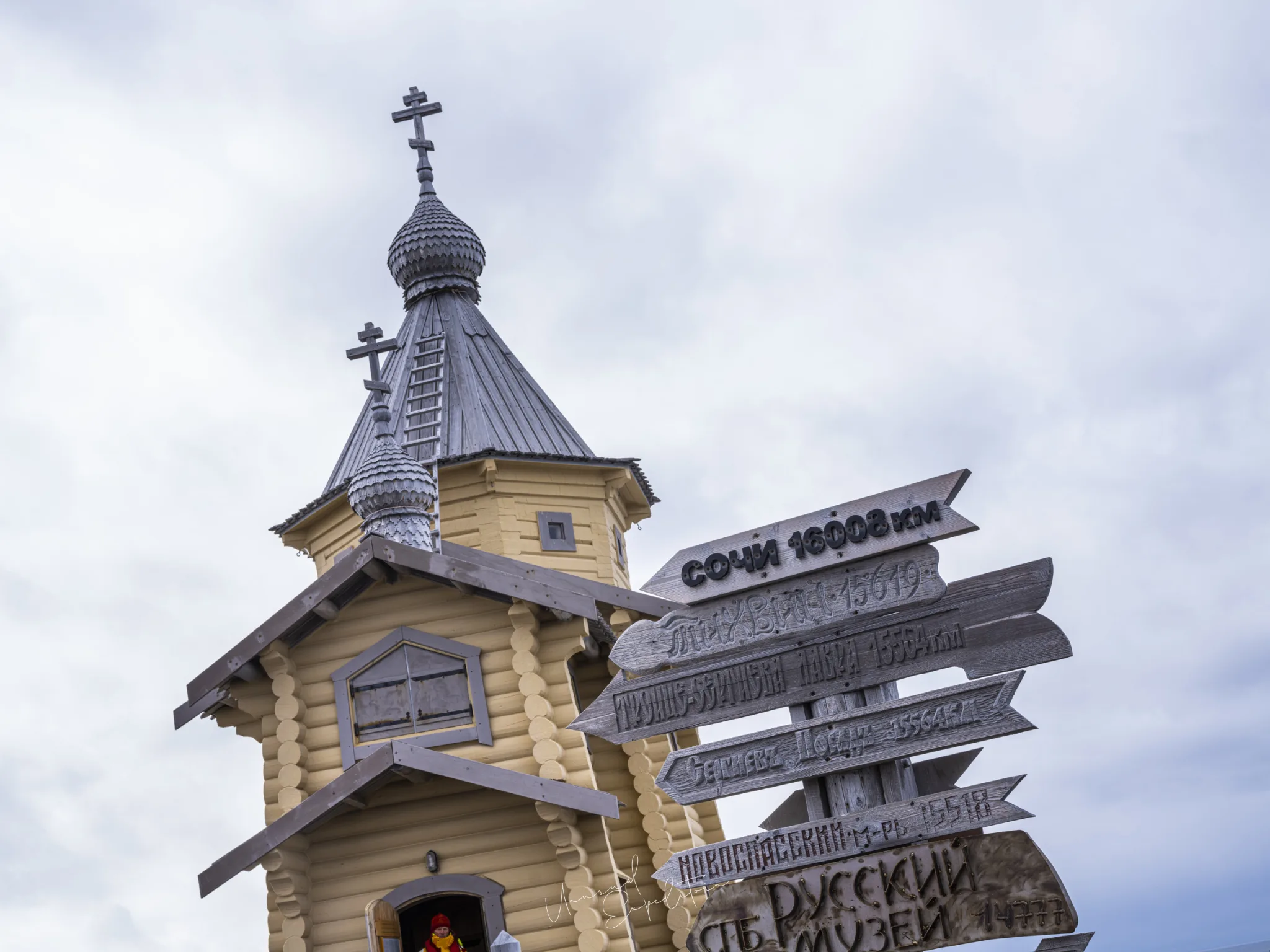
The first hours on King George Island are not the Antarctica of the brochures, and they are worth photographing for exactly that reason. The Fildes Peninsula is black gravel, patches of old snow, a scatter of prefabricated station buildings in orange, red and white, aerials, fuel drums, and a wooden Russian Orthodox church on a rise above Bellingshausen station. Trinity Church, built of Siberian timber and consecrated in 2004, is the southernmost Orthodox church in the world and photographs best from below against the sky, with the signpost of home-town distances in the foreground. Keep to the marked tracks; the stations are workplaces and access inside is not guaranteed. A 24-70mm lens covers the station frames, and the longer lens comes out for the penguins and seals along the shore.
"The first picture most people take in Antarctica is a red welcome sign on a gravel runway in a grey wind. It is not the picture they came for, and it is one of the few they will show to everyone, because it is the moment they stood on the continent."
Joseph Mak, tour leader, Unusual Expedition
King George Island time zone
The stations on the Fildes Peninsula and the ships that call there generally keep Chile's Magallanes time, UTC minus 3 all year, the same as Punta Arenas and Ushuaia. Singapore is UTC plus 8, so the island runs eleven hours behind home. Phones usually fail to find a network and default to whatever time they last had, so set your camera clock by hand in Punta Arenas and leave it.
Start your voyage on the island with us
Our Antarctica fly-cruise lands on King George Island in March, when the island has real sunsets and the colonies are full of fledglings. The Antarctica photography tour page has the current departure and how to book. Bring a windproof layer for the first hours on the gravel; it is colder than the thermometer says.
Join the Antarctica photography tour
Antarctica Express Air-Cruise 2028 - Antarctica departs 10 Mar 2028 To 16 Mar 2028. Small group, photography first. All Antarctica photography tours.
Explore Antarctica in depth
- The Complete Guide to an Antarctica Photography TourAntarctica
- Sunset in Antarctica: Does the Sun Set, and What the Light DoesAntarctica
- Antarctica Photos: What It Really Looks Like from an Expedition ShipAntarctica
- What to Pack for an Antarctica Cruise (and the 25 kg Rule)Antarctica
- Photographing the South Shetland IslandsAntarctica
- King George Island, Antarctica: The Airstrip, the Bases and the ChurchAntarctica
- Is Antarctica Worth Visiting? A Photographer's ViewAntarctica
- Crossing the Drake Passage: What to ExpectAntarctica
- Cape Horn and the Beagle Channel: Photographing the End of the WorldAntarctica
- Camera Gear for Antarctica PhotographyAntarctica
- The Best Time to Visit Antarctica for PhotographyAntarctica
- Photographing Whales in AntarcticaAntarctica
Upcoming Photo Tours
- Egypt Photo Tour – EgyptEgypt 12 Dec 2026 To 20 Dec 2026
- Inner Mongolia Winter Owl Photo Tour – ChinaChina 01 Jan 2027 To 04 Jan 2027
- Inner Mongolia Winter Photo Tour – ChinaChina 05 Jan 2027 To 11 Jan 2027
- Mekong And Central Highland Vietnam Photo Tour - VietnamVietnam 16 Jan 2027 To 24 Jan 2027