
Antarctica Photos: What It Really Looks Like from an Expedition Ship
Real Antarctica photos from four voyages: the landscape, the true colour of ice, grey weather, wildlife at 5 metres, ship versus Zodiac.
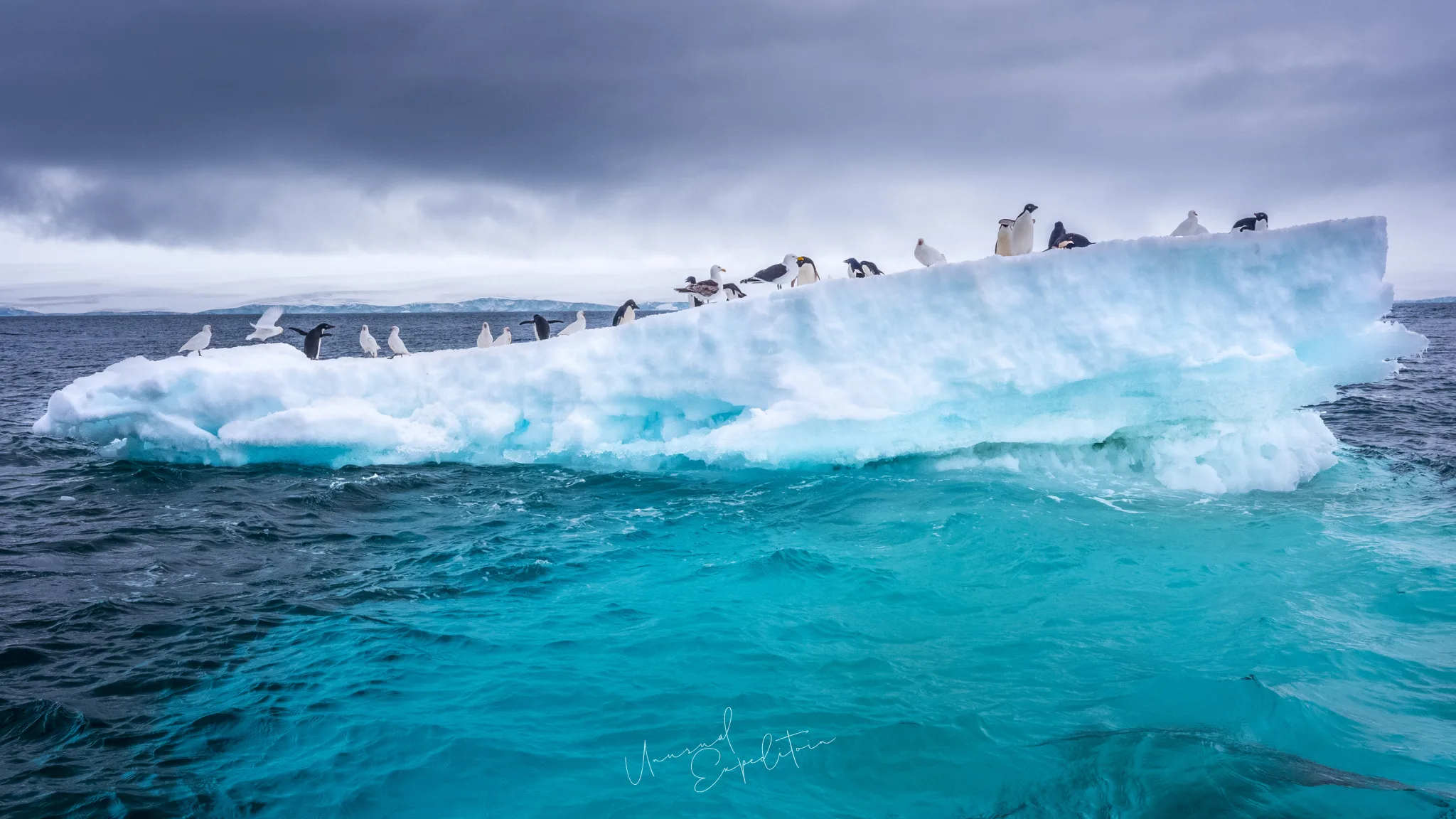
Antarctica photos from an expedition ship show a place that is mostly white, grey and blue, lit from the side for most of the day, and far larger than any lens can hold. The famous frames, a glowing iceberg in a dark bay or an orca surfacing through brash ice, are real, but they are moments inside long hours of flat light, cloud and wind. These are my own photographs from four voyages to the Antarctic Peninsula, chosen to show what it really looks like, not what the brochures pick.
If you are deciding whether to go, the complete guide to an Antarctica photography tour covers the route, the season and the cost. This page is the pictures: what the landscape looks like, what colour the ice really is, what the weather does to the light, what the animals look like at 5 metres, and how different the same bay looks from the ship and from a Zodiac.
Antarctica landscape photos: ice, rock and water
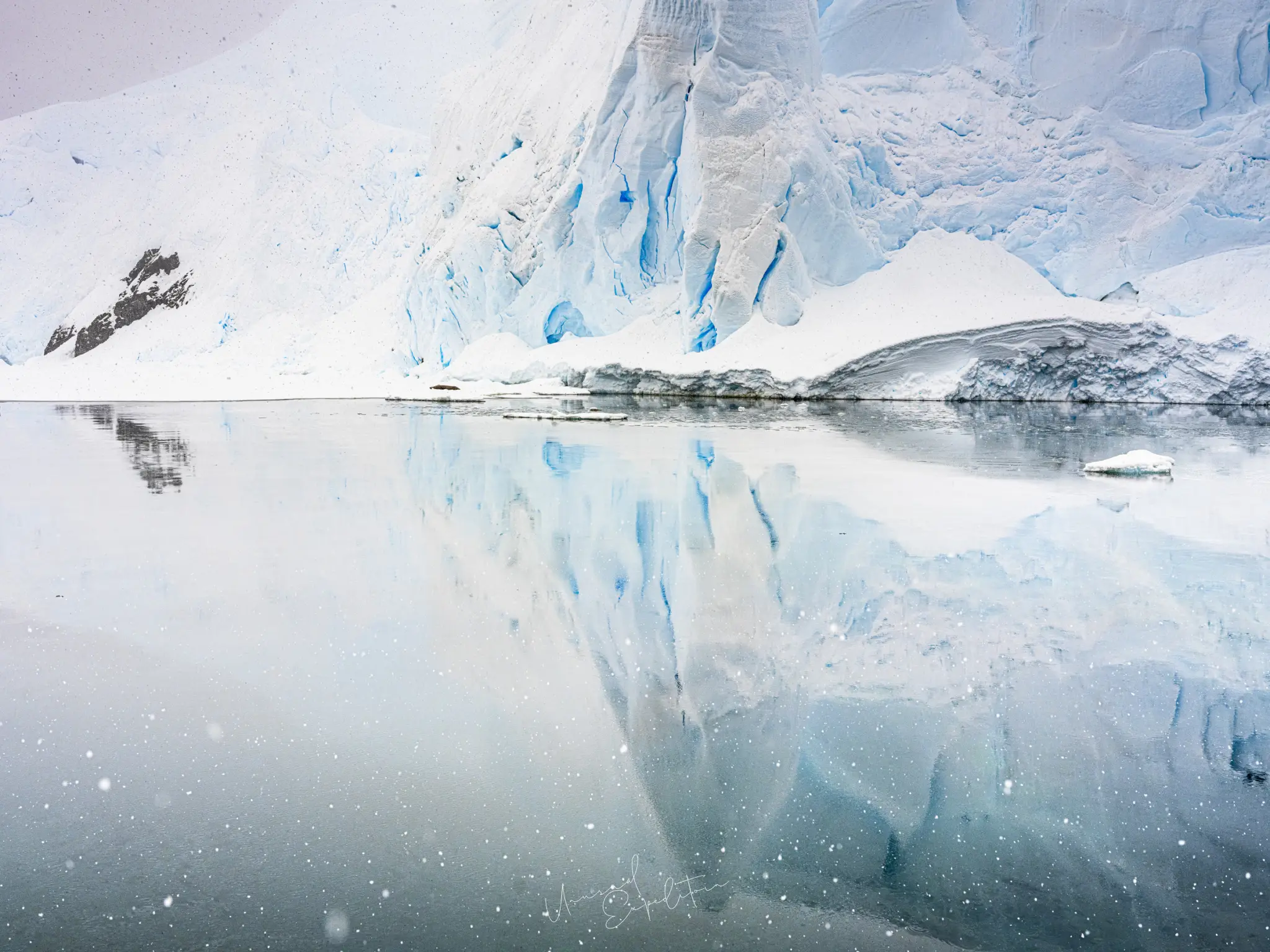
The Antarctic Peninsula landscape is a mountain range that drops straight into the sea, with glaciers filling every valley and calving into bays that are often dead calm. The scale is the first thing people cannot believe. A glacier front that looks like a low wall from the deck is forty metres high; the black speck in front of it is a Zodiac with ten people in it. The second thing is the quiet. On a windless morning the water in a bay such as Paradise Harbour is a mirror, and the reflection of the ice is as sharp as the ice. The photographs that work here are usually simple: a horizon, a reflection, one shape. The iceberg and landscape guide goes into the compositions; the picture below is what a calm bay looks like before anyone has composed anything.
Antarctica ice photos: what colour icebergs really are
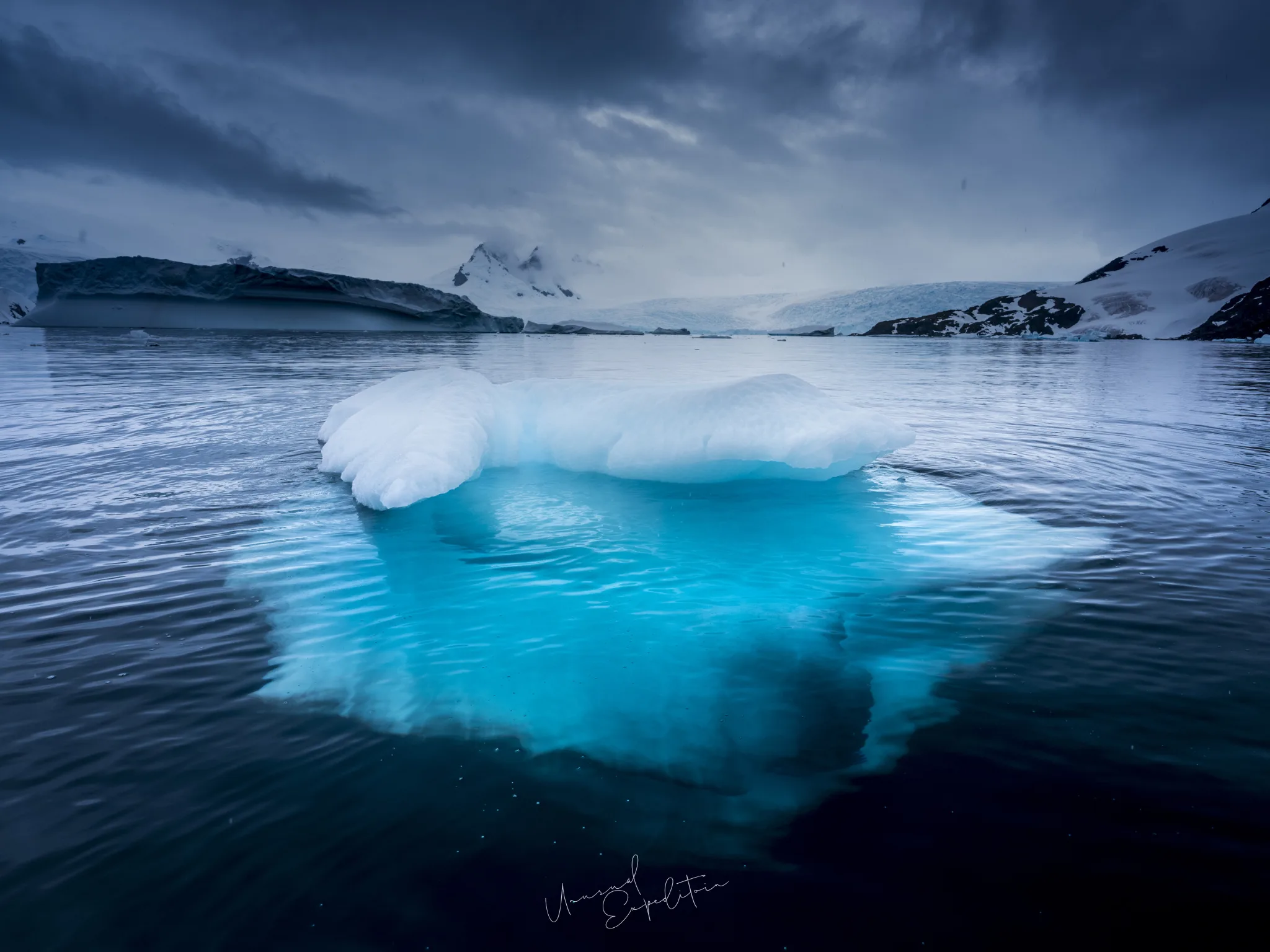
Icebergs are white on top and blue underneath, and the blue is not an exaggeration of editing. Glacier ice that has been compressed for centuries has had most of its air squeezed out, and dense ice absorbs the red end of the spectrum and scatters the blue. The oldest, clearest ice is a deep saturated blue; younger ice is white and opaque; the underwater part of any berg glows turquoise through the water because the sea filters the light again. The colour is strongest on overcast days and in the shadowed side of a berg, which surprises people who wait for sun. A berg in a dark bay under a grey sky is the picture most of my guests end up printing.
Antarctica photos real: the weather is grey more often than blue
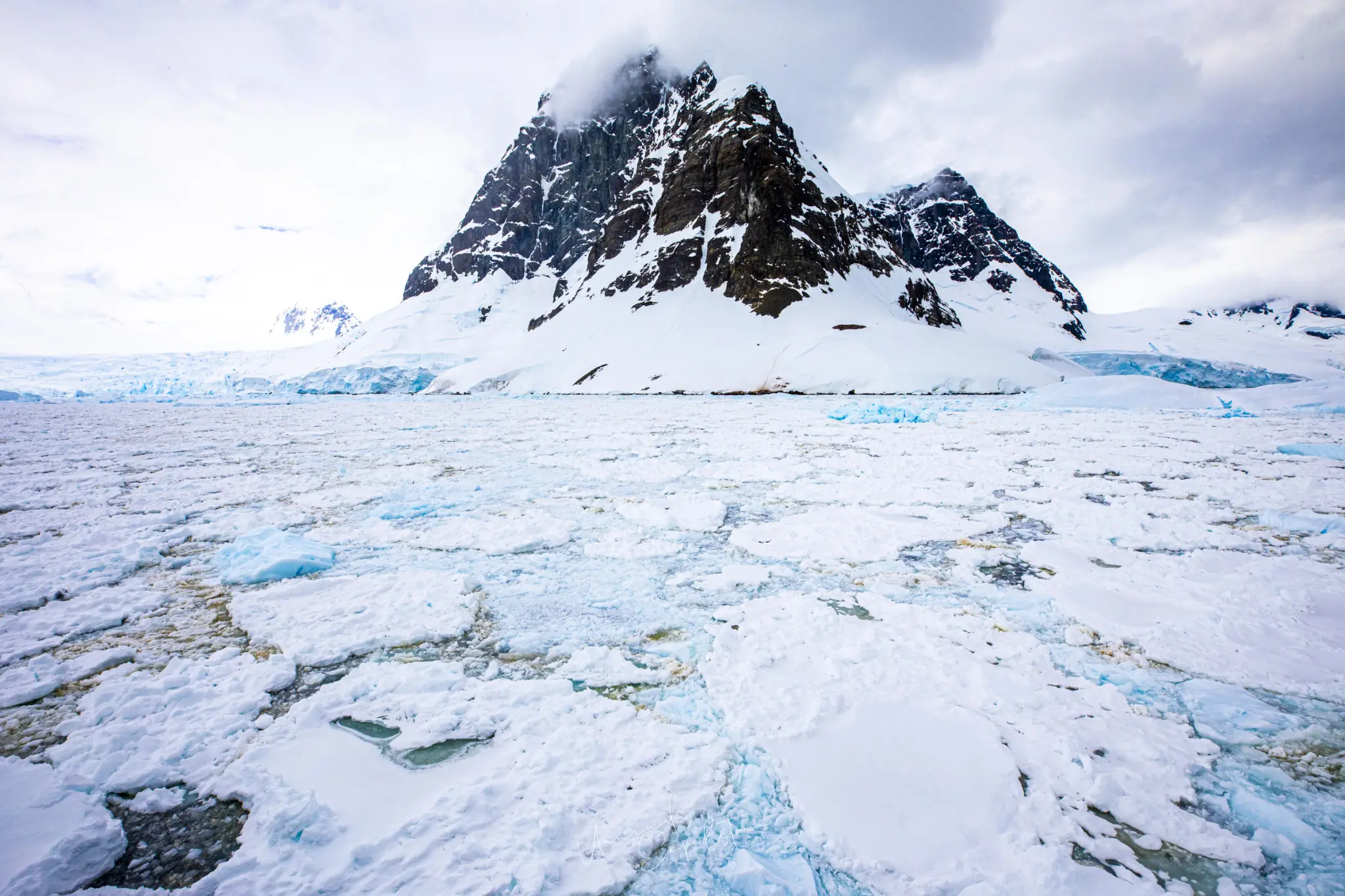
Most Antarctica photos online are shot in sunshine because that is what people post. Most Antarctic days are not like that. The peninsula sits in the path of the weather systems that circle the Southern Ocean, and overcast, snow showers and a low ceiling are the normal state; a clear day is the exception you remember. For photography this is less of a loss than it sounds. Flat light takes the glare off the snow, shows the blue in the ice, and lets you shoot in any direction without a blown sky. What it does take away is the sense of depth, so on a grey day you look for a dark shape, a rock face, a line of penguins, a Zodiac, to give the eye something to measure the white against. The picture below is an ordinary peninsula afternoon: pack ice to the horizon, a peak under cloud, no sun.
Antarctica summer photos: what December and January look like
Summer photos of Antarctica, which means December and January, are full of light and empty of shadow. The sun is up for twenty hours or more and never climbs high, so the whole day is a kind of extended afternoon. Snow is still clean on the slopes early in the season and trampled to pink mud around the colonies by January. Penguin chicks are small and grey. Icebergs are at their biggest, because the winter's calving has not yet broken up. The colours in my summer frames are white, pale blue and the black of wet rock, with the occasional orange of a Zodiac or a jacket. There is no sunset to speak of; the long twilight slides along the horizon and comes back as dawn, which is the subject of sunset in Antarctica: does the sun set. Our March departure is a different palette, with real low light and real colour at the ends of the day.
Antarctica wildlife photos at 5 metres
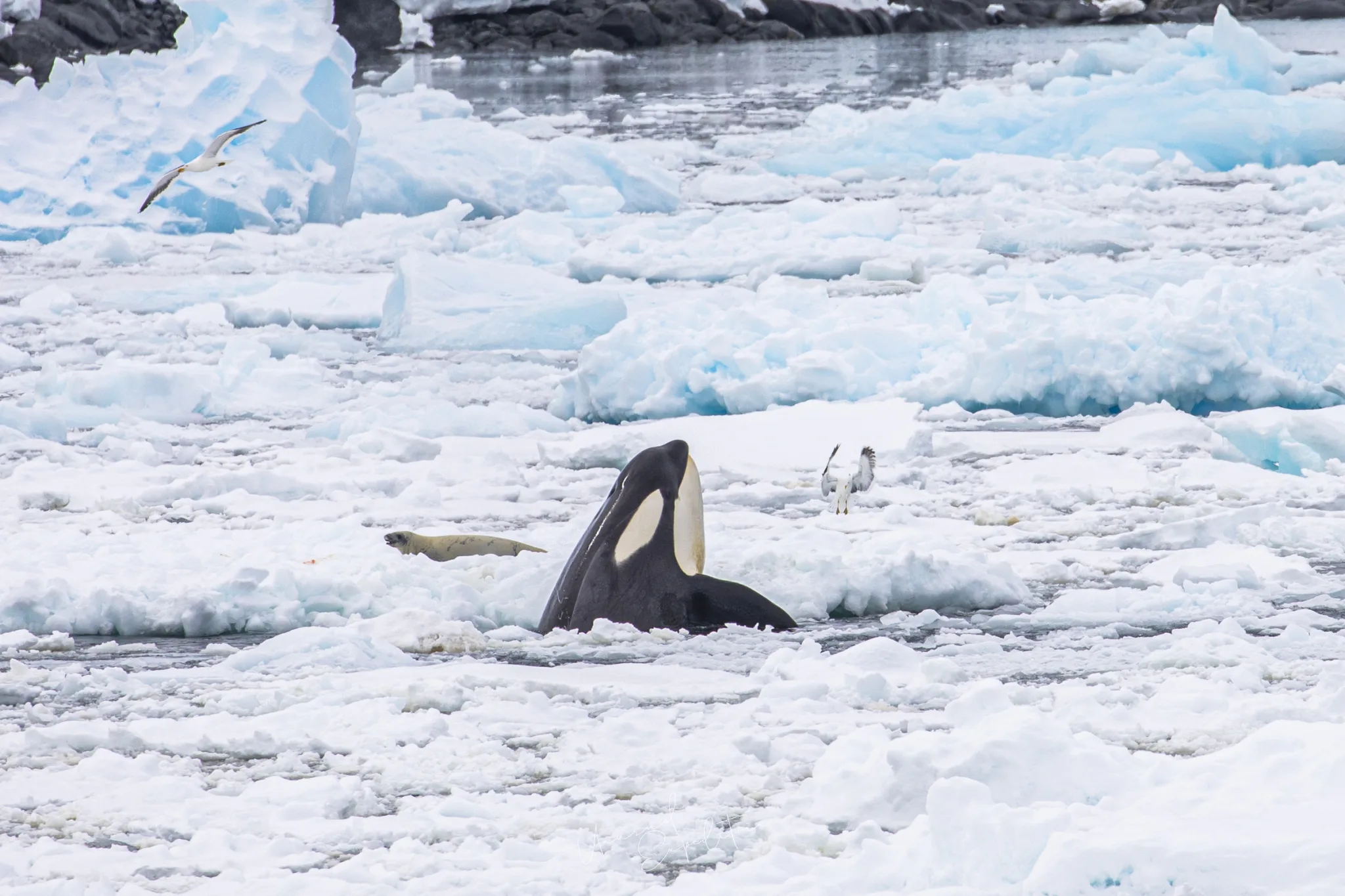
Wildlife photographs in Antarctica are taken closer than anywhere else in the world because the animals have no land predators and do not treat people as a threat. The IAATO rule is that you keep 5 metres from any animal, more if it reacts, and the animals ignore the rule freely: a gentoo will walk up to a kneeling photographer, a Weddell seal will sleep through a Zodiac idling beside its floe, and a humpback will surface next to a stationary boat. Orcas are the exception, seen on perhaps one voyage in two and never on demand; the frame below is a pod hunting through brash ice with a crabeater seal on a floe between them, taken from the ship with a long lens. The species list, where each one lives and the camera settings that work are in the penguin guide, the whale guide and the seals and seabirds guide.
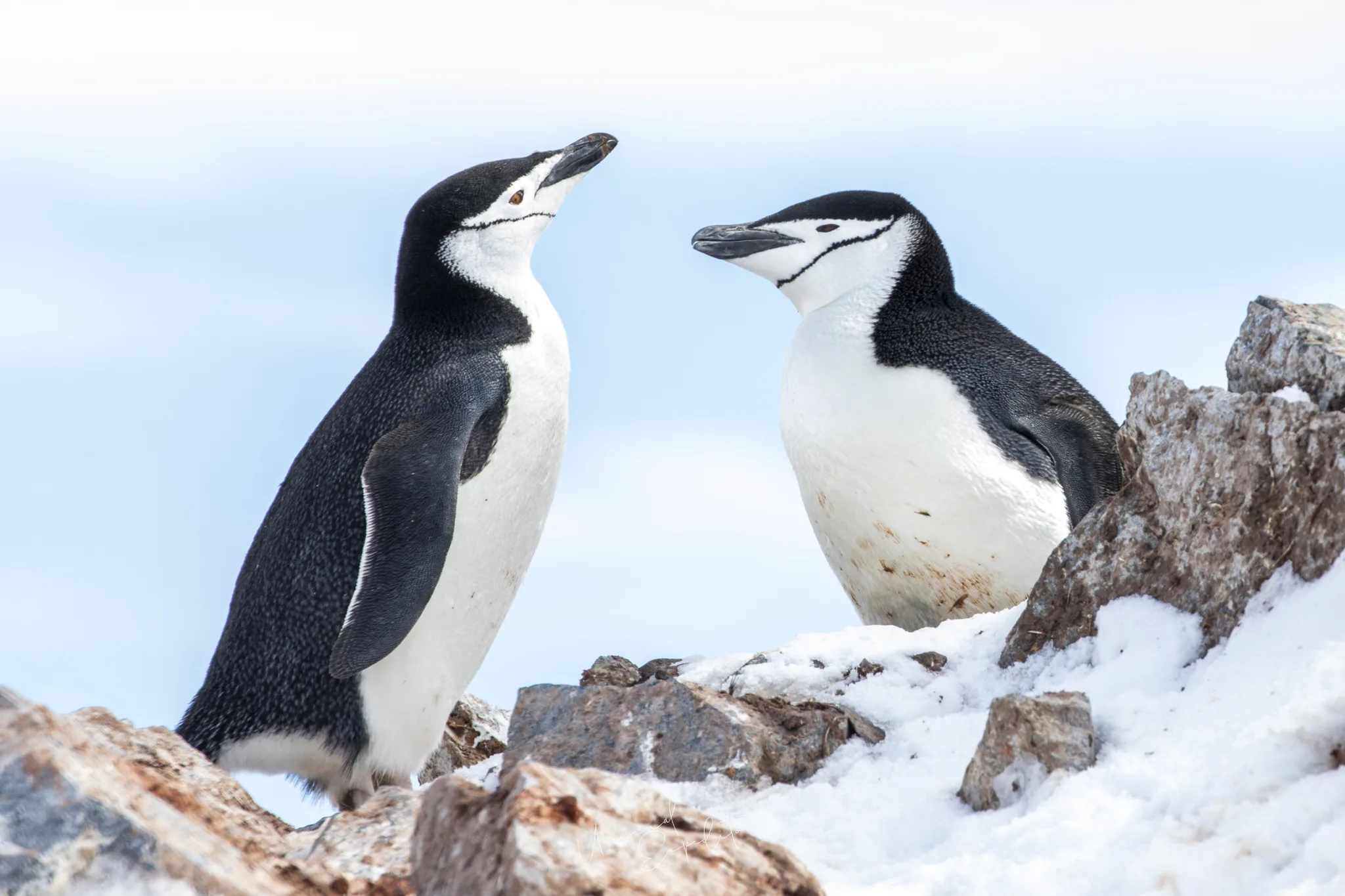
Antarctica penguin photos: what a colony looks like up close
A penguin colony is louder, smellier and busier than any photograph conveys, and the best penguin pictures are of two birds, not two thousand. Chinstraps nest on rock ledges and greet each other with heads thrown back; gentoos nest on low ground near the beach and run food chases through the colony; Adelies are the small black-headed birds further south. Kneel in the snow where the guides allow it, use a 70-200mm or 100-400mm lens, expose a stop or two brighter than the camera suggests so the white breast stays white, and wait. The pair below were photographed from the knees at about 6 metres, which is why the eye is level with theirs.
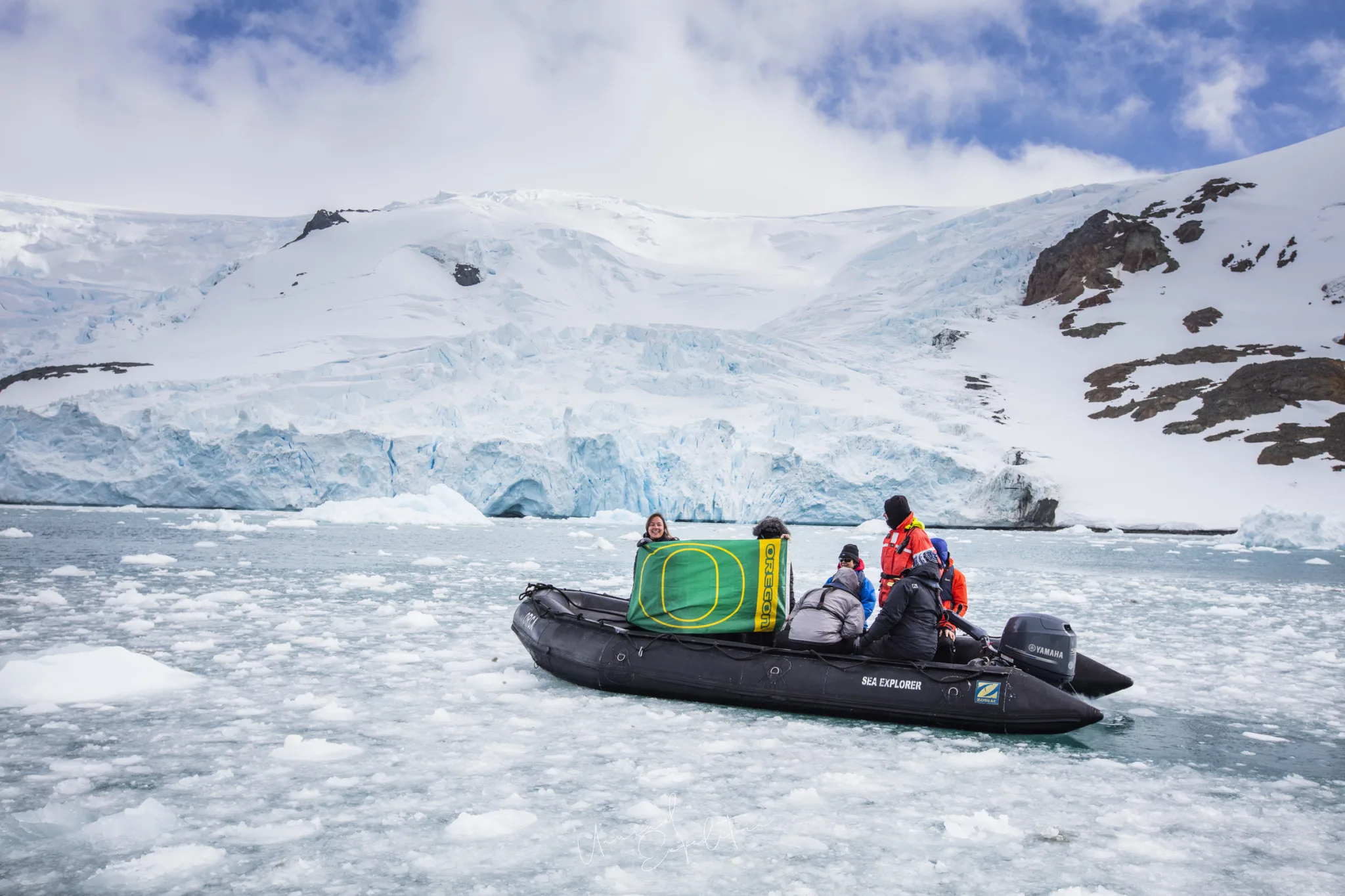
Antarctica photos from a Zodiac and from the ship
The same bay gives two different sets of photographs depending on where you stand. From the ship's deck, ten or fifteen metres above the water, you photograph scale: the whole glacier front, the whole iceberg, a Zodiac as a dot. From the Zodiac, at water level, you photograph texture and colour: the blue in the ice at arm's length, a seal at eye level, the underside of a berg glowing green through the water. Both are worth having, and the trip gives both every day that the weather allows. In the Zodiac the camera rides on a short strap, shutter speeds stay above 1/500 s because the boat never stops moving, and a lens cloth lives in an outside pocket because spray is constant. The photography tips article has the settings for both positions.
Antarctica beautiful photos and the plain ones
The frames in this piece were chosen to show the place as it is, not only at its best, and the plain ones are the useful ones if you are deciding whether to go. Antarctica will give you a glowing iceberg or an orca if you are there long enough and watching, but it will give you grey sky, flat sea and a wet landing every day. The photographers who come home happiest are the ones who photograph the grey days as hard as the bright ones, because the grey days are Antarctica too, and because the pictures of pack ice under cloud are the ones nobody else has. The beautiful frames look after themselves.
"The photograph everyone wants from Antarctica is the sunlit iceberg. The photograph I keep going back to is the grey one: pack ice to the horizon, a black peak under cloud, and nothing in the frame to tell you how big it is. That is what the place looks like most of the time, and it is the harder picture to make."
Joseph Mak, tour leader, Unusual Expedition
What is not in these Antarctica photos
No emperor penguins, which breed on fast ice far from the peninsula; no king penguins, which live on sub-Antarctic islands such as South Georgia; no polar bears, which live at the other end of the planet. No research station interiors, because the stations are workplaces and visits inside are not guaranteed. No night sky, because these are midsummer frames and the sky never went dark; the March departure is the first on which I expect to photograph stars from the deck. And no people's faces in the landscape frames, because the Antarctica most people want to see is the one without us in it.
Make your own set with us
Every frame on this page was taken from a small expedition ship or a Zodiac on the Antarctic Peninsula route, which is the route our fly-cruise follows. The Antarctica photography tour page has the current March departure and how to book. Bring the long lens and a dry bag; I will be on deck.
Join the Antarctica photography tour
Antarctica Express Air-Cruise 2028 - Antarctica departs 10 Mar 2028 To 16 Mar 2028. Small group, photography first. All Antarctica photography tours.
Explore Antarctica in depth
- The Complete Guide to an Antarctica Photography TourAntarctica
- King George Island: Weather by Month, Daylight Hours and PenguinsAntarctica
- Sunset in Antarctica: Does the Sun Set, and What the Light DoesAntarctica
- What to Pack for an Antarctica Cruise (and the 25 kg Rule)Antarctica
- Photographing the South Shetland IslandsAntarctica
- King George Island, Antarctica: The Airstrip, the Bases and the ChurchAntarctica
- Is Antarctica Worth Visiting? A Photographer's ViewAntarctica
- Crossing the Drake Passage: What to ExpectAntarctica
- Cape Horn and the Beagle Channel: Photographing the End of the WorldAntarctica
- Camera Gear for Antarctica PhotographyAntarctica
- The Best Time to Visit Antarctica for PhotographyAntarctica
- Photographing Whales in AntarcticaAntarctica
Upcoming Photo Tours
- Egypt Photo Tour – EgyptEgypt 12 Dec 2026 To 20 Dec 2026
- Inner Mongolia Winter Owl Photo Tour – ChinaChina 01 Jan 2027 To 04 Jan 2027
- Inner Mongolia Winter Photo Tour – ChinaChina 05 Jan 2027 To 11 Jan 2027
- Mekong And Central Highland Vietnam Photo Tour - VietnamVietnam 16 Jan 2027 To 24 Jan 2027