
Antarctica Photography Tips: Exposure for Snow and Ice, Light and Zodiac Shooting
Antarctica photography tips: +1 to +2 EV for snow, the histogram, white balance on ice, 1/2000 s for penguins, Zodiac work, March light.
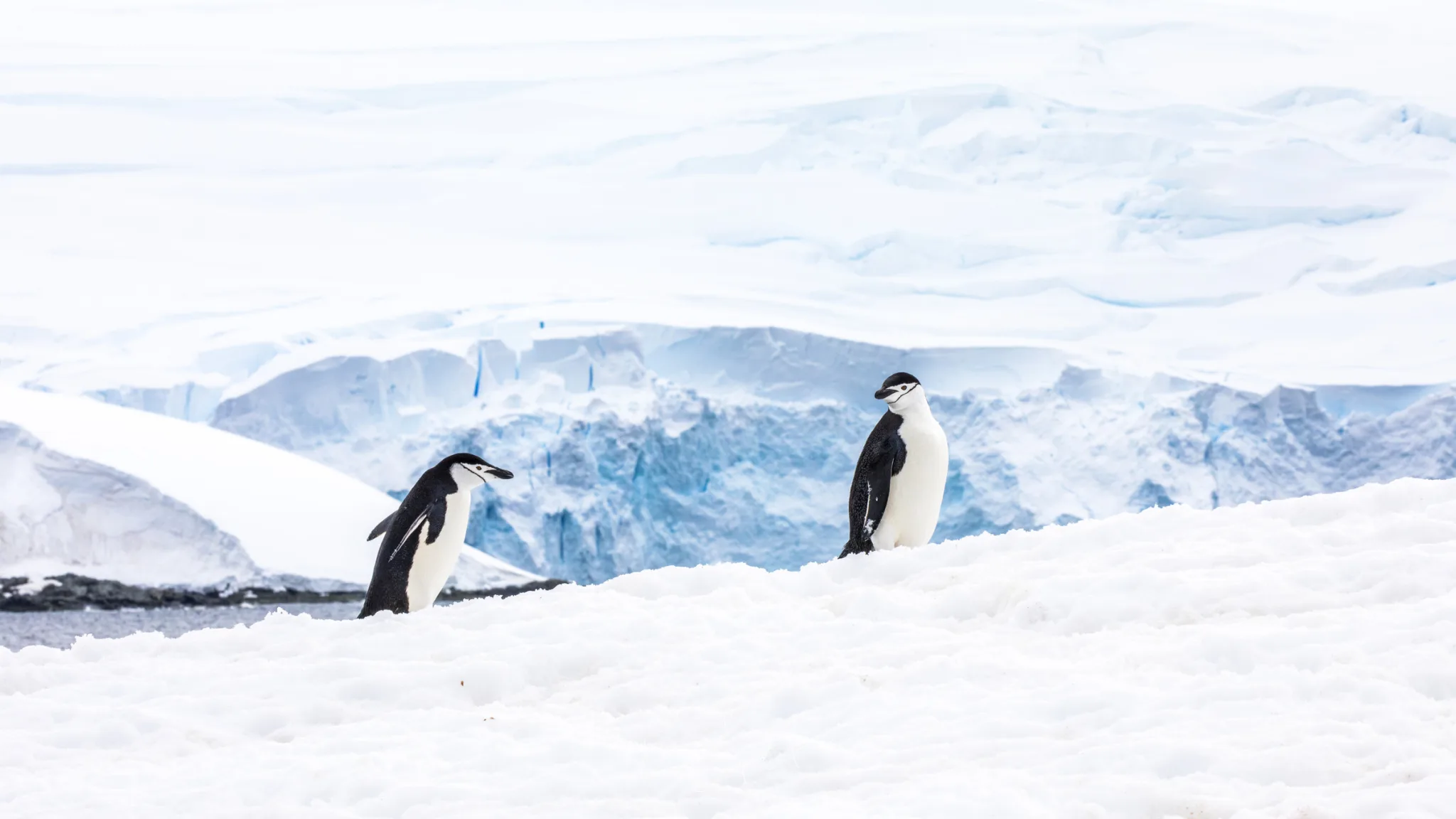
The most useful Antarctica photography tips are about exposure: snow fools a camera meter into grey, so you add one to two stops and check the histogram, and penguins moving off a Zodiac need 1/2000 s or faster with the ISO left to rise. Add a white balance you trust on ice, a way of working from a moving boat, and a plan for flat midday light and long March evenings, and most frames come home. These notes expand the shooting section of our Antarctica photography tour guide.
Why snow comes out grey and how to fix it
A camera meter assumes the scene averages to a middle tone. Point it at a snow slope and it darkens the frame until the snow is grey, the penguins are black blobs and the ice has lost its glow. Underexposing snow is the first mistake I see in Antarctica, on every voyage, and the fix is to override the meter. Set exposure compensation to +1 and go to +2 when the frame is mostly snow or bright cloud. In manual, expose until the snow sits near the right edge of the histogram without clipping. The screen will look bright, which is correct; snow is white. Shoot raw. Shadows can be lifted; blown snow cannot be recovered.
Reading the histogram on ice
The histogram is the only exposure guide you can trust in Antarctica; the screen is unreadable in bright light. On ice and snow the shape you want is a tall pile close to the right edge, with a thin tail of darker tones for rock, water and the birds. If the pile is centred, the snow will be grey. If it climbs the right wall, you have lost detail in the brightest ice, and on sculpted bergs that detail is the picture. Turn on the highlight warning and let a tiny area blink where the sun catches a wet edge, but no more. Blue ice is darker than it looks and needs less compensation than white snow; a berg in a dark bay is often a straight meter reading. Check it again whenever the light changes, which is often.
White balance on snow and blue ice
Auto white balance does a reasonable job on the Antarctic Peninsula but it tends to warm the shadows on snow, which are naturally blue, and to neutralise the glow inside an iceberg, which is the reason you are pointing at it. Set a fixed daylight white balance for anything in sun and leave it there; the blue shadows on snow are real and belong in the frame. Under overcast, the cloudy preset warms things slightly and keeps the ice from going steel grey. A consistent setting in the field makes the sequence from a landing hang together and stops you chasing colour on the screen when you should be watching the penguins. Deception Island's black sand next to snow is a good test: sand neutral, snow white.
Shutter speeds for penguins and whales
Penguins leaving the water are among the fastest subjects in wildlife photography and they arrive without warning. From a moving Zodiac, 1/2000 s is the starting shutter speed and faster is better; let the ISO rise to wherever the camera needs it, because a sharp frame at ISO 3200 beats a soft one at 400. Set continuous autofocus with a wide zone and fire in bursts as the birds porpoise toward the shore. Whales are slower but the blow and the fluke happen once; 1/1000 s from the deck and 1/2000 s from a Zodiac hold them. The table below gives starting points. Our separate guides to photographing penguins in Antarctica and photographing whales in Antarctica go deeper on each subject.
| Subject | Shutter speed to start | Exposure compensation |
|---|---|---|
| Penguins porpoising, from a Zodiac | 1/2000 s or faster | +1 to +1.5 on snow or spray |
| Penguins walking or standing, on land | 1/500 s | +1 to +2 on snow |
| Whale blow or fluke, from the deck | 1/1000 s | 0 to +0.7 over dark water |
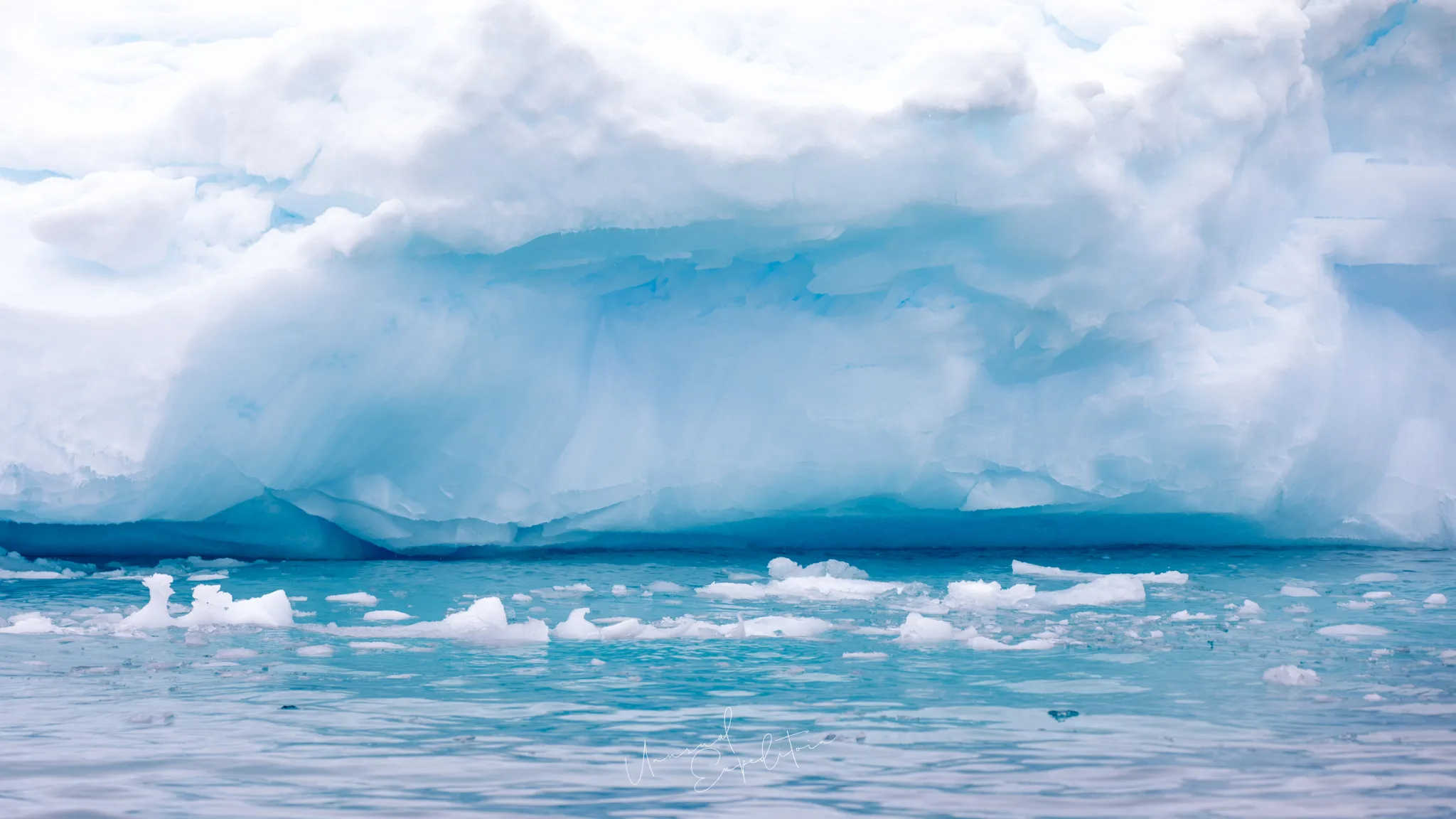
| Iceberg in flat light | 1/250 s handheld | +0.3 to +1, watch the right edge |
| Sunset on ice, from a tripod at anchor | As the light needs | 0 to minus 0.7 |
These are starting points; the histogram, not the table, has the final word on every frame.
How to photograph from a moving Zodiac
A Zodiac is a rubber boat with a driver who is watching ice and wildlife, and water that never stops moving. Sit, do not stand, and brace your elbows on your knees or the pontoon. Use the fastest shutter speed the light allows, image stabilisation on, and a wide autofocus zone because you cannot hold a single point on a bobbing bird. Keep the camera on a short strap round your neck and the second body in a dry bag at your feet, with a lens cloth in an outside pocket for the spray. The driver will turn the boat so everyone gets a side; wait for yours. Humpbacks in March often approach a stationary Zodiac on their own, and the frame then is a 24-70mm one, not a long lens.
"The first morning off King George Island on my January 2016 voyage, half the group came back with grey snow and were sure the light had been bad. It had not. We dialled in +1.3 as a group before the next landing and the same slope came back white, with the ice glowing. I have started every voyage since with that conversation."
Joseph Mak, tour leader, Unusual Expedition
Five metres and eye level
IAATO rules, which every operator in the Antarctic Treaty area follows, keep visitors at least five metres from wildlife, and further if the animal reacts. Penguins may walk closer to you; you do not walk closer to them. That distance forces the long lens and takes you out of the birds' space, which is when they behave normally. The other half of the rule is height. Standing over a penguin gives a picture of the top of its head on a lot of snow. Kneel or lie down, which the rules allow as long as you are not where birds are nesting or passing, and the bird's eye comes level with the lens, the background drops to the bay and the frame becomes a portrait. In March the subjects are fledged chicks and moulting adults, scruffy and still, which makes eye level easy to hold.
The flat midday light problem
In mid March the sun at 62 to 65 degrees south climbs to a modest height at midday, but when it is out, snow in direct sun is a wall of white with hard blue shadows and no texture. Overcast is more common, and flat grey light is where most of the day's shooting happens. Flat light brings out the blue in ice, which direct sun washes to white, and it is the best light for penguin portraits because there are no blown highlights on their chests. Look for subjects with their own contrast: a dark berg in a bright bay, black rock through snow, the pink and green snow algae on the slopes in late season. Keep the exposure compensation up; grey light makes the meter even more inclined to produce grey snow.
The long March evenings
This is where the late season pays back the shorter days. Midsummer voyages have no true sunset; the light dips for a few pale hours and comes back up. In mid March there are about thirteen hours of daylight, the sun sets in mid evening, and twilight lasts. The ship is often at anchor or moving slowly then, so the deck takes a tripod and the bergs turn pink, then blue, then grey. Lower the exposure compensation as the light drops; snow at dusk is no longer the brightest thing in the frame. The hour after breakfast is the other end of the same light, and the stillest water of the day is usually then. Our article on the best time to visit Antarctica for photography sets out what each part of the season gives.
What to do between landings
Many of the pictures I value from Antarctica were taken from the deck. The ship repositioning is when whales surface beside the hull, when the Lemaire Channel opens up on a still morning with the water like glass, when a leopard seal lifts its head off a floe. Keep one body ready in the cabin with the long lens on it and a warm battery in. Go out at the first announcement from the bridge and stay longer than feels sensible. The gear that makes this bearable is listed in our guide to camera gear for Antarctica photography.
Learn it on deck, with the ice in front of you
None of these Antarctica photography tips are difficult; what makes them stick is doing them in the place. The Antarctica photography tour is our March departure on a small expedition ship, and I will be on the deck and in the Zodiac with you.
Join the Antarctica photography tour
Antarctica Express Air-Cruise 2028 - Antarctica departs 10 Mar 2028 To 16 Mar 2028. Small group, photography first. All Antarctica photography tours.
Explore Antarctica in depth
- The Complete Guide to an Antarctica Photography TourAntarctica
- King George Island: Weather by Month, Daylight Hours and PenguinsAntarctica
- Sunset in Antarctica: Does the Sun Set, and What the Light DoesAntarctica
- Antarctica Photos: What It Really Looks Like from an Expedition ShipAntarctica
- What to Pack for an Antarctica Cruise (and the 25 kg Rule)Antarctica
- Photographing the South Shetland IslandsAntarctica
- King George Island, Antarctica: The Airstrip, the Bases and the ChurchAntarctica
- Is Antarctica Worth Visiting? A Photographer's ViewAntarctica
- Crossing the Drake Passage: What to ExpectAntarctica
- Cape Horn and the Beagle Channel: Photographing the End of the WorldAntarctica
- Camera Gear for Antarctica PhotographyAntarctica
- The Best Time to Visit Antarctica for PhotographyAntarctica
Upcoming Photo Tours
- Egypt Photo Tour – EgyptEgypt 12 Dec 2026 To 20 Dec 2026
- Inner Mongolia Winter Owl Photo Tour – ChinaChina 01 Jan 2027 To 04 Jan 2027
- Inner Mongolia Winter Photo Tour – ChinaChina 05 Jan 2027 To 11 Jan 2027
- Mekong And Central Highland Vietnam Photo Tour - VietnamVietnam 16 Jan 2027 To 24 Jan 2027