
Sunset in Antarctica: Does the Sun Set, and What the Light Does
Does Antarctica have sunset? Yes on the peninsula, barely in December. Daylight by month, why there is no night in summer, and March light.
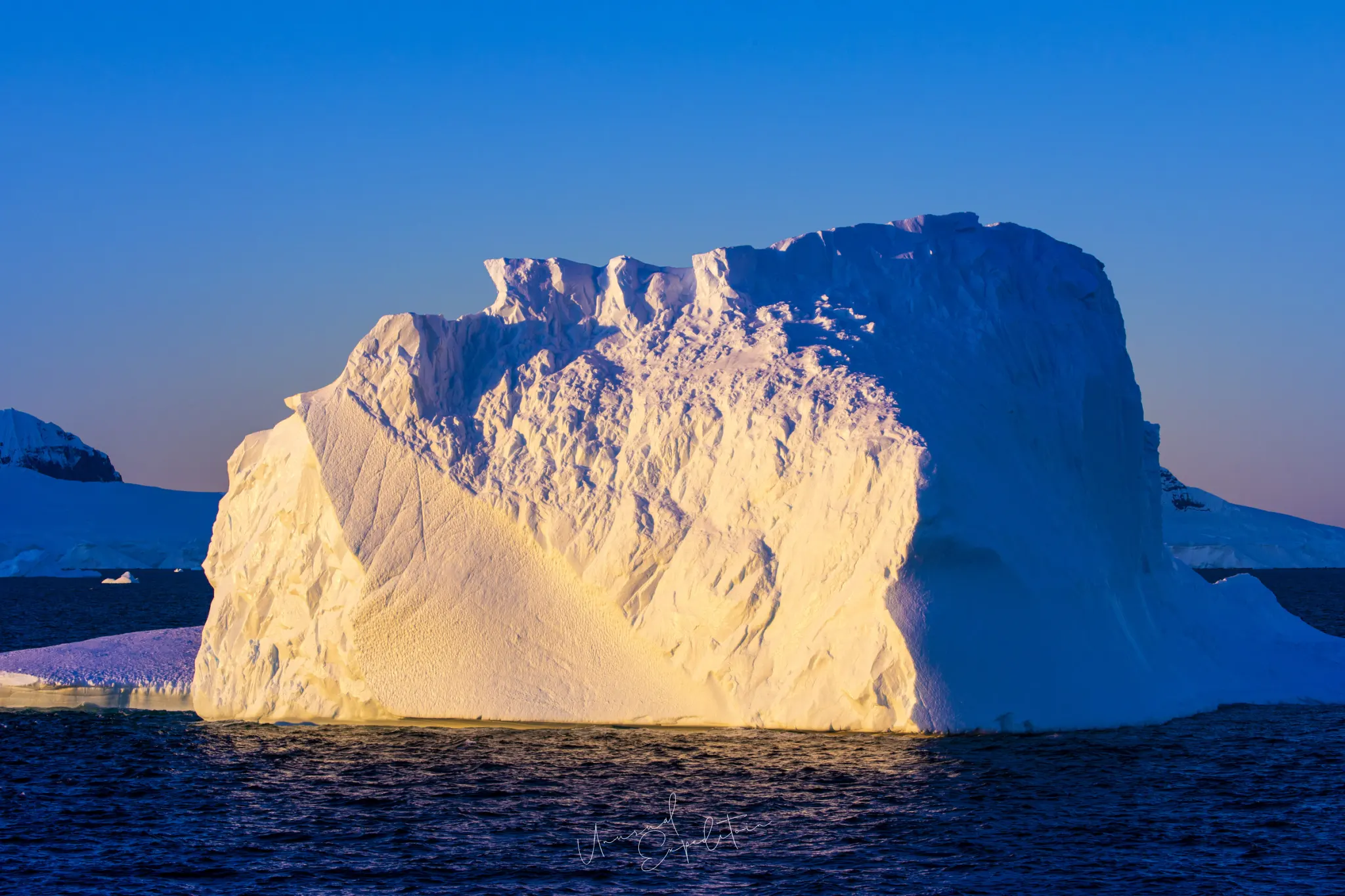
Does Antarctica have sunset? On the Antarctic Peninsula, where every small-ship voyage goes, yes: the sun sets every day of the year, but in December and January it dips below the horizon for so short a time that the sky never goes dark. Real sunsets, with colour, shadow and a night afterwards, return in February and are at their best in March. At the South Pole itself the sun sets once a year, around the March equinox, and does not rise again until September.
That answer surprises people, because the picture most of us carry is of a continent in permanent daylight or permanent dark. Both are true in their place and their month, and neither is true where the ships go. The complete guide to an Antarctica photography tour explains why we chose a March departure; this page is the light itself: when the sun sets in Antarctica, what the sunset looks like from a ship, why there is no night in midsummer, and what that does to your photographs.
Does the sun set in Antarctica
It depends on latitude, and Antarctica spans a great deal of it. The Antarctic Circle runs at about 66.5 degrees south. South of that line there is at least one day a year when the sun never sets and one when it never rises, and the further south you go the longer those spells become, until at the South Pole, 90 degrees south, there is one sunrise and one sunset a year. North of the circle the sun rises and sets every day, however briefly. The South Shetland Islands sit at about 62 degrees south and the peninsula waters a fly-cruise works at 63 to 65 degrees, so the whole of our route is north of the Antarctic Circle. The sun sets there every night of the year. What changes with the season is how long it stays down and how dark it gets while it is.
Why is there no night in Antarctica in summer
Near the December solstice the sun at 64 degrees south sets late in the evening and rises again in the small hours, and between those two moments it never drops far enough below the horizon for the sky to darken. Astronomers call it civil twilight: the sun is down, but you can read on deck without a lamp. On my midsummer voyages the ship's lights stayed off until the very end of the evening and the sky was a long, pale band of orange and grey that slid along the horizon from west to south to east without ever going out. It is beautiful and it is tiring. People stop sleeping properly because the body has no cue, and after three or four days the lack of shadow begins to flatten every picture that is not of ice up close.
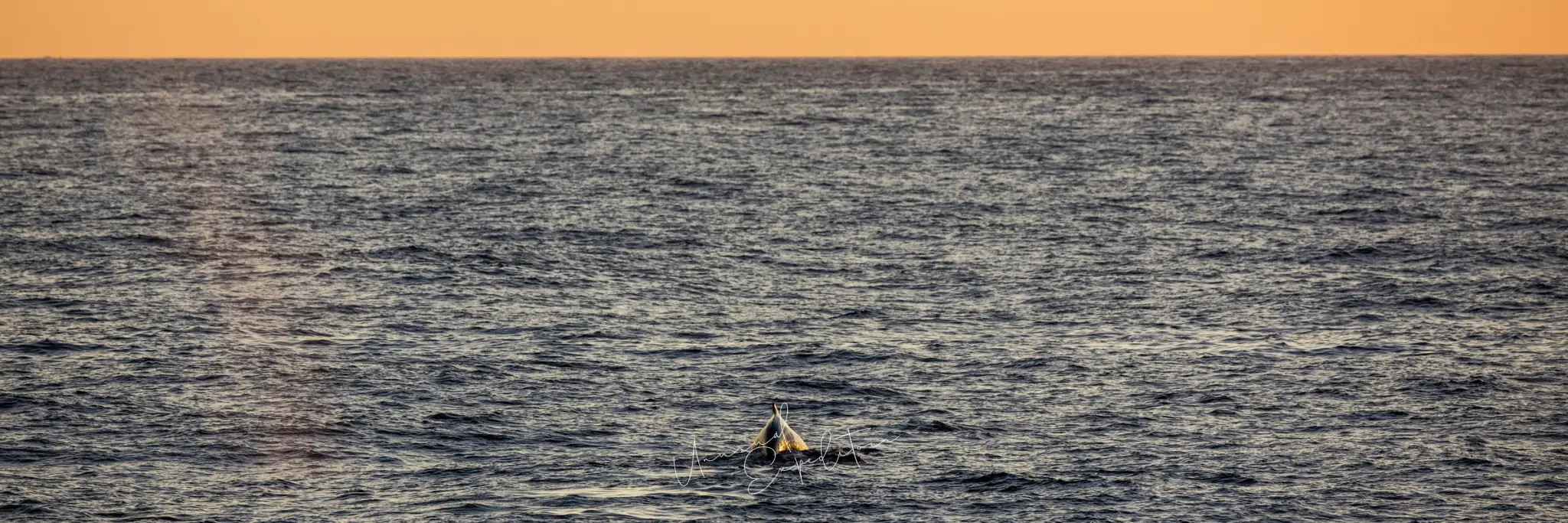
Antarctica sunset time by month
These are approximate hours of daylight for the South Shetland Islands and the northern Antarctic Peninsula, at roughly 62 to 65 degrees south, taken from standard astronomical tables and rounded. They are not a shooting schedule; they are the shape of the season. Sunrise and sunset shift by several minutes a day at this latitude, so the ends of a month differ noticeably from its middle.
| Month | Approximate daylight | Darkness | What the sunset is like |
|---|---|---|---|
| Late October | About 15 to 16 hours | A few hours of real night | Proper sunsets, often over sea ice; cold |
| November | About 17 to 19 hours | Short, fading to twilight by month end | Long slow sunsets, sun low for hours |
| December | About 20 to 22 hours | None; civil twilight all night | Sun sets late and rises early, sky never dark |
| January | About 19 to 21 hours | None to very little | Same as December until the last week |
| February | About 15 to 17 hours | A few hours of darkness return | Real colour again, sunset in late evening |
| March | About 12 to 13 hours | Full night of ten to twelve hours | Sunset in mid evening, long golden hour, stars |
The season runs from late October to late March because that is when ships can reach the coast, and the only months inside it that give both a sunset and a night afterwards are late February and March.
Sunset in Antarctica in January
January is the high season for ships and the hardest month for sunset photography. The sun sets in Antarctica in January close to midnight at the latitudes we sail and comes back up within a few hours, and in between the sky holds a steady glow. There are colours, sometimes very fine ones, but they stretch over four or five hours instead of forty minutes, and they sit along the horizon rather than filling the sky. The practical consequence is that if you want the warm light you have to be on deck late, long after dinner, and again before breakfast, and you do that for a week. The reward is low side-light on icebergs at an hour when most of the ship is asleep. The month-by-month guide to the Antarctica season sets this against chicks, whales and ice for each month.
Sunset in Antarctica in February and March
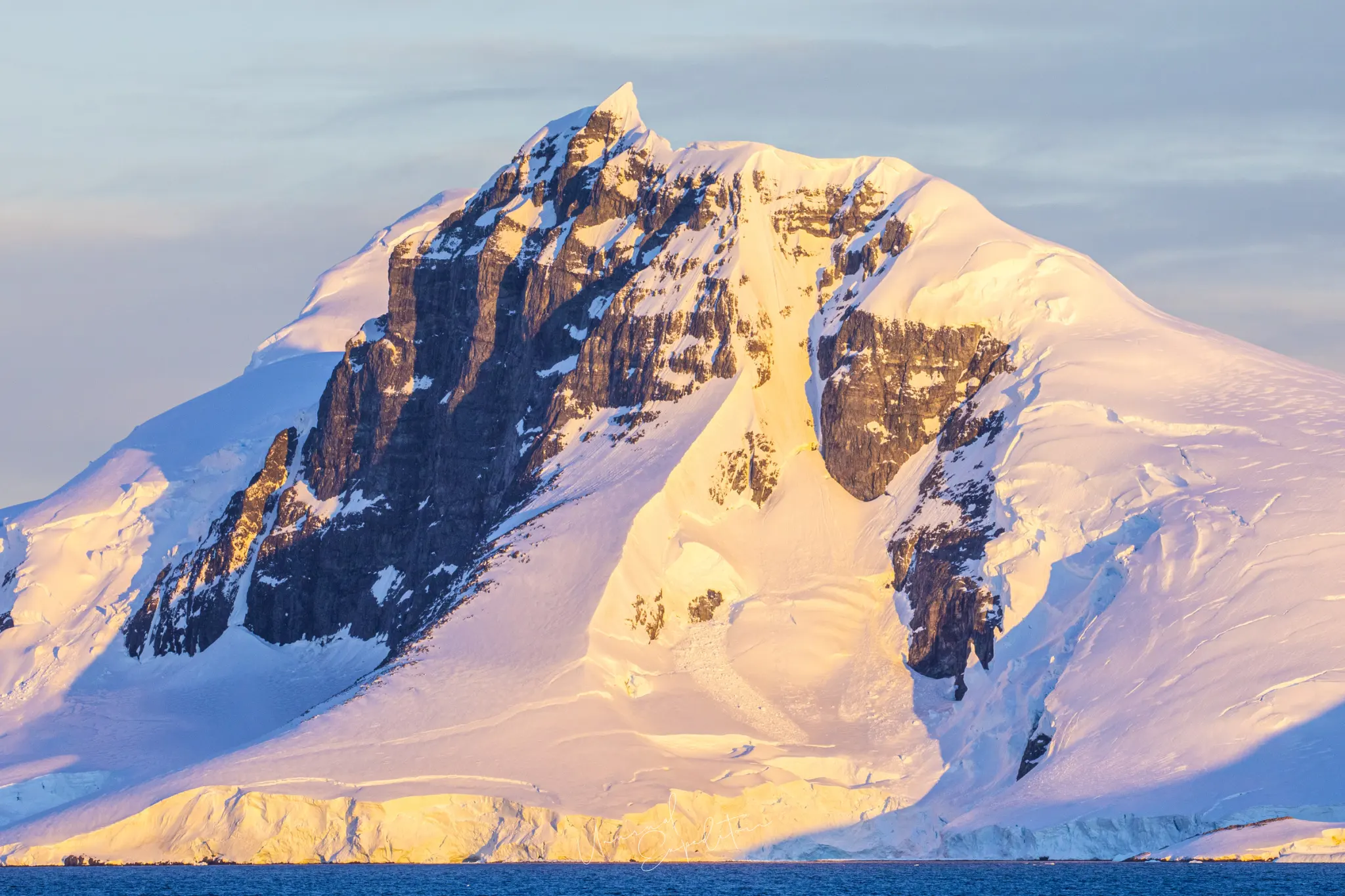
By February the days have shortened enough for the sun to set in the late evening and for darkness to follow, and by March the sun goes down in mid evening and the night lasts ten hours or more. This is the window our late-season departure is built on. The sunset is a sunset in the ordinary sense: the light turns gold, then orange, then pink on the snow slopes and the undersides of clouds, shadows lengthen across the ice, and twenty minutes after the sun has gone the sea turns to steel and the first stars come out. Penguins at sunset in March stand in warm side-light on wet rock. Humpbacks blow against a coloured sky. None of that is available in December. You pay for it with shorter days and a colder, muddier shore, and in my judgement it is a fair trade.
Antarctica sunset photo: what works from a ship
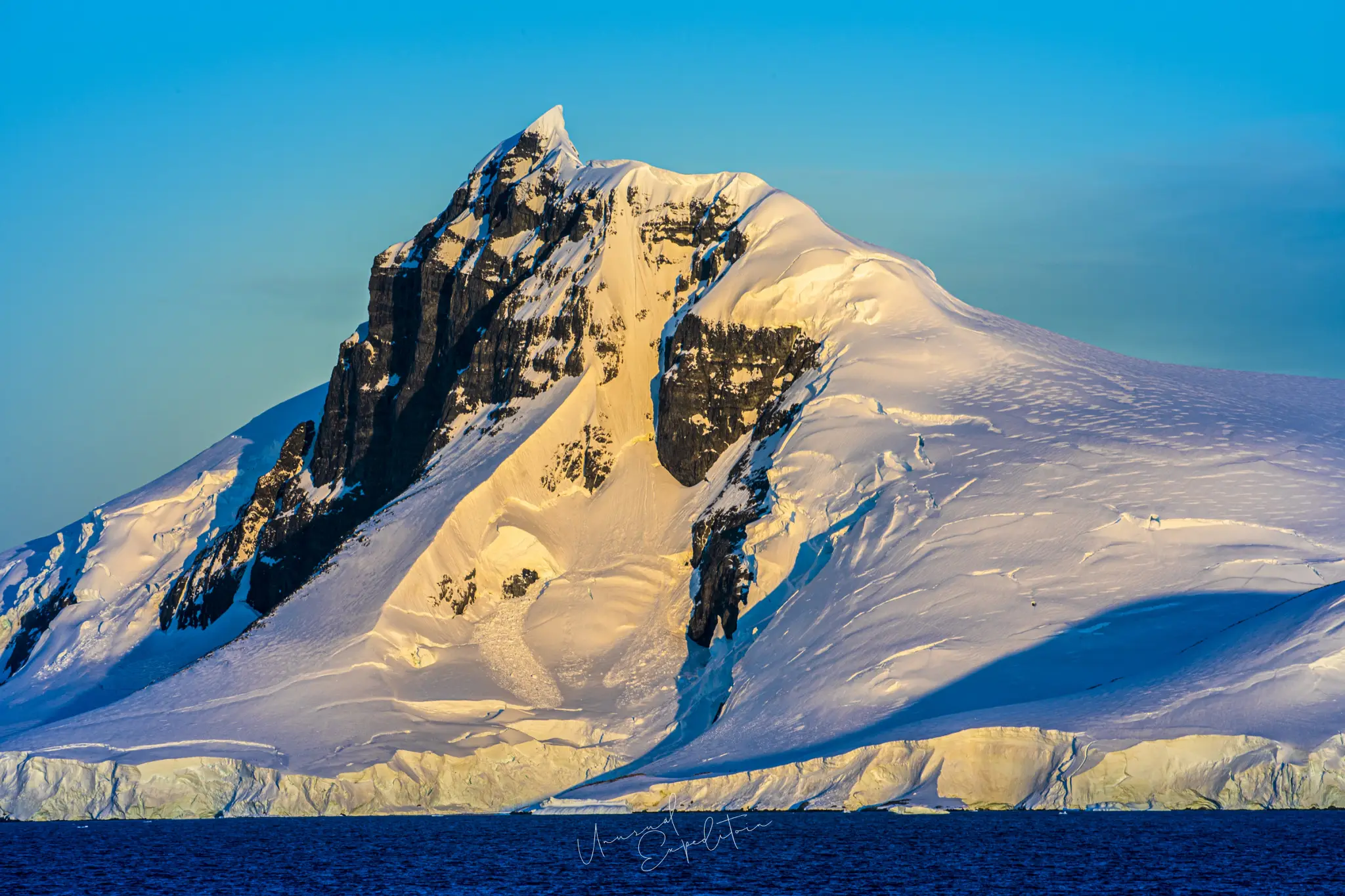
An Antarctic sunset photo rarely works as a plain sky picture, because the sky is the least Antarctic thing in it. The frame needs ice, and the ice needs to be lit. Shoot across the light rather than into it, so the sun is off to one side and the bergs show their texture; shoot into it only when there is something to silhouette, a Zodiac, a line of penguins on a ridge, the ship's bow. Expose for the highlights on the ice and let the shadows go, then check that the brightest snow has not clipped. A 24-70mm lens covers most of it from the deck; a 70-200mm lens picks a single lit berg out of a dark bay, which is the picture I like best. The exposure guide for snow and ice goes through the settings. Have the tripod ready for the half hour after sunset, when the light drops fast and the sea goes still.
Penguins at sunset
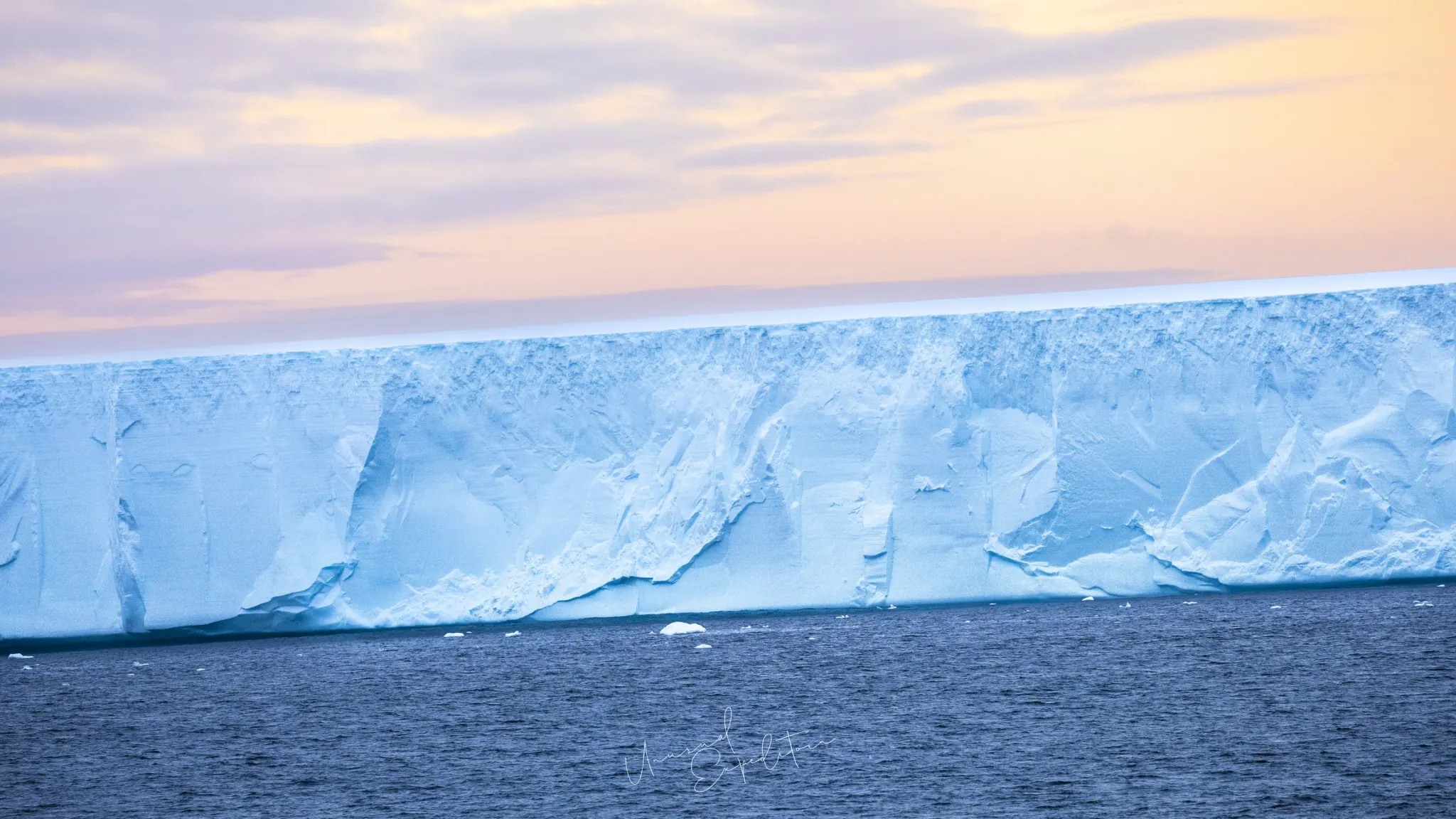
Penguins against a sunset are a March subject. In midsummer the colonies are lit from the side at an hour when landings have long finished, and you watch the colour from the ship. In March the sun is low enough during the afternoon landings, and sunset comes early enough, that a gentoo colony can be photographed in warm raking light and, if the ship stays late, against the coloured sky from a Zodiac cruise along the shore. Keep to the 5 metres the IAATO rules require, kneel where the guides allow it, and use the long lens to put a lit bird against a dark sea. The penguin photography guide covers the species and the shutter speeds.
Antarctica night photos
Night photographs of Antarctica exist only outside midsummer. In December there is no night to photograph. In March there is a long one, and on a clear evening the southern sky from the deck of a darkened ship is extraordinary: the Milky Way, the Magellanic Clouds, and Orion upside down. The difficulty is the ship, which moves even at anchor; long exposures blur the stars unless the water is dead calm, so most people settle for a steadier dusk frame with a few bright stars over the ice and treat anything more as a gift. Aurora australis is possible at this latitude in March but not something to count on; it needs darkness, a clear sky and activity on the sun all at once.
"On four midsummer voyages I never saw the sun set properly. It would slide along the horizon for hours, glorious and exhausting, and then come back up. March will be the first time I photograph Antarctica with a real sunset and a real night behind it, and that is the reason I chose it."
Joseph Mak, tour leader, Unusual Expedition
Does the sunset in Antarctica last longer
Yes, and the reason is geometry. At the equator the sun drops almost straight down and the whole business is over in twenty minutes. At 64 degrees south it meets the horizon at a shallow angle, so the last part of the descent and the twilight after it take far longer. In March the golden hour at the peninsula really is an hour or more, followed by a slow blue hour. In December the shallow angle is why the sun never gets far enough down to give darkness at all. The same shallow angle makes the light directional for most of the day, which is good for ice and bad for faces; shoot people in open shade or with the sun behind you.
Photograph the sunset with us in March
Our Antarctica fly-cruise sails in March, when the sun sets in mid evening and the light does what photographers want it to. The Antarctica photography tour page has the current departure and the booking details. I will be on deck for every sunset, and for the half hour after it.
Join the Antarctica photography tour
Antarctica Express Air-Cruise 2028 - Antarctica departs 10 Mar 2028 To 16 Mar 2028. Small group, photography first. All Antarctica photography tours.
Explore Antarctica in depth
- The Complete Guide to an Antarctica Photography TourAntarctica
- King George Island: Weather by Month, Daylight Hours and PenguinsAntarctica
- Antarctica Photos: What It Really Looks Like from an Expedition ShipAntarctica
- What to Pack for an Antarctica Cruise (and the 25 kg Rule)Antarctica
- Photographing the South Shetland IslandsAntarctica
- King George Island, Antarctica: The Airstrip, the Bases and the ChurchAntarctica
- Is Antarctica Worth Visiting? A Photographer's ViewAntarctica
- Crossing the Drake Passage: What to ExpectAntarctica
- Cape Horn and the Beagle Channel: Photographing the End of the WorldAntarctica
- Camera Gear for Antarctica PhotographyAntarctica
- The Best Time to Visit Antarctica for PhotographyAntarctica
- Photographing Whales in AntarcticaAntarctica
Upcoming Photo Tours
- Egypt Photo Tour – EgyptEgypt 12 Dec 2026 To 20 Dec 2026
- Inner Mongolia Winter Owl Photo Tour – ChinaChina 01 Jan 2027 To 04 Jan 2027
- Inner Mongolia Winter Photo Tour – ChinaChina 05 Jan 2027 To 11 Jan 2027
- Mekong And Central Highland Vietnam Photo Tour - VietnamVietnam 16 Jan 2027 To 24 Jan 2027