
Crossing the Drake Passage: What to Expect
How long the Drake Passage takes, Drake Lake vs Drake Shake, is it dangerous, a seasickness plan, albatross from the deck, the Convergence.
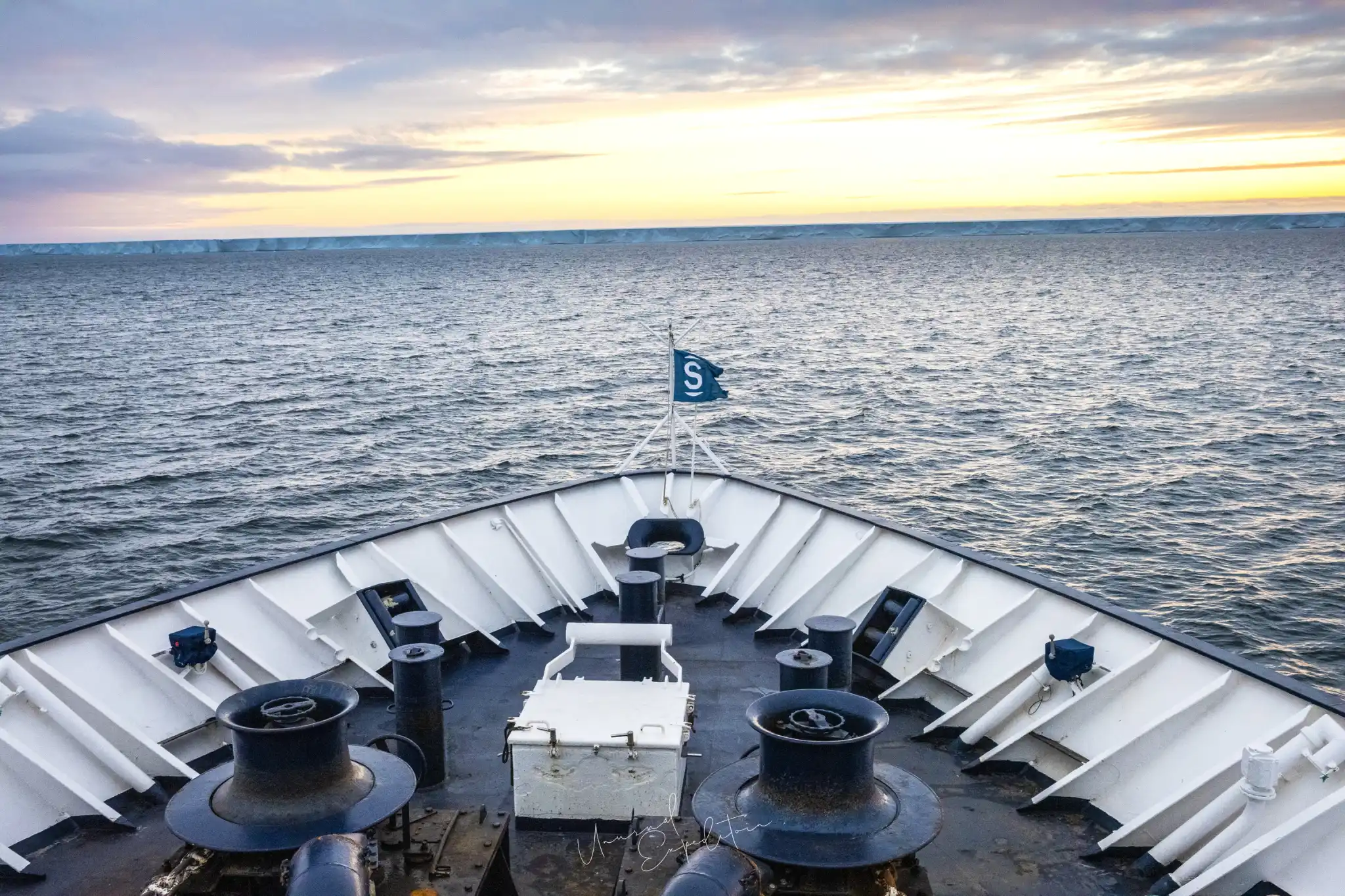
Crossing the Drake Passage means 36 to 48 hours at sea between the Antarctic Peninsula and Cape Horn, across roughly 800 km of the only latitude on earth where the ocean runs unobstructed round the globe. It can be flat, it can be very rough, and nobody knows which until a day before. On our fly-cruise you cross it once, northbound, after flying south over it. These notes are part of our complete guide to an Antarctica photography tour.
Where the Drake Passage is and why it is rough
The Drake Passage is the stretch of the Southern Ocean between the tip of South America at Cape Horn and the South Shetland Islands, about 800 km at its narrowest and often quoted as up to 1,000 km. It is the one band of latitude where no land interrupts the water, so the Antarctic Circumpolar Current and the westerly winds run around the whole planet without a coastline to break them. The swell that builds there has nothing to stop it. Low pressure systems march through from west to east, and a ship meets whatever system happens to be passing. That is the whole explanation: wind and water with room to work.
Drake Passage: how long to cross
By ship, the Drake Passage takes 36 to 48 hours in each direction, depending on the vessel's speed and the sea state; captains slow down in heavy weather for comfort and safety. A classic Antarctic cruise from Ushuaia therefore spends roughly four days of the voyage crossing open water. The alternative is to fly. Antarctica21's charter from Punta Arenas to King George Island covers the same distance in about two hours on a BAe 146 or Avro RJ, a four-engine jet built for the gravel strip on the Fildes Peninsula. Our departure flies south and sails north, so the crossing happens once, at the end, when you have the pictures in the bag and the ice behind you. How that shape works, and when the flight can slip, is explained in how an Antarctica fly cruise works.
Drake Lake or Drake Shake
Sailors have two names for the crossing. The Drake Lake is the passage on a day when the systems have cleared and the sea is a long, low swell that the ship rides easily; people eat lunch, read on deck, and wonder what the fuss was about. The Drake Shake is the other day: a few metres of swell on the beam, spray over the bow, doors tied open, the dining room half empty. Both are normal and both happen in the same week. The weather a day or two before you sail decides which you get, and the bridge shares the forecast before the ship sails. Can the Drake Passage be calm? Yes, and often. Can it be rough? Also yes. Plan for the Shake and enjoy the Lake if it comes.
| Question | Classic ship route, both ways | Fly-cruise, this departure |
|---|---|---|
| Drake crossings | Two, southbound and northbound | One, northbound |
| Time crossing open water | About four days of the voyage | 36 to 48 hours once, plus a two-hour flight |
| Seasickness exposure | Twice, including at the start | Once, at the end, after the ice |
| Weather risk | Rough seas can delay or shorten the peninsula time | Flight waits for visibility at King George Island; can slip a day or more |
| Deck photography of seabirds | Two crossings' worth | One crossing's worth |
| Cape Horn | Passed, sometimes approached | Zodiac landing attempted, weather permitting |
The trade is plain: the fly-cruise gives up one seabird crossing in exchange for a week that is mostly ice, and keeps the single crossing for the end, when a rough night costs you nothing you have not already photographed.
Is the Drake Passage dangerous?
Uncomfortable, yes. Dangerous, not in any practical sense for a modern expedition ship. Antarctic vessels are built and crewed for this water, carry stabilisers, and sail under IAATO rules and the Antarctic Treaty's environmental protocol with captains who know this water. The risks that matter are small and personal: a fall in a corridor when the ship rolls, a camera sliding off a table, a door swinging. Hold the rails, keep one hand free, wedge the camera bag between the bunk and the wall, and do not carry a hot drink across a moving room. On my ship crossings of the Drake nobody was hurt and most people were on deck for part of each crossing.
A seasickness plan that works
Most people are fine if they prepare. Talk to your doctor before you travel about a prescription patch or tablets and start them before the ship leaves sheltered water, because once you feel ill it is too late for most medication to help. Eat lightly but do eat; an empty stomach is worse. Choose a lower, central cabin if seasickness worries you and you have the choice. Fresh air and a view of the horizon help more than lying down in the dark, so a chair on a sheltered deck is better than the bunk for many. The one rule that holds for everyone is to take the medication early. On this departure the crossing comes after the ice, so a bad night costs you the Beagle Channel approach at worst, not a landing.
Seabirds from the deck
The Drake Passage is the best seabird photography of the whole trip, and it needs no landing. Wandering albatross with a wingspan over three metres follow the ship for hours, sliding across the wake without a wingbeat. Black-browed albatross, southern giant petrels, cape petrels with their checked backs, and the tiny Wilson's storm petrels dancing on the water all work the ship. Use the 100-400mm, shutter at 1/2000 s or faster, continuous autofocus, and shoot from the stern where the birds come closest and the wind is behind you. The grey light of the Drake is kind to white birds; expose with a touch of plus compensation so the albatross stays white against the dark sea. Our guide to seals and seabirds of Antarctica covers each species.
"On my December 2019 voyage the Drake gave us the Lake going south and the Shake coming home. I spent the rough afternoon at the stern with the 100-400mm and a wandering albatross that stayed with the ship for an hour. Most of the group were in their cabins. The bird pictures from that afternoon are still the ones I show first."
Joseph Mak, tour leader, Unusual Expedition
Crossing the Antarctic Convergence
Somewhere in the Drake Passage the ship crosses the Antarctic Convergence, the line where cold Antarctic surface water meets the warmer water of the sub-Antarctic and sinks beneath it. It is not visible, but it is measurable: the sea surface temperature drops by several degrees over a short distance, the air chills, fog often forms, and the birds change. South of the Convergence the Antarctic species take over, snow petrels and Antarctic terns among them; north of it the sub-Antarctic birds return. Oceanographers treat the Convergence, also called the Antarctic Polar Front, as the biological boundary of Antarctica, a better definition of arriving or leaving than any line of latitude. Northbound, it is the moment the trip starts to feel like it is ending.
What to photograph on the crossing
Apart from the birds, the Drake Passage gives three subjects. The sea itself, best from a high deck with a 24-70mm when the swell is up, a wave breaking over the bow and the horizon tilted. The ship and the people on it, which is where the trip's story pictures come from: the empty dining room, a hand on a rail, the group in the lounge watching the Horn appear. And the light, because the Drake is where the long March twilight is unbroken by mountains, and a sunset over open water from the stern is a different picture from one over ice. Keep the camera in a zip bag between sessions; the deck is wet, the lounges are warm, and condensation is as much a problem here as on the peninsula. Camera gear for Antarctica photography covers the kit.
What the Drake Passage looks like
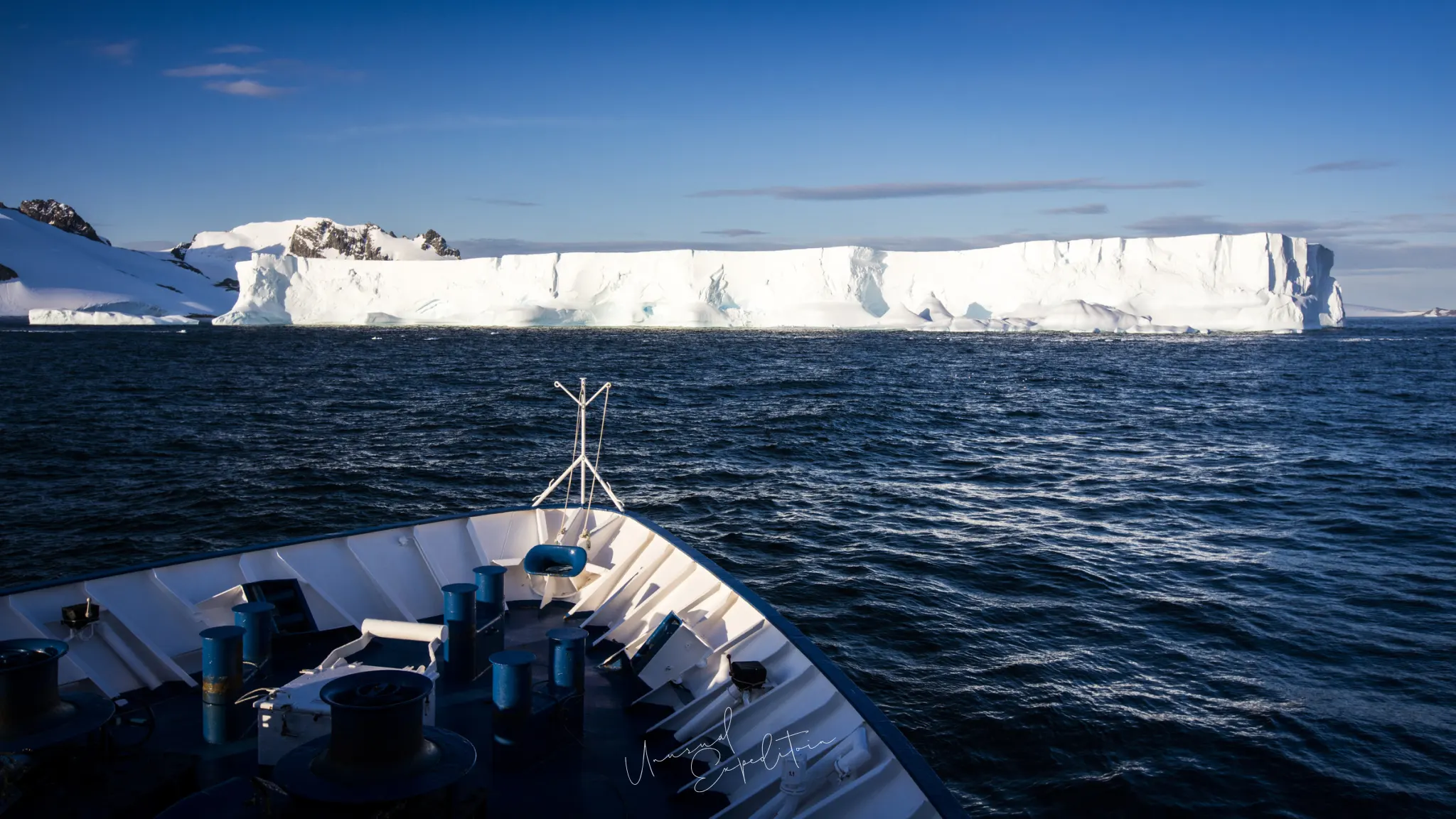
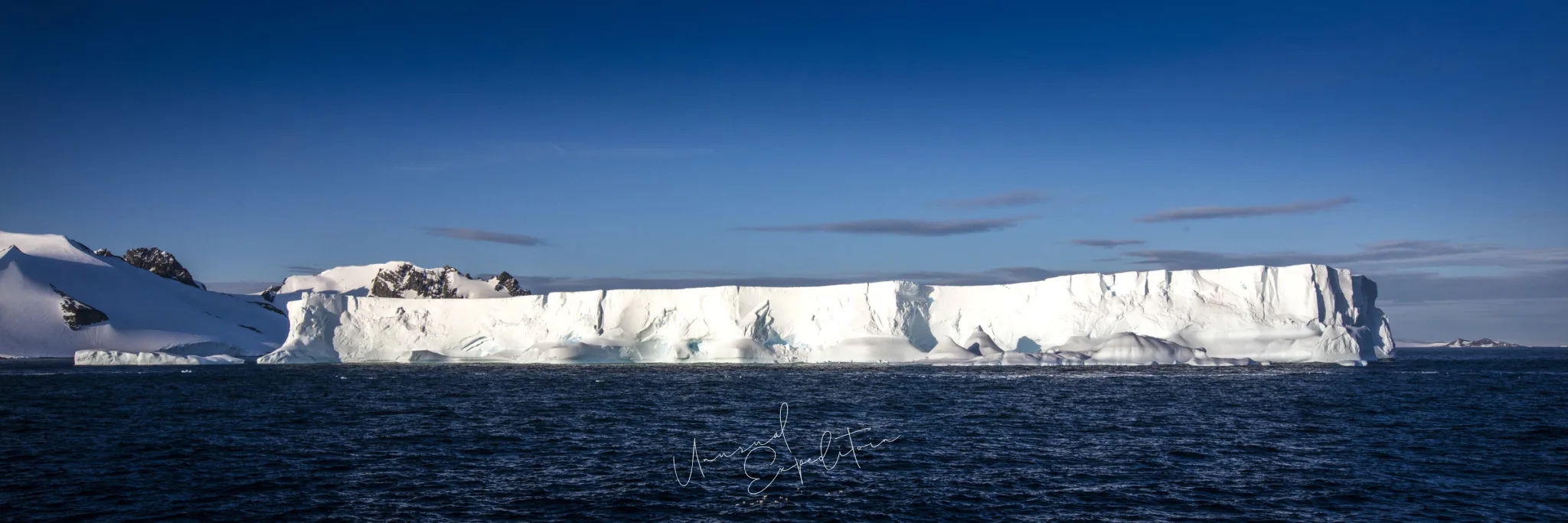
Photos of the Drake Passage disappoint people who expect drama in every frame, because for most of the crossing it looks like any open ocean: a grey or blue horizon, a long swell, and birds. What marks it as the Drake is what appears at its southern end. The water temperature drops as the ship crosses the Antarctic Convergence, the air turns colder and clearer, and then the first ice arrives, usually a tabular iceberg standing alone in open water, flat-topped and a mile long, carved from an ice shelf far to the south and drifting north to melt. The first berg is the photograph everyone takes and the one that tells you the crossing is nearly done. After it come the smaller bergs, the first penguins porpoising beside the hull, and the South Shetland Islands on the horizon.
Cape Horn at the end of it
The northbound crossing ends at Cape Horn, where the ship attempts a Zodiac landing on Hornos Island if the sea allows and then turns into the Beagle Channel for Ushuaia. The landing is a bonus and depends on calm conditions, which the Drake does not often provide. What to expect there, from the albatross monument to the lighthouse keeper, is in Cape Horn and the Beagle Channel: photographing the end of the world.
Sail it once, with the pictures already made
The Drake Passage is part of the Antarctic experience and I would not want to skip it entirely, but crossing it once, at the end, is the shape I prefer, having crossed it by ship and flown over it. Our Antarctica photography tour flies in and sails home over the Drake to Ushuaia. Look for me at the stern rail on the crossing; that is where the albatross are.
Join the Antarctica photography tour
Antarctica Express Air-Cruise 2028 - Antarctica departs 10 Mar 2028 To 16 Mar 2028. Small group, photography first. All Antarctica photography tours.
Explore Antarctica in depth
- The Complete Guide to an Antarctica Photography TourAntarctica
- King George Island: Weather by Month, Daylight Hours and PenguinsAntarctica
- Sunset in Antarctica: Does the Sun Set, and What the Light DoesAntarctica
- Antarctica Photos: What It Really Looks Like from an Expedition ShipAntarctica
- What to Pack for an Antarctica Cruise (and the 25 kg Rule)Antarctica
- Photographing the South Shetland IslandsAntarctica
- King George Island, Antarctica: The Airstrip, the Bases and the ChurchAntarctica
- Is Antarctica Worth Visiting? A Photographer's ViewAntarctica
- Cape Horn and the Beagle Channel: Photographing the End of the WorldAntarctica
- Camera Gear for Antarctica PhotographyAntarctica
- The Best Time to Visit Antarctica for PhotographyAntarctica
- Photographing Whales in AntarcticaAntarctica
Upcoming Photo Tours
- Egypt Photo Tour – EgyptEgypt 12 Dec 2026 To 20 Dec 2026
- Inner Mongolia Winter Owl Photo Tour – ChinaChina 01 Jan 2027 To 04 Jan 2027
- Inner Mongolia Winter Photo Tour – ChinaChina 05 Jan 2027 To 11 Jan 2027
- Mekong And Central Highland Vietnam Photo Tour - VietnamVietnam 16 Jan 2027 To 24 Jan 2027