
What to Pack for an Antarctica Cruise (and the 25 kg Rule)
Antarctica cruise packing list for photographers: layers, waterproofs, gloves, supplied boots, camera bag, and the 25 kg flight limit.
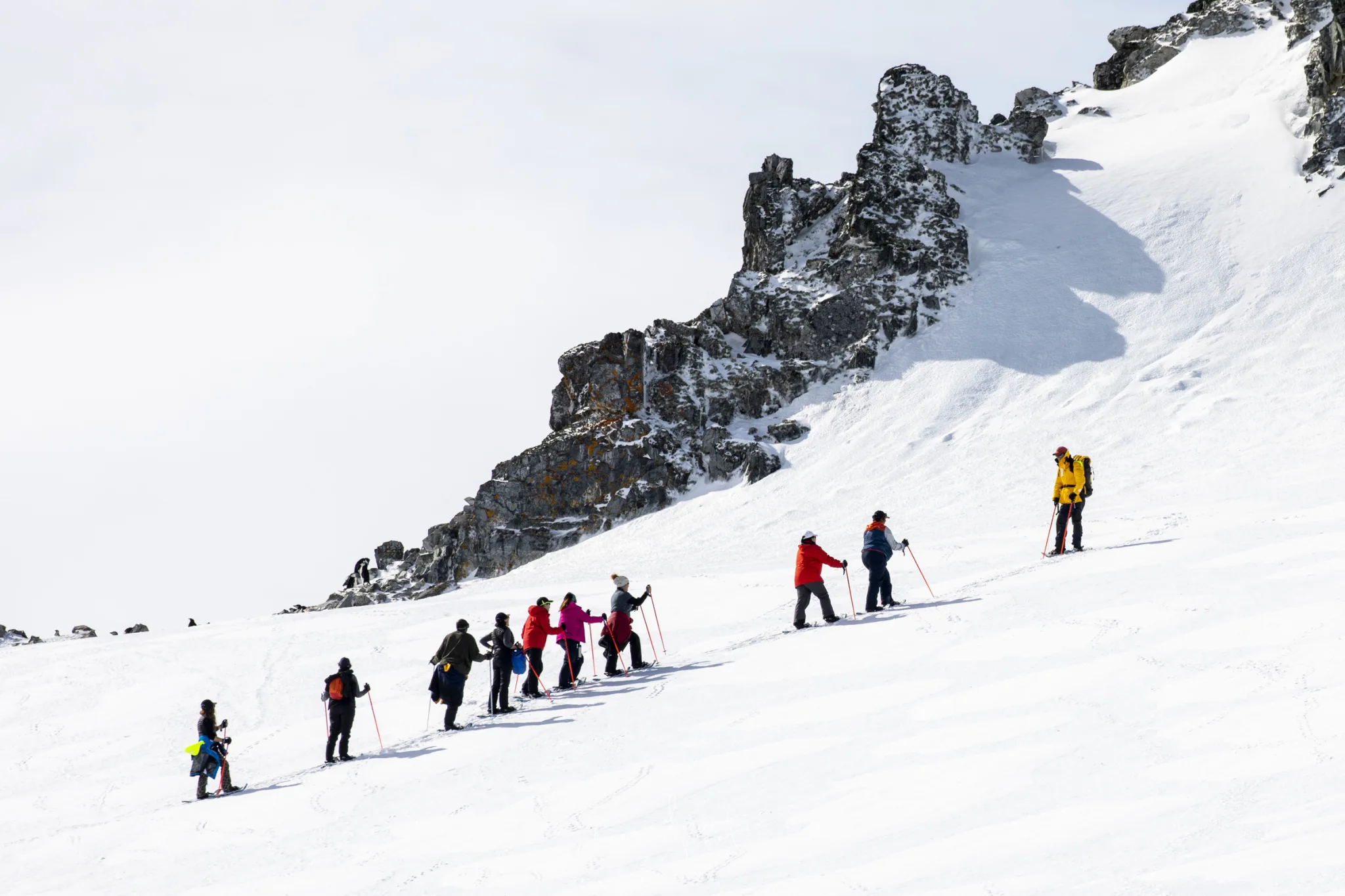
What to pack for an Antarctica cruise comes down to three layers for the top half, waterproof trousers for the bottom half, two pairs of gloves, and a camera bag that counts toward a hard 25 kg limit including hand luggage on the Antarctic flight. Expedition boots are fitted and supplied, so you do not pack those. This list is written for the March fly-cruise in our complete Antarctica photography tour guide, where the weight rule shapes every other choice.
What is the 25 kg rule on an Antarctica fly cruise?
On the Antarctica21 charter flights between Punta Arenas and King George Island the allowance is 25 kg per person, and that figure includes hand luggage. Everything is weighed together in Punta Arenas before boarding. The aircraft is a BAe 146 or Avro RJ, a four-engine jet chosen because it can use the gravel airstrip on the Fildes Peninsula, and the limit is a safety figure, so do not plan on paying for excess. For a photographer this changes the arithmetic. A body, a 24-70mm, a 70-200mm or 100-400mm, batteries, cards and a laptop can be a third of the total before a single sock goes in. Pack the camera bag first, weigh it, and build the clothing around what is left. Anything you do not need in Antarctica itself can be left in Punta Arenas if the operator offers storage; ask before you rely on it. Why the flight exists at all is explained in how an Antarctica fly cruise works.
What to wear on an Antarctica cruise: the layering system
What to wear on an Antarctica cruise is a layering question, not a thickness question. In March the air sits around freezing, roughly minus 5 to plus 3 degrees, but the wind in a moving Zodiac and on an open deck drives the felt temperature far lower, and spray is constant. Start with a merino or synthetic base layer, never cotton, which holds sweat and chills you. Add a fleece or light insulated mid layer. Finish with a waterproof, windproof shell with a hood that fits over a hat. Bring your own insulated outer jacket unless the operator's pre-departure notes confirm one is issued. On landings you walk uphill in snow and then stand still for an hour photographing a colony, so the mid layer should come off and go on without removing the shell. Two sets of base layers and two mid layers for a week are enough; the shell is worn every day.
What to wear below the waist and on your feet
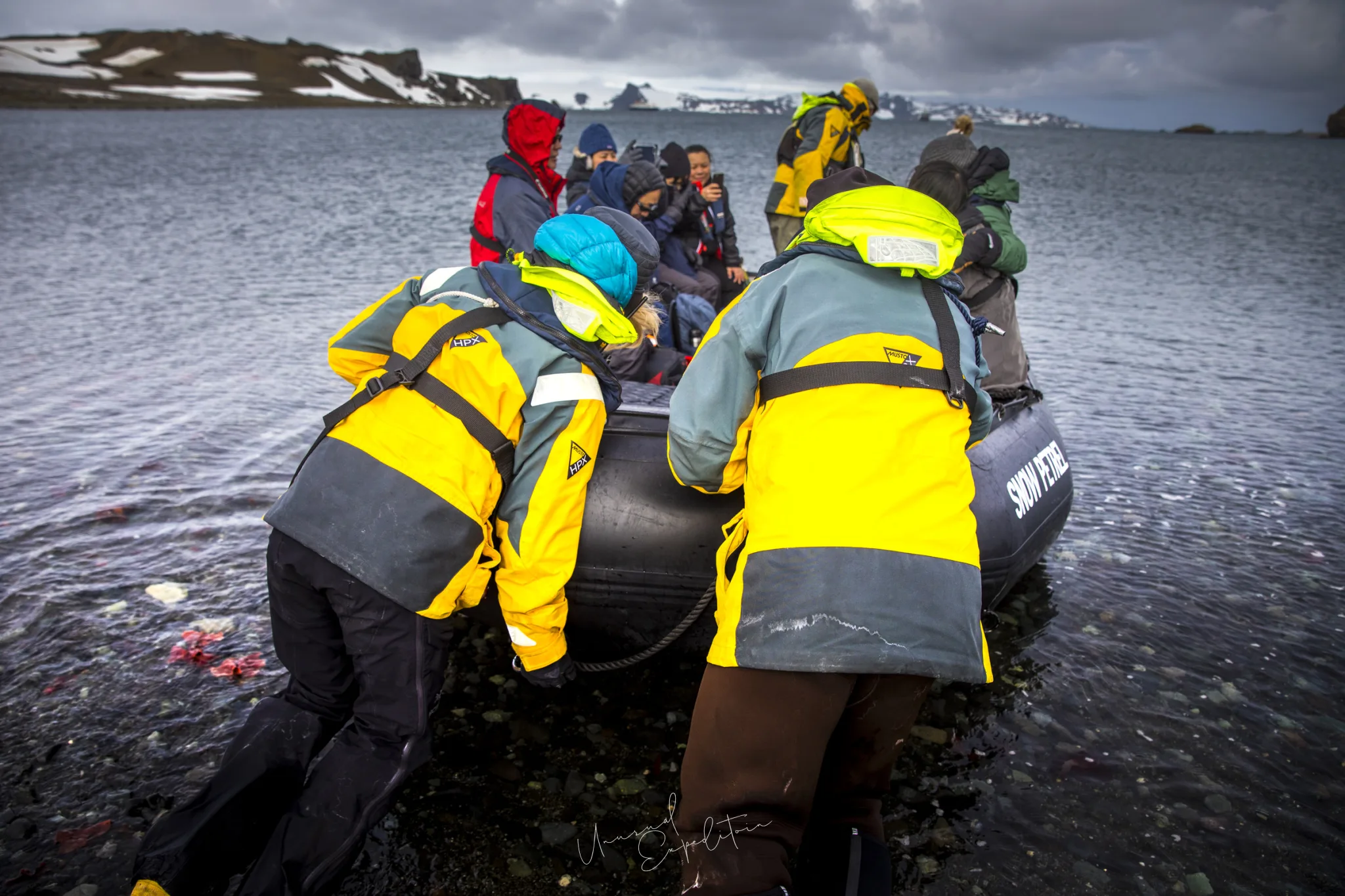
Waterproof over-trousers are not optional. Every Zodiac landing is a wet landing, meaning you step into shallow water from the boat, and the trousers go over the boots so sea water runs off instead of in. Underneath, a thermal base layer and a pair of fleece or softshell trousers do the work. The expedition boots are fitted and supplied by the operator, tall rubber boots with grip, so leave your own hiking boots at home and bring two or three pairs of thick wool socks plus thin liner socks. On the ship you need only comfortable indoor shoes with a sole that grips a wet deck. Trainers are fine for Punta Arenas and Ushuaia. A pair of gaiters is unnecessary with boots that tall. Everything that goes ashore is biosecurity-checked under IAATO rules, so arrive with pockets and Velcro vacuumed clean of seeds and soil from earlier trips.
Hands, head and face for a photographer
Hands are the photographer's problem. A thick mitten keeps you warm and makes the camera unusable; a thin glove lets you work and freezes in ten minutes of spray. The answer is a system: a thin liner glove that works a touchscreen and a shutter button, worn under a waterproof insulated glove or mitten that comes off for the shot and goes back on between frames. Carry a spare pair of liners because one will get wet. Chemical hand warmers in the outer glove are worth their weight. For the head, a warm beanie that fits under the shell hood, a neck gaiter or buff that can be pulled over the nose in wind, and sunglasses with good UV protection, because light off snow and water in March is strong even on grey days. High-factor sunscreen and lip balm go in a shell pocket, not the suitcase.
Antarctica cruise packing list
| Category | Pack | Notes |
|---|---|---|
| Base layers | Two merino or synthetic tops and bottoms | No cotton |
| Mid layers | Fleece or light insulated jacket, fleece trousers | Removable without taking the shell off |
| Outer | Waterproof windproof shell with hood, waterproof over-trousers, insulated jacket | Confirm with the operator whether a parka is issued |
| Feet | Wool socks, liner socks, indoor shoes with grip | Expedition boots supplied |
| Hands and head | Liner gloves, waterproof insulated gloves or mittens, beanie, neck gaiter, sunglasses | Spare liners, hand warmers |
| Camera | Body, 24-70mm, 70-200mm or 100-400mm, batteries, cards, cloths, dry bag | Carry as hand luggage, weigh it first |
| Health | Seasickness medication, sunscreen, lip balm, personal medicines, insurance papers | Evacuation cover is required |
| Power | Universal adaptor, small multi-socket strip, chargers | Socket type varies by ship |
| Documents | Passport valid six months, flight tickets, insurance certificate | Chile and Argentina visa-free for Singapore passports |
Weigh the whole lot before you leave Singapore; if it is over 25 kg at home it will be over 25 kg in Punta Arenas, and the scale there is the one that counts.
What to pack for the camera bag
The camera bag travels as hand luggage, on your back onto the aircraft and across your front in the Zodiac. A padded backpack with a rain cover suits this better than a shoulder bag. Inside: one or two bodies, a 24-70mm for landscape and ship work, a 70-200mm or 100-400mm for penguins, seals and whales, more batteries than seems sane, memory cards for the whole voyage, a lens cloth for salt spray and a plastic bag or dry bag large enough to seal the camera before you walk from the cold deck into the warm cabin, so condensation forms on the bag and not inside the lens. A small tripod is useful for sunsets from the deck in March and dead weight ashore. Leave the drone at home; recreational drones are not permitted in the coastal wildlife areas under IAATO guidelines. The full kit discussion is in camera gear for Antarctica photography.
Sun, sea and stomach
Three things people forget. First, sun: snow and water reflect ultraviolet from below as well as above, and in March the sun is still high enough at midday to burn a Singapore face that thinks it is used to it. Sunscreen and sunglasses every landing. Second, sea: this trip crosses the Drake Passage once, northbound, and the Drake can be a lake or a shake; pack whatever seasickness medication works for you, start it before the ship leaves sheltered water, and talk to your doctor about patches or tablets before you travel. The crossing is described in crossing the Drake Passage: what to expect. Third, dryness: ship cabins are warm and dry, so moisturiser and lip balm matter more than you expect. Personal medicines go in hand luggage with a copy of the prescription.
"On my first voyage I took two heavy jumpers and wore neither. On the fourth I took one fleece, one shell and three pairs of liner gloves, and I was warmer, because the gloves were dry. The weight I saved went on a second camera body, which I did use."
Joseph Mak, tour leader, Unusual Expedition
What to leave at home
Leave at home anything heavy that Antarctica does not need: your own boots, a second big jacket, a full-size laptop if a tablet and a portable drive will do, hardback books, and formal clothes, because expedition ships do not dress for dinner. Leave the drone. Leave the cotton. Leave new, untested gear; a shell you have never worn in rain is a gamble. Leave the idea that you will shop in Antarctica, since there is nothing to buy except possibly a souvenir at a research station if a visit happens, which is never guaranteed. Punta Arenas and Ushuaia both have outdoor shops if something is forgotten, but a city at the end of the world charges end-of-the-world prices and the sizes may not be yours. Pack once, weigh once, and take the weight you saved as a longer lens or a second body.
Pack light and come south with us
A well-packed bag is the difference between photographing a humpback and fumbling for a glove. If you would like to put the 25 kg to use on the Antarctica photography tour, Joseph Mak will be on the deck and in the Zodiac with you in March, and the tour page carries the current departure and fare. Send us a photo of your packed bag on the scale if you want a second opinion before you fly.
Join the Antarctica photography tour
Antarctica Express Air-Cruise 2028 - Antarctica departs 10 Mar 2028 To 16 Mar 2028. Small group, photography first. All Antarctica photography tours.
Explore Antarctica in depth
- The Complete Guide to an Antarctica Photography TourAntarctica
- King George Island: Weather by Month, Daylight Hours and PenguinsAntarctica
- Sunset in Antarctica: Does the Sun Set, and What the Light DoesAntarctica
- Antarctica Photos: What It Really Looks Like from an Expedition ShipAntarctica
- Photographing the South Shetland IslandsAntarctica
- King George Island, Antarctica: The Airstrip, the Bases and the ChurchAntarctica
- Is Antarctica Worth Visiting? A Photographer's ViewAntarctica
- Crossing the Drake Passage: What to ExpectAntarctica
- Cape Horn and the Beagle Channel: Photographing the End of the WorldAntarctica
- Camera Gear for Antarctica PhotographyAntarctica
- The Best Time to Visit Antarctica for PhotographyAntarctica
- Photographing Whales in AntarcticaAntarctica
Upcoming Photo Tours
- Egypt Photo Tour – EgyptEgypt 12 Dec 2026 To 20 Dec 2026
- Inner Mongolia Winter Owl Photo Tour – ChinaChina 01 Jan 2027 To 04 Jan 2027
- Inner Mongolia Winter Photo Tour – ChinaChina 05 Jan 2027 To 11 Jan 2027
- Mekong And Central Highland Vietnam Photo Tour - VietnamVietnam 16 Jan 2027 To 24 Jan 2027