
The Best Time to Visit Antarctica for Photography
October to March compared for photographers: light, penguins, whales, ice and ships, and why we chose March after four midsummer voyages.
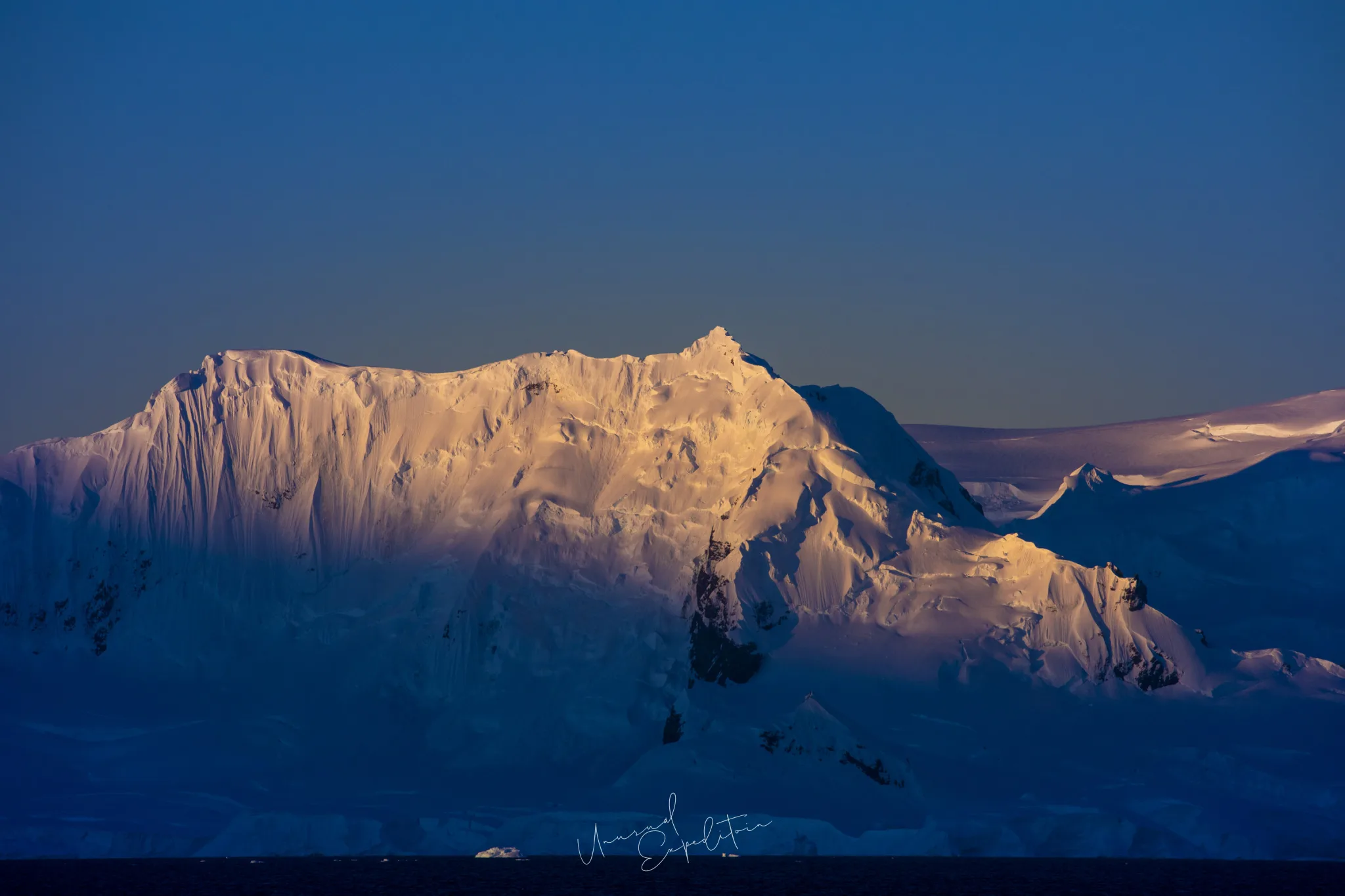
The best time to visit Antarctica for photography depends on what you want in the frame. The tourist season runs from late October to late March. Early season gives clean snow and courting penguins, midsummer gives hatching chicks under round-the-clock light, and late season, February into March, gives whales at their most numerous, fledging chicks, real sunsets and fewer ships. After four midsummer voyages by ship, we chose March for the trip described in our complete Antarctica photography tour guide. Here is the reasoning.
When is the best time to visit Antarctica for photography?
There is no single answer, because Antarctica changes more between October and March than most destinations change in a year. The season exists at all because the sea ice around the Antarctic Peninsula breaks up in spring and reforms in autumn; ships leave as the ice returns and darkness comes back, which is why IAATO member operators run nothing for tourists from April to September. Within the open months the light shifts from more than twenty hours in November to no true night at all in December and January, then back to roughly thirteen hours by mid March. The penguin colonies move through courtship, eggs, chicks, fledging and moult in that order. Whales arrive in numbers as the summer krill feeding goes on. So the useful question is which of those stages you want to photograph, and the sections below take each part of the season in turn.
What does early season in Antarctica give a photographer?
Early season means November. The snow is still clean and deep at the landing sites, the penguins are courting, building nests and sitting on eggs, and the big icebergs of the previous winter are still drifting in the bays. Daylight runs past twenty hours. For a landscape photographer this is the purest Antarctica: white slopes without the guano stains that come later, pack ice still in the channels, long low light at either end of a very long day. The costs are real. Whales are few because the krill feeding season has barely begun. Sea ice can still block the southern anchorages, so a ship may not reach the places it reaches in January. There are no chicks yet. If your picture of Antarctica is ice and clean snow with penguins as a small element, November is a strong choice. If it is wildlife behaviour, November is the weakest month of the season.
What does mid season in Antarctica look like?
December and January are midsummer. Chicks hatch from mid December and the colonies are at their busiest, adults shuttling to and from the sea to feed them, skuas waiting at the edges. There is no true sunset; the sun dips toward the horizon late at night and comes back up a short while later, so the light stays usable round the clock and the sky never goes dark. This is the season I know best, from four midsummer voyages, and the colony pictures on this site come from it. It is also when most ships are on the Peninsula, because the weather is at its most settled and demand is highest. Bubble-net feeding by humpbacks, where it happens on the Peninsula, is most frequent in January. For penguin chick photography specifically, see our article on photographing penguins in Antarctica.
Is February a good time to visit Antarctica?
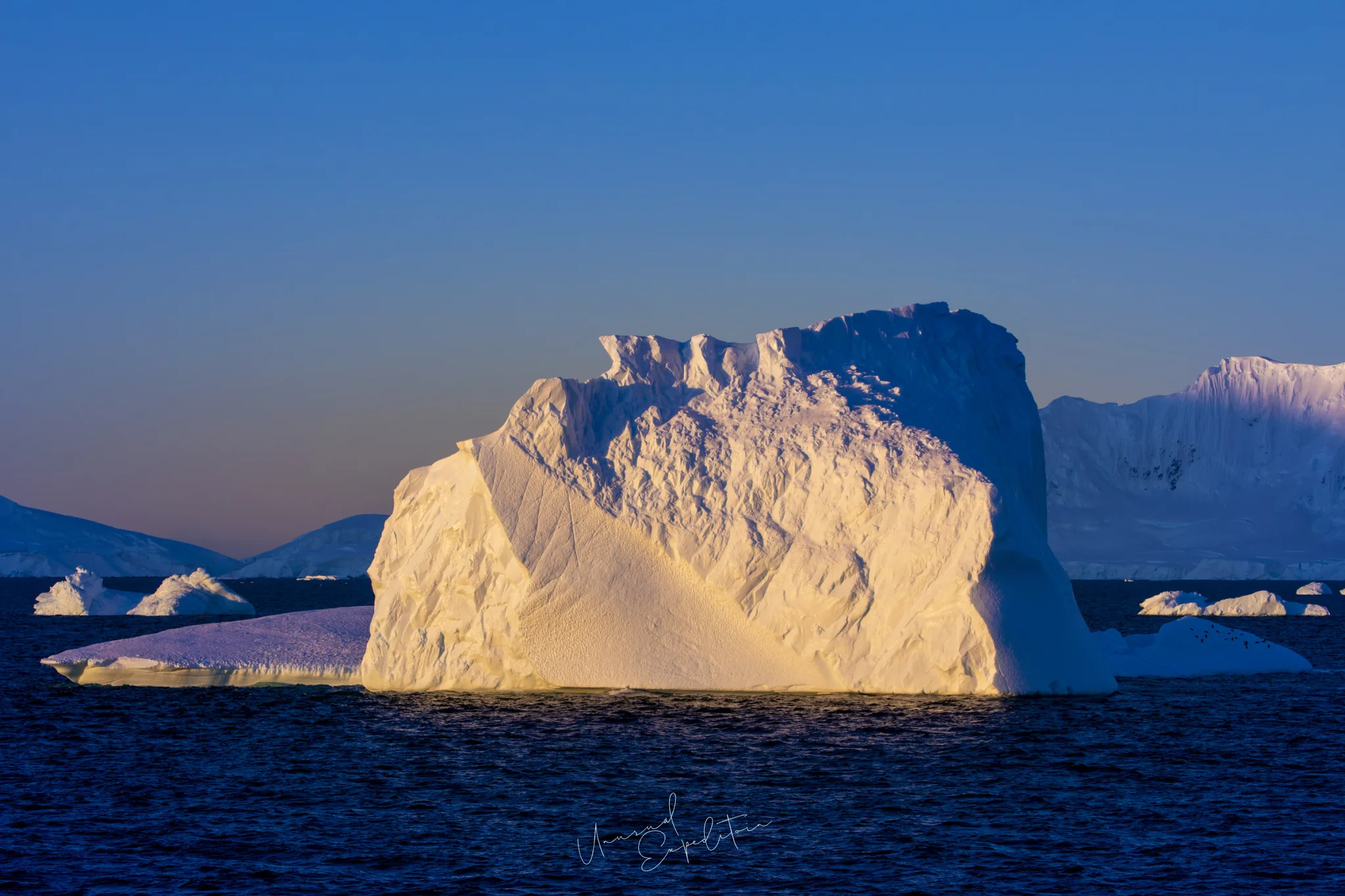
February is a good time to visit Antarctica, and for many photographers the best balance of the season. The chicks are large, in grey down and beginning to lose it, chasing adults for food in the scenes that make the most entertaining pictures. Whale numbers have built through the summer, so humpbacks and minke are regular sightings in the Gerlache Strait area, and orca are possible. The sun sets properly again, which means colour in the sky for the first time since November. Snow algae, pink and green, start to show on the slopes near the colonies. The Adelie colonies are the exception: they finish early and are largely emptied by late February, so February is poor for that species. Ship numbers begin to fall from their January peak. Weather is a little less settled than midsummer, but not markedly so.
Is March a good time to visit Antarctica?
March is a good time to visit Antarctica if you want whales, sunsets and space, and a poor time if you want tidy penguin colonies. By March the humpbacks have fed all summer and are at their most numerous and most relaxed: lunge feeding, logging at the surface, tail slaps, and close approaches to a Zodiac that sits still. Gentoo chicks are fledging and dispersing, chinstrap chicks fledge from late February into March, and the adults stand in moult, scruffy and motionless for about three weeks. Daylight is roughly thirteen hours in mid March, with the sun rising around breakfast and setting in mid evening, and the twilights are long. Temperatures sit around freezing, roughly minus 5 to plus 3 degrees, with wind chill well below that. The ships thin out noticeably. Our own March departure takes the fly-cruise shape, described in how an Antarctica fly cruise works, which cuts the Drake Passage crossing to one direction.
| Part of season | Light | Penguins | Whales | Ice and snow | Ships |
|---|---|---|---|---|---|
| Early (November) | More than twenty hours, brief twilight nights | Courtship, nests, eggs | Few | Clean snow, big bergs, sea ice may block sites | Fewer |
| Mid (December to January) | Round the clock, no true sunset | Chicks hatching and growing | Building, bubble-net feeding most frequent in January | Snow softening, channels opening | Most |
| Late (February to March) | Sunsets return, about thirteen hours by mid March | Fledging, adults in moult, Adelie colonies emptied | Most numerous and most relaxed | Snow algae, muddier colonies, early pack ice possible | Fewest |
Wildlife behaviour and sky colour improve as the season ages; snow and ice conditions get worse.
What does late season cost you?
Late season has a bill. The Adelie colonies are largely deserted by late February, so a March voyage photographs gentoo and chinstrap and sees Adelie, if at all, as stragglers. The snow at the landing sites has been walked, melted and stained for four months; colonies are wetter and muddier, and clean white foregrounds are harder to find. Antarctic sea ice reaches its annual minimum around late February or early March according to NSIDC records, and from then on new pack ice can reform and close a site the ship wanted, so the expedition leader has less room to move than in January. Days are shorter than in December, which matters less than people expect because the hours you lose are the flat midday kind, but it does mean fewer hours in which a landing can run. Weather turns faster toward the equinox. None of these are reasons not to go; they are the trade for whales, sunsets and a quieter Peninsula, and you should go in with eyes open.
"After four midsummer voyages I have hundreds of frames of chicks and almost none of a sunset, because there was hardly one. In December and January the light at midnight is beautiful and strange, but it never goes gold and it never goes dark. I want to photograph a berg with colour in the sky behind it, and for that we have to go back in March."
Joseph Mak, tour leader, Unusual Expedition
Why March, after four midsummer voyages by ship
We chose March for our Antarctica photography tour for three reasons. Whales first: the one thing midsummer consistently did not give our groups was whales close to the Zodiac, and March is when they are most numerous. Light second: the sunsets and long golden hours that December cannot offer, worth more to a landscape photographer than extra hours of flat daylight. Ships third: fewer vessels means less queuing for landing slots under the IAATO cap of one hundred visitors ashore at a site, and more flexibility for the expedition team. We accepted the deserted Adelie colonies and the muddier gentoo rookeries in exchange. For the month-by-month detail, read the Antarctica photography season, month by month. For what the trip costs and includes, see how much an Antarctica trip costs from Singapore.
Travel with us in the late season
March is a bet on whales and light, and after four midsummer voyages we are content to make it. If you want to be on deck and in the Zodiac with someone who has photographed the Peninsula in the other season too, join the Antarctica photography tour, a fly-cruise from Punta Arenas operated by Antarctica21 with Joseph Mak travelling as photo tour leader. The tour page carries the current departure and fare.
Join the Antarctica photography tour
Antarctica Express Air-Cruise 2028 - Antarctica departs 10 Mar 2028 To 16 Mar 2028. Small group, photography first. All Antarctica photography tours.
Explore Antarctica in depth
- The Complete Guide to an Antarctica Photography TourAntarctica
- King George Island: Weather by Month, Daylight Hours and PenguinsAntarctica
- Sunset in Antarctica: Does the Sun Set, and What the Light DoesAntarctica
- Antarctica Photos: What It Really Looks Like from an Expedition ShipAntarctica
- What to Pack for an Antarctica Cruise (and the 25 kg Rule)Antarctica
- Photographing the South Shetland IslandsAntarctica
- King George Island, Antarctica: The Airstrip, the Bases and the ChurchAntarctica
- Is Antarctica Worth Visiting? A Photographer's ViewAntarctica
- Crossing the Drake Passage: What to ExpectAntarctica
- Cape Horn and the Beagle Channel: Photographing the End of the WorldAntarctica
- Camera Gear for Antarctica PhotographyAntarctica
- Photographing Whales in AntarcticaAntarctica
Upcoming Photo Tours
- Egypt Photo Tour – EgyptEgypt 12 Dec 2026 To 20 Dec 2026
- Inner Mongolia Winter Owl Photo Tour – ChinaChina 01 Jan 2027 To 04 Jan 2027
- Inner Mongolia Winter Photo Tour – ChinaChina 05 Jan 2027 To 11 Jan 2027
- Mekong And Central Highland Vietnam Photo Tour - VietnamVietnam 16 Jan 2027 To 24 Jan 2027