
Cape Horn and the Beagle Channel: Photographing the End of the World
Photographing Cape Horn and the Beagle Channel after the Drake Passage: the Hornos Island landing, albatross monument, lighthouse, Ushuaia.
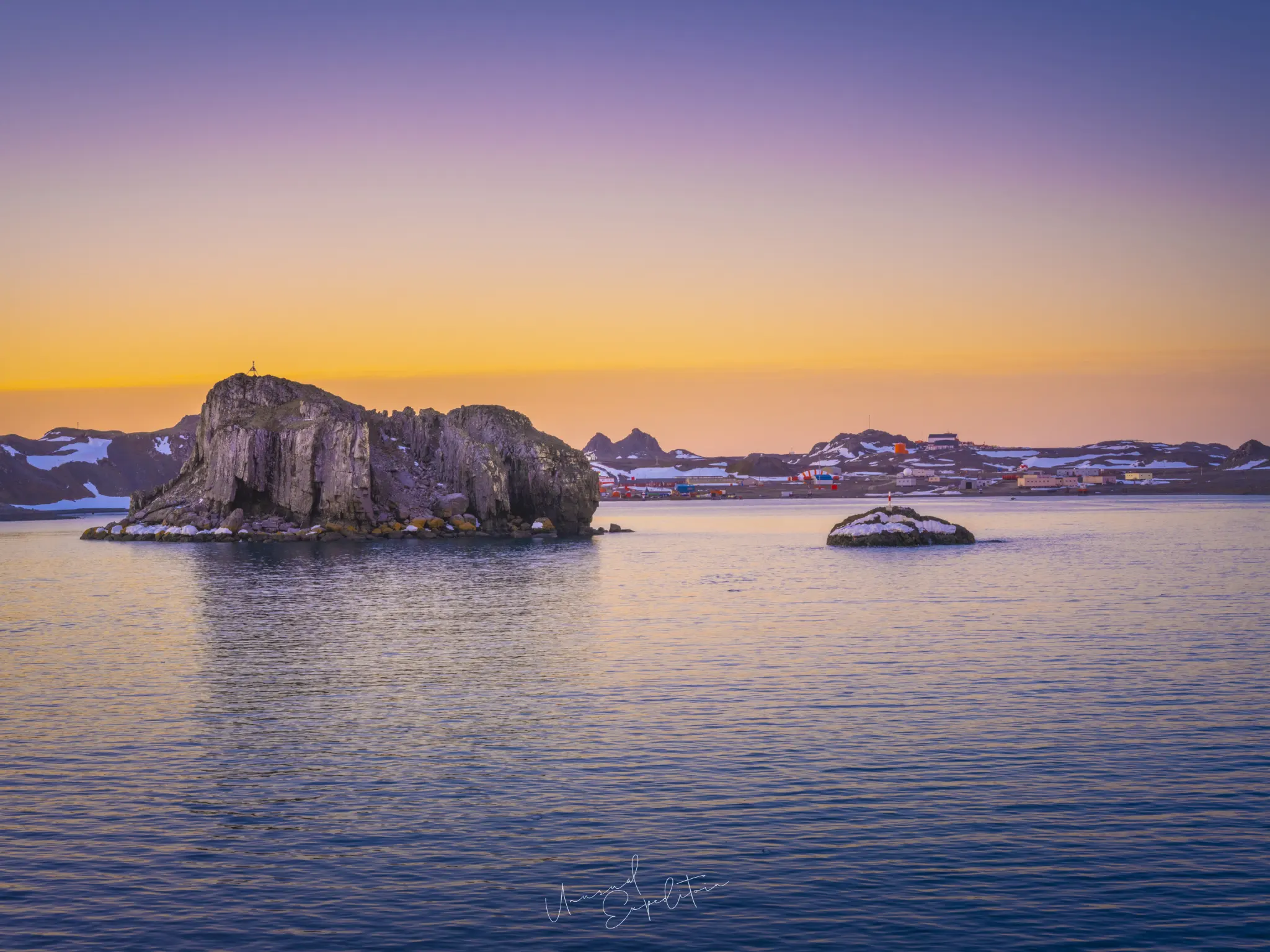
Cape Horn and the Beagle Channel are the last two subjects of an Antarctica fly-cruise: a Zodiac landing on Hornos Island, Chile, if the sea allows, with its lighthouse, its keeper, its steel albatross monument and a wooden stair of about 110 steps, and the sheltered run up the Beagle Channel to Ushuaia, Argentina. Both are photographed in wind and low light at the end of a Drake Passage crossing. These notes belong to our complete guide to an Antarctica photography tour.
Where Cape Horn is
Cape Horn is the southern headland of Hornos Island, the southernmost island of the Tierra del Fuego archipelago, in Chile. It is the headland that sailors have rounded since the seventeenth century and the name that stuck. The island is a steep, grassy, treeless lump of rock with cliffs on its southern face and a small landing on its sheltered side. The Chilean Navy keeps a lighthouse there with a resident keeper and family, and the island falls within a Chilean national park and a UNESCO biosphere reserve. For a ship coming north out of the Drake Passage, Cape Horn is the first land in two days and the signal that the open ocean is behind you.
Can you land at Cape Horn?
Sometimes. A landing at Cape Horn is attempted on our departure, weather permitting, and landings succeed only in calm conditions. The landing stage is exposed, the swell that crosses the Drake arrives at the island unbroken, and the Chilean Navy and the expedition leader both have to agree that the Zodiacs can get people ashore and back safely. When the sea is up, the ship passes close to the headland instead and the photographs are made from the deck. Treat the landing as a bonus. I have not stood on Hornos Island myself; none of my four midsummer voyages attempted the landing, so this will be a first for me as much as for the group. The crossing that brings you there is described in crossing the Drake Passage: what to expect.
The wooden stair of about 110 steps
From the landing a wooden stair of about 110 steps climbs the slope to the plateau where the lighthouse, the chapel and the monument stand. Photographically it is the first thing you see and the best leading line on the island: a pale timber line zigzagging up green tussock toward a grey sky. Shoot it from the bottom with a 24-70mm at the wide end, with the group spread along it for scale, and again from the top looking back down to the Zodiacs and the ship. The stair is exposed to the wind and can be slippery, so one hand for the rail and the camera on a strap. The operator asks that guests can get in and out of a Zodiac unaided and walk on uneven ground, and this stair is where that matters.
The albatross monument
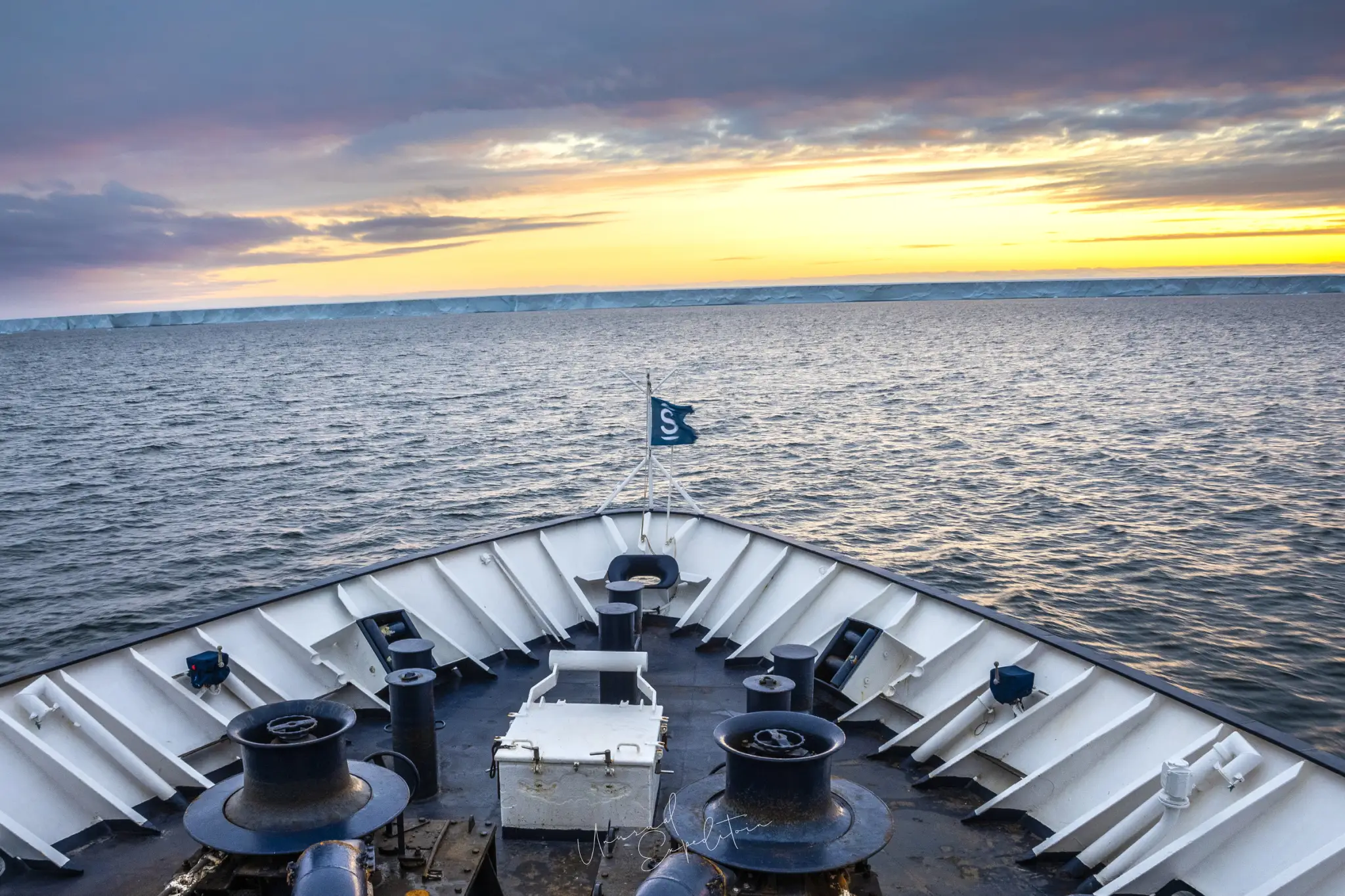
On the plateau stands the Cape Horn monument, a steel sculpture erected in 1992 in memory of the sailors who died rounding the Horn. Two plates of steel frame the silhouette of an albatross in flight against the sky, and it is deliberately see-through; the picture is the shape of the bird with cloud, sea or a real albatross behind it. It stands in wind that rarely drops, so brace, use a shutter speed of 1/500 s or faster, and shoot many frames. The strongest compositions keep the horizon low and let the sculpture fill the top two thirds, or go tight with a 70-200mm on the cut-out and whatever weather is passing through it. Check the exposure against the sky, not the dark steel, or the monument will come out as a flat black shape with no edge detail. A person standing in the gap, small, gives it scale.
The lighthouse and its keeper
The Cape Horn lighthouse is operated by the Chilean Navy and staffed by a keeper, who lives on the island with family and often greets visitors and stamps passports with the Cape Horn stamp. Ask before photographing the keeper or the family; this is a home and a workplace. The lighthouse itself is modest, a small tower beside the keeper's house and a tiny chapel, and it photographs best as part of the scene: a white structure on a green plateau with the Drake behind it, with a 24-70mm from the path. In flat grey light bring the exposure up a third of a stop so the white walls stay white. The chapel interior, if open, needs a wide lens and a high ISO.
"The Beagle Channel in the long light of a midsummer evening, mountains going pink on both sides and everyone on deck, is the picture of Ushuaia people come home with. Coming back in is quieter. People had seen the ice by then and were already editing. I tell them to stop and look up, because this stretch of water is a picture on its own."
Joseph Mak, tour leader, Unusual Expedition
Photographing the end of the world
The weather at Cape Horn is the subject. Expect wind, low cloud moving fast, patches of sun on the sea and showers you can see coming. The island is green and the sea is grey, and a yellow jacket or the orange of a Zodiac carries a frame. Work wide for the plateau and the monument and long for the cliffs and the birds; black-browed albatross and giant petrels patrol the headland. Keep the camera under a jacket between frames and the cloth in reach, because spray reaches the stair. Settings and exposure habits for this kind of light are in our Antarctica photography tips for snow and ice exposure; the compensation here goes the other way, toward neutral, because there is no snow in the frame.
The Beagle Channel into Ushuaia
From Cape Horn the ship heads for the Beagle Channel, the strait named after HMS Beagle, the ship that carried Charles Darwin through these waters in the 1830s. The channel separates the main island of Tierra del Fuego from the islands to the south and is shared between Chile and Argentina along its length. For a photographer it is the first sheltered water after the Drake and the first mountains and forest since Punta Arenas: snow-capped peaks on both sides, beech forest down to the shore, glaciers hanging in the side valleys on the northern shore, and sea lions and cormorants on the rocks near Ushuaia. Shoot from the bow with a 24-70mm for the channel ahead and from the beam with a 70-200mm for the glaciers; a polariser cuts the haze on the far shore.
| Subject | Where you shoot from | Lens | What decides it |
|---|---|---|---|
| Cape Horn headland | Deck, as the ship rounds it | 70-200mm | Sea state and visibility |
| Wooden stair and plateau | On Hornos Island, if landed | 24-70mm | Calm sea for the Zodiacs |
| Albatross monument | On the plateau | 24-70mm and 70-200mm | Wind and passing cloud |
| Lighthouse and keeper | On the path by the station | 24-70mm | Permission from the keeper |
| Beagle Channel mountains | Deck, bow and beam | 24-70mm, 70-200mm | Light; it is sheltered water |
| Ushuaia waterfront | Deck on arrival, then on foot | 24-70mm | Disembarkation timing |
Only the Beagle Channel on this list is close to a certainty; everything at Cape Horn depends on a sea that is calm less often than not.
Ushuaia: the end of an Antarctica cruise
Ushuaia calls itself the southernmost city in the world, and it sits on the north shore of the Beagle Channel under a wall of mountains, with the port at its centre and the town climbing the slope behind. For most Antarctica cruises it is both start and finish; for our fly-cruise it is the finish only. The waterfront is photogenic in the morning light with the ships at the pier and the peaks behind, and the town is small enough to walk. From Ushuaia the route home runs through Buenos Aires, and Singapore passport holders enter Argentina visa-free for up to 90 days, according to the Singapore Ministry of Foreign Affairs and the Argentine foreign ministry. Routings and buffer nights are covered in our Antarctica tour from Singapore.
Finish the voyage at the Horn with us
Cape Horn is the right full stop to a week in the ice, whether you stand on the plateau or watch it pass from the rail. Our Antarctica photography tour ends this way, north over the Drake Passage to Cape Horn and the Beagle Channel for Ushuaia. I will be on the deck with you, and if the sea allows, on the stair for the first time myself.
Join the Antarctica photography tour
Antarctica Express Air-Cruise 2028 - Antarctica departs 10 Mar 2028 To 16 Mar 2028. Small group, photography first. All Antarctica photography tours.
Explore Antarctica in depth
- The Complete Guide to an Antarctica Photography TourAntarctica
- King George Island: Weather by Month, Daylight Hours and PenguinsAntarctica
- Sunset in Antarctica: Does the Sun Set, and What the Light DoesAntarctica
- Antarctica Photos: What It Really Looks Like from an Expedition ShipAntarctica
- What to Pack for an Antarctica Cruise (and the 25 kg Rule)Antarctica
- Photographing the South Shetland IslandsAntarctica
- King George Island, Antarctica: The Airstrip, the Bases and the ChurchAntarctica
- Is Antarctica Worth Visiting? A Photographer's ViewAntarctica
- Crossing the Drake Passage: What to ExpectAntarctica
- Camera Gear for Antarctica PhotographyAntarctica
- The Best Time to Visit Antarctica for PhotographyAntarctica
- Photographing Whales in AntarcticaAntarctica
Upcoming Photo Tours
- Egypt Photo Tour – EgyptEgypt 12 Dec 2026 To 20 Dec 2026
- Inner Mongolia Winter Owl Photo Tour – ChinaChina 01 Jan 2027 To 04 Jan 2027
- Inner Mongolia Winter Photo Tour – ChinaChina 05 Jan 2027 To 11 Jan 2027
- Mekong And Central Highland Vietnam Photo Tour - VietnamVietnam 16 Jan 2027 To 24 Jan 2027