
Masai Mara Places to Visit: Seven Photo Spots and Where to Stand
Masai Mara places to visit with a camera: river crossings, leopard forest, Triangle plains, balloons, Musiara, the escarpment.
The Masai Mara places to visit with a camera are the Mara River crossing points, the riverine forest along the Talek and Mara rivers, the open plains of the Mara Triangle, the balloon launch grounds at dawn, Musiara Marsh, the Oloololo escarpment and a Maasai village outside the reserve. None of them is a fixed viewpoint. In the Mara a photo spot is a stretch of ground where the animals, the light and the rules line up, and where you stand is decided by how your driver parks.
The spots below sit inside our Masai Mara photography tour guide, which covers the reserve, the seasons and the subjects. Here the question is narrower: for each place, which way the light falls, what lens to use, how crowded it gets and what the rules allow. The photographs are our own, from our trip into the Mara Triangle.
Masai Mara places to visit for photography: how the spots work
The Maasai Mara National Reserve covers about 1,510 square kilometres of grassland in Narok County. The western third, west of the Mara River, is the Mara Triangle, managed by the Mara Conservancy; the rest is run by Narok County. Both keep you in the vehicle except at designated points, and the Mara Conservancy's park rules say rangers can fine or remove vehicles that leave the tracks or crowd animals. So you cannot walk to a better angle. You choose a place, ask the driver to put the vehicle where the light will be behind you, switch off the engine and wait. Every spot here works on that pattern. A 200-400mm or 100-400mm does most of the work, with a 70-200mm or 24-70mm on a second body for the wide view.
Mara River crossing points
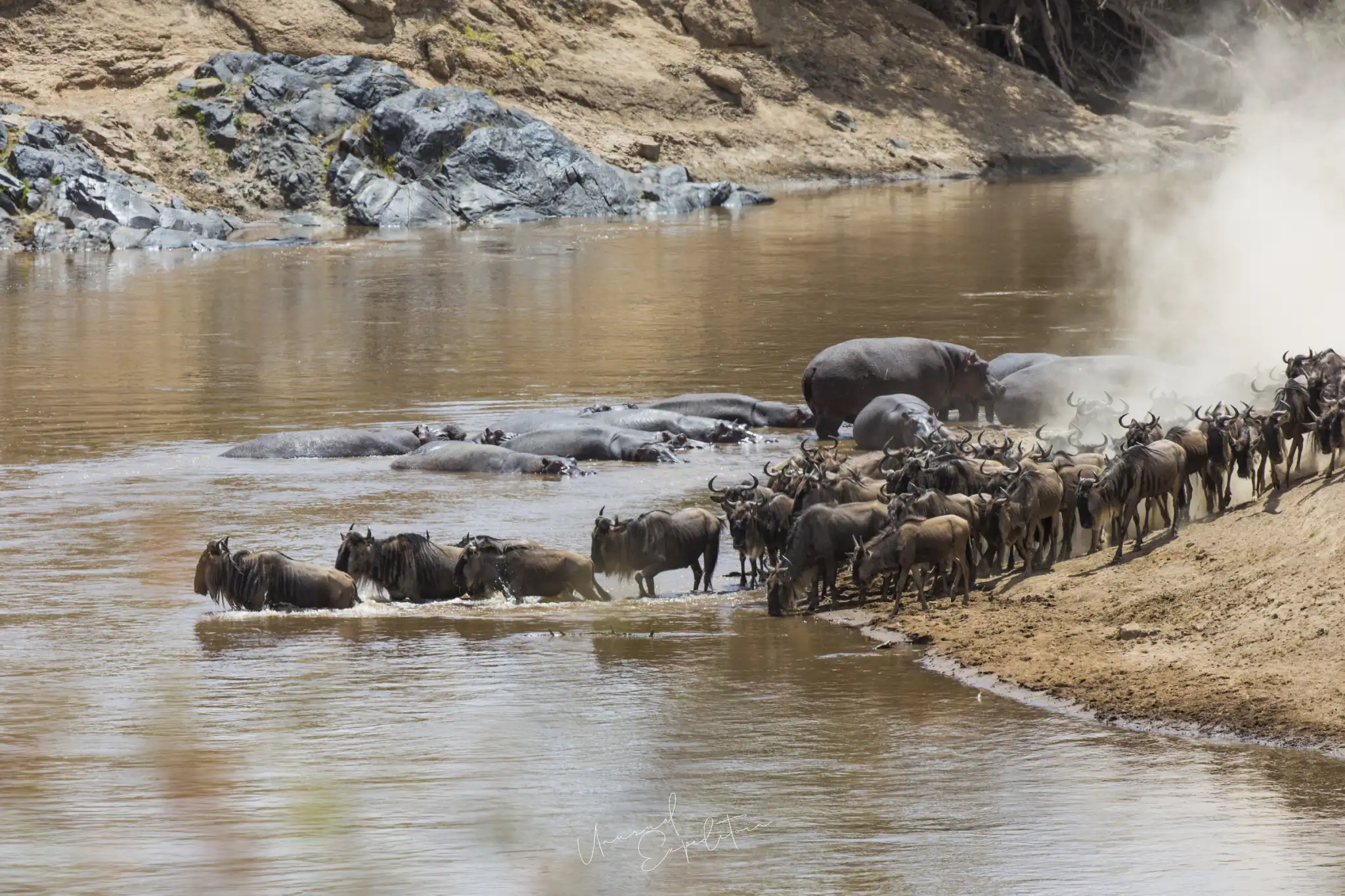
The Mara River crossing points are the most photographed places in the reserve, and the most crowded. From about July to September the herds gather on the banks and, after hours of hesitation or none at all, pour down the cut banks into the water. Vehicles line up on the far side at a distance the rangers set. A crossing can happen at any time of day, so the light is whatever you get: harsh at midday, which suits dust and spray, and soft only if you are lucky. Park slightly downstream so the animals come toward you as they climb out. Use the long lens for faces in the water and the 70-200mm or 24-70mm for the whole line coming down the bank. Our Mara River crossing guide covers the waiting, the crocodiles and the behaviour rules in detail.
Riverine forest along the Talek and Mara rivers
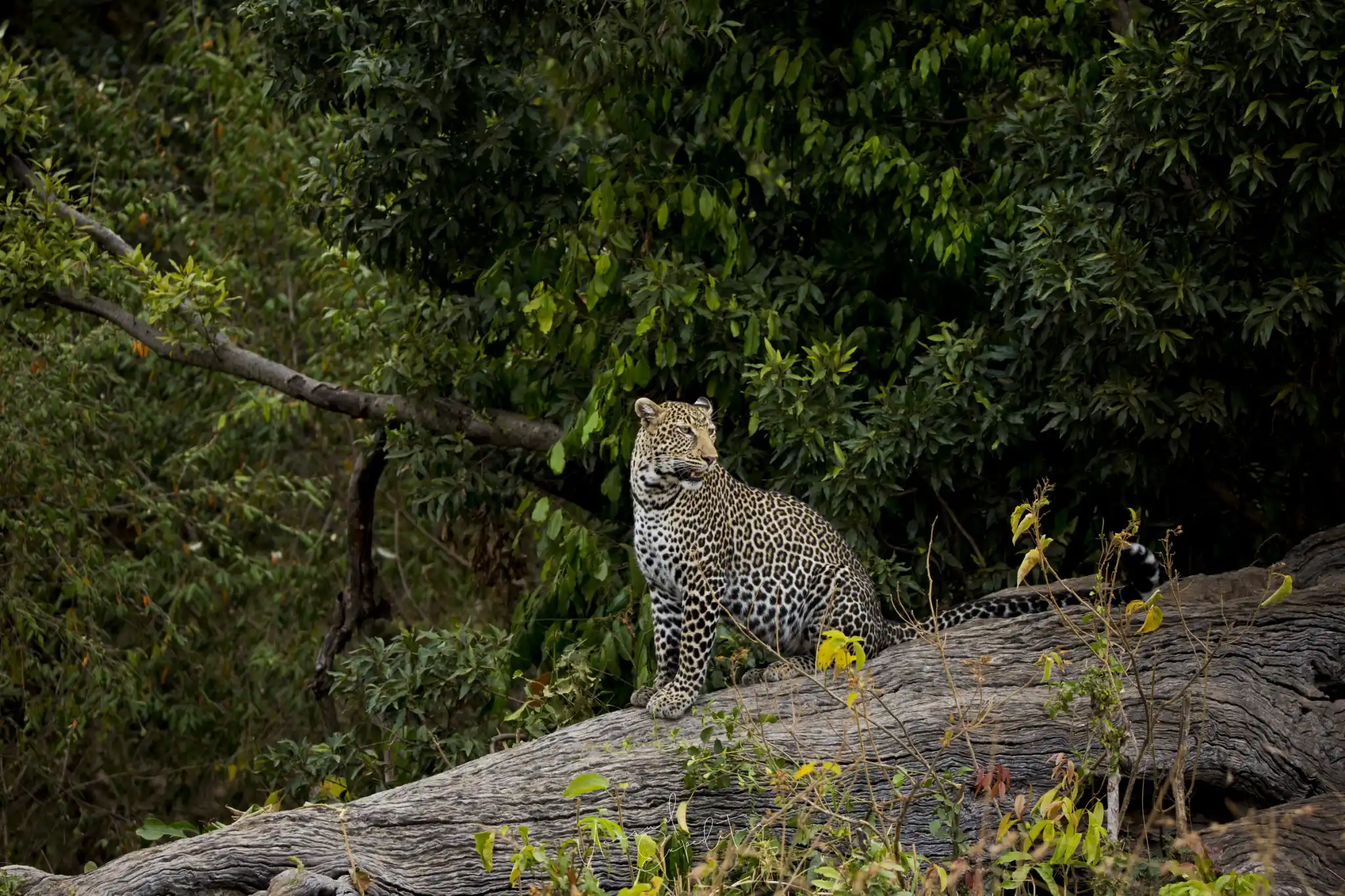
The belts of forest and thicket along the Talek and the Mara are leopard country. The cats rest on fallen trunks and low branches at the forest edge, and the light there is difficult: dark green behind, bright grass in front. Early and late in the day the low sun reaches under the canopy and lifts the cat off the background. Expose for the animal and let the forest go dark, which is what makes the leopard on our card stand out. A 200-400mm or 100-400mm is the lens, and patience is the method, because a resting leopard may not move for a long time. Sightings draw vehicles quickly, so keep your distance and accept the angle you get.
The open plains of the Mara Triangle
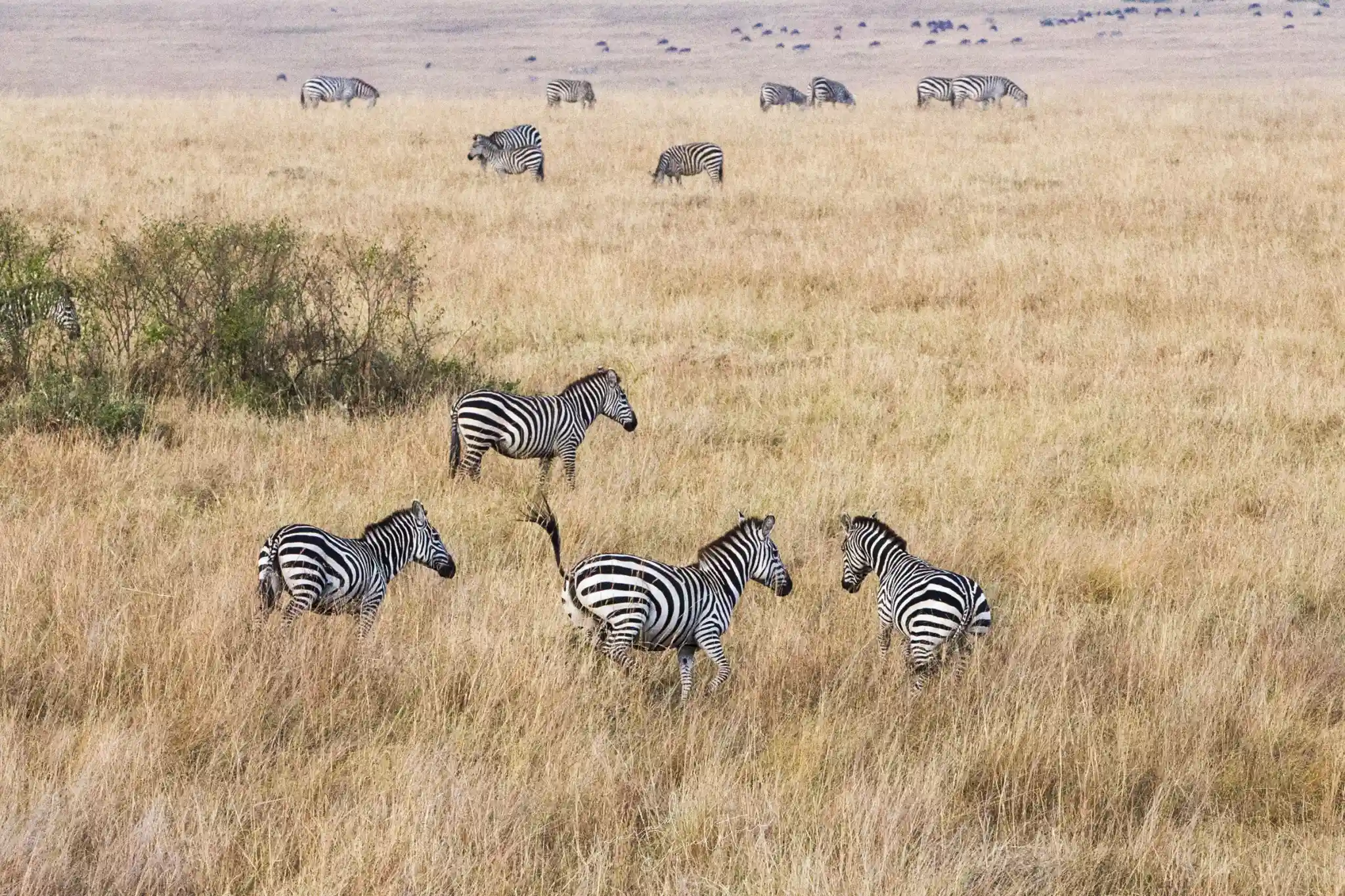
West of the river, the Mara Triangle opens into rolling grassland with scattered acacias and big skies. This is where the wide landscape pictures come from: a lone tree, a line of herds below a storm, sunbeams through cloud. Shoot with the sun to the side in the first and last hours, when the grass turns gold and the shadows give the ground shape. In the middle of the day, look up: the dry months bring towering cumulus, the rains bring dark walls of cloud. A 24-70mm, or a 16-35mm for the biggest skies, and a 70-200mm to compress a tree against the horizon. Crowds are rarely a problem on the plains; the vehicles collect at the cats and the river. For more of what the plains look like in different weather, see our Masai Mara photos.
The balloon launch grounds at dawn
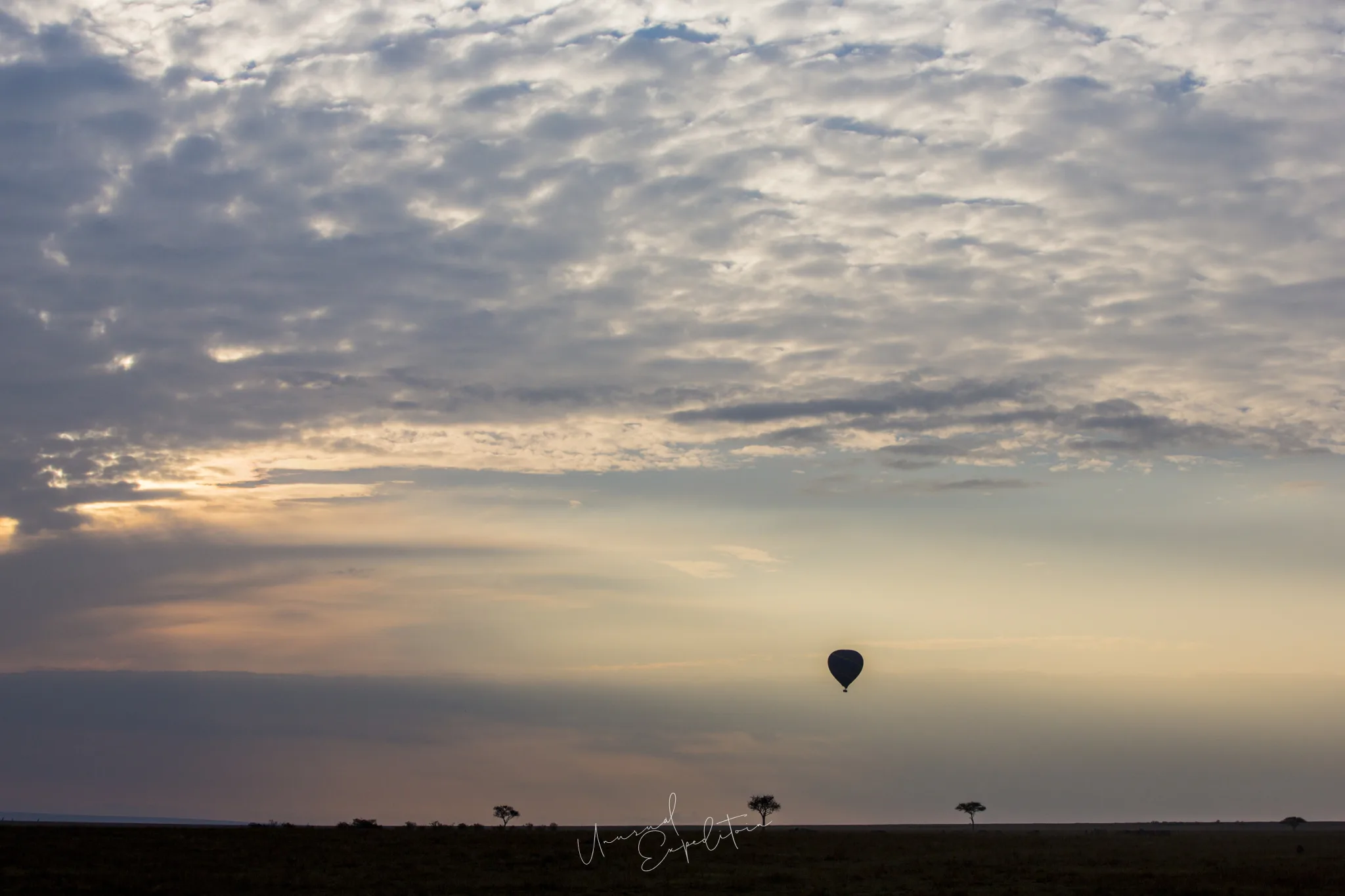
Hot air balloons launch from several camps in the reserve before sunrise and drift over the plains in the first light. You can photograph them in two ways. From the basket you get the herds and the river from above, with the low sun raking across the grass. From the ground, a balloon against the dawn sky is one of the most recognisable Masai Mara pictures, and it costs nothing but an early start. Shoot the balloon as a silhouette with the sky exposed correctly and use a 70-200mm to make it larger against the horizon. Our Masai Mara hot air balloon safari guide covers the flight itself and whether it is worth the fare.
"People ask me for the best spot in the Mara as if it were a viewpoint. It is a direction. Put the sun behind you, find the animal, and park where it will walk. Most of my good frames came from sitting still in a place that looked empty."
Joseph Mak, tour leader, Unusual Expedition
Musiara Marsh in the north of the reserve
Musiara Marsh, in the north of the main reserve near the Mara River, became famous through the BBC series Big Cat Diary, which followed the lions known as the Marsh Pride. The marsh stays green after the plains dry out, so it draws grazers, buffalo and the predators that follow them, and it is a good place for birds. The light is best early, with the sun low behind you as you look across the wet ground. Lions here are used to vehicles, which means close views and, in busy months, a crowd. We did not photograph the marsh on our trip, so we describe it from public information; ask your camp how far it is from where you stay.
The Oloololo escarpment
The Oloololo escarpment forms the western edge of the Mara Triangle, a wall of ridge above the plains. From the lodges along its rim you look east over the whole Triangle and the river, which makes it a place for wide panoramas, storms rolling across the grass and the light of late afternoon on the plains below. The view faces east, so the evening light falls behind you onto the plains and the morning sun rises in front of you. A 24-70mm and a 70-200mm cover it. We did not stand on the rim ourselves, so treat this as a pointer to a place worth asking about.
A Maasai village outside the reserve
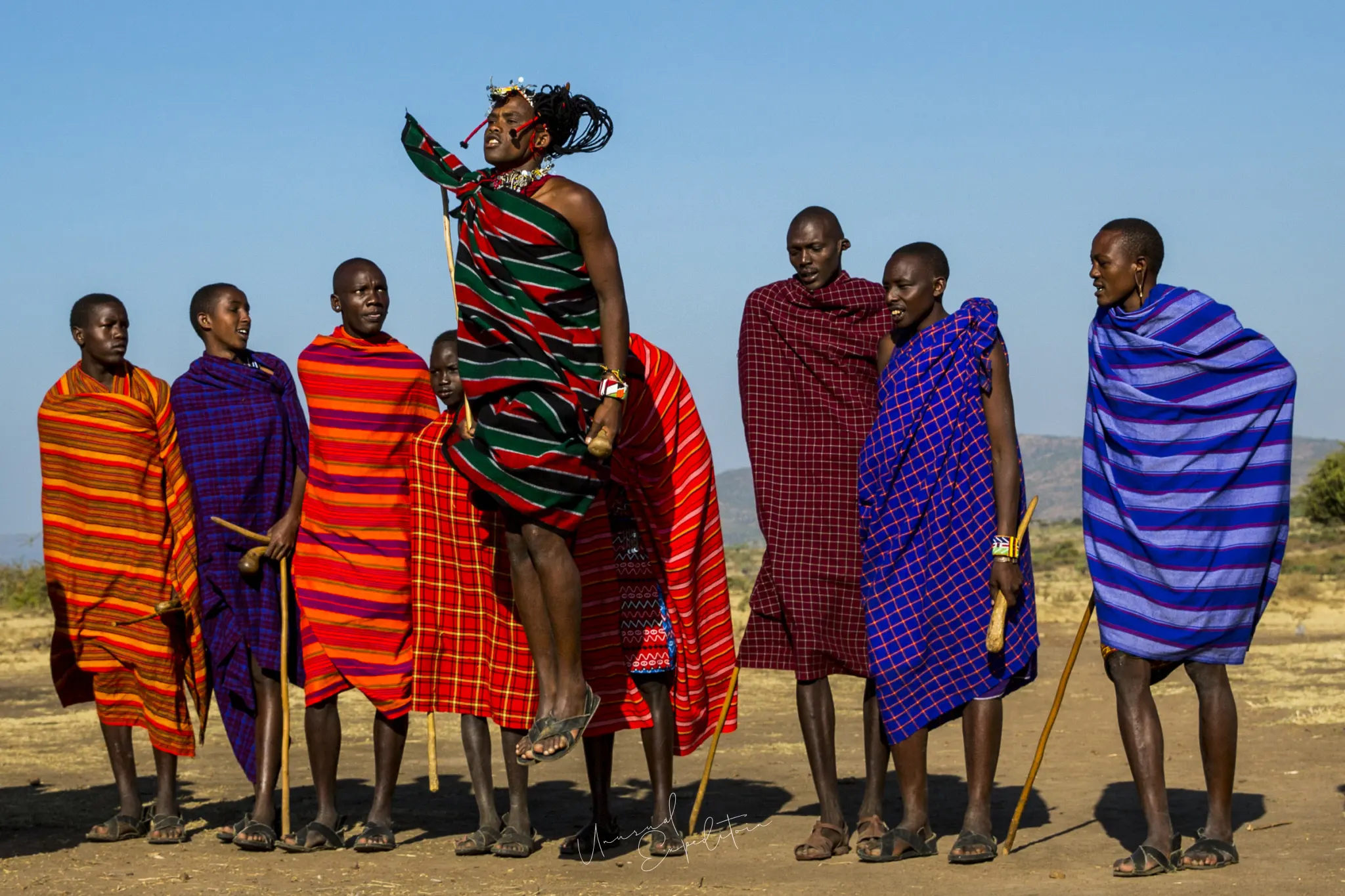
The Maasai villages around the reserve are the one place in the Mara where you can leave the vehicle and photograph people. Visits are arranged with the community, usually include the welcome song and the jumping dance, and a fee goes to the village. Ask before you photograph anyone, and photograph the people who are taking part, not the children who gather around. The light is hard by midday, so the morning or late afternoon is kinder to faces and the red and blue shukas. A 24-70mm for the dance and a 70-200mm for portraits. Our Maasai village visit guide covers the etiquette in full.
Which Masai Mara spot for which picture
| Spot | Main subject | Best light | Lens | Crowds |
|---|---|---|---|---|
| Mara River crossing points | Wildebeest and zebra in the water | Whenever the herd crosses | 200-400mm, 70-200mm | High in July to September |
| Talek and Mara riverine forest | Leopards | Early and late | 200-400mm | Builds quickly at a sighting |
| Mara Triangle plains | Lone trees, herds, skies | First and last hours, storms | 16-35mm, 24-70mm, 70-200mm | Low |
| Balloon launch grounds | Balloons at dawn, aerials | Sunrise | 24-70mm, 70-200mm | Low on the ground |
| Musiara Marsh | Lions, buffalo, birds | Morning | 200-400mm | Medium to high |
| Oloololo escarpment | Panoramas over the Triangle | Late afternoon | 24-70mm, 70-200mm | Low |
| Maasai village | People, dance, houses | Morning or late afternoon | 24-70mm, 70-200mm | Your group only |
The cats and the river decide most days; the plains and the escarpment fill the gaps between them.
Photograph the Masai Mara with us
We run the Masai Mara as a private photography trip on request, planned around the spots and the season you want. The Kenya photography tours page has the destination guides and how to ask us.
Masai Mara photography tours
The next Masai Mara departure is announced on the Masai Mara photography tours page, with previous expeditions and all the planning guides.
Explore Masai Mara in depth
- Masai Mara Photography Tour: The Complete Guide to Photographing the MaraKenya
- Masai Mara Wildlife Photography: Techniques for the Plains and the RiverKenya
- Masai Mara National Reserve: What It Is, Where It Is and What It Looks LikeKenya
- Birds of Masai Mara: Photos and Names of the Birds You Will SeeKenya
- How to Get to Masai Mara, and Is It Worth ItKenya
- Masai Mara Animals: Big Cats, Elephants, Hippos and BirdsKenya
- Maasai Village Visit: Photographing the Maasai with RespectKenya
- Masai Mara Hot Air Balloon Safari: Photographing the Sunrise FlightKenya
- Mara River Crossing: How to Photograph the Wildebeest at the RiverKenya
- Best Time to Visit Masai Mara for the Great MigrationKenya
- Masai Mara Photos: What the Reserve Really Looks LikeKenya
Upcoming Photo Tours
- Egypt Photo Tour – EgyptEgypt 12 Dec 2026 To 20 Dec 2026
- Inner Mongolia Winter Owl Photo Tour – ChinaChina 01 Jan 2027 To 04 Jan 2027
- Inner Mongolia Winter Photo Tour – ChinaChina 05 Jan 2027 To 11 Jan 2027
- Mekong And Central Highland Vietnam Photo Tour - VietnamVietnam 16 Jan 2027 To 24 Jan 2027