
Antarctica Photography Season, Month by Month
Antarctica cruise season October to March in one table: light, ice, penguins, whales and ships by month. April to September is closed.
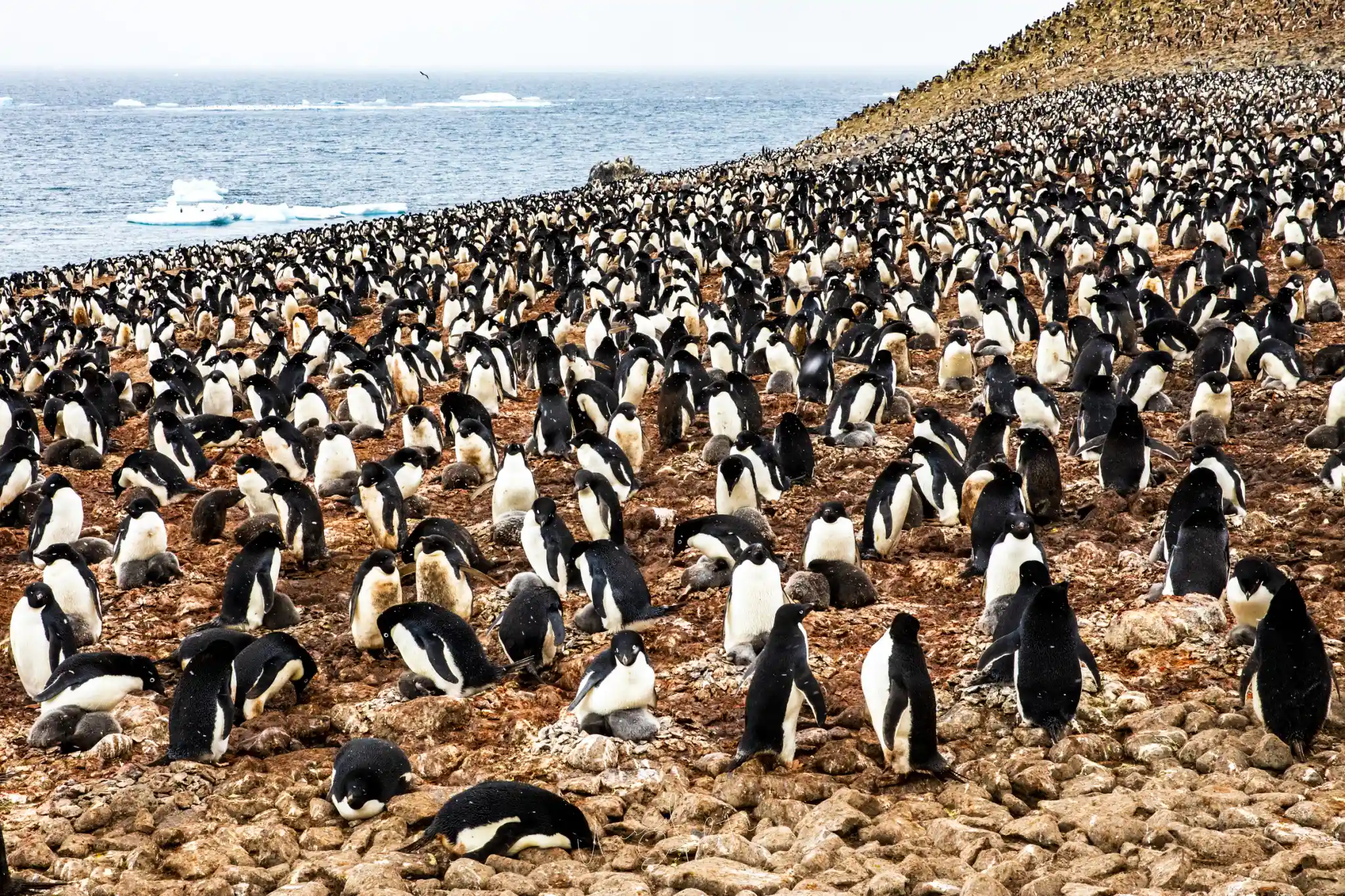
Antarctica cruises run from late October to late March, the southern spring and summer, and nothing sails for tourists from April to September. Within those six months the light, the ice, the penguin colonies, the whales and the number of ships all change, so the month you choose decides the pictures you come home with. The table below lays the Antarctica photography season out month by month, and the notes that follow explain why we chose March for the trip in our complete Antarctica photography tour guide.
| Month | Light | Ice | Penguins | Whales | Ships |
|---|---|---|---|---|---|
| October | Long days lengthening fast, still a few dark hours | Heavy sea ice, many landing sites still closed | Arriving at the colonies, courtship beginning | Very few | First sailings only |
| November | More than twenty hours, brief twilight nights | Pristine snow, large bergs, pack ice in the channels | Courtship, nest building, eggs | Few | Rising |
| December | Round the clock, no true sunset | Snow softening, channels opening | Chicks hatching from mid month | Building | Many |
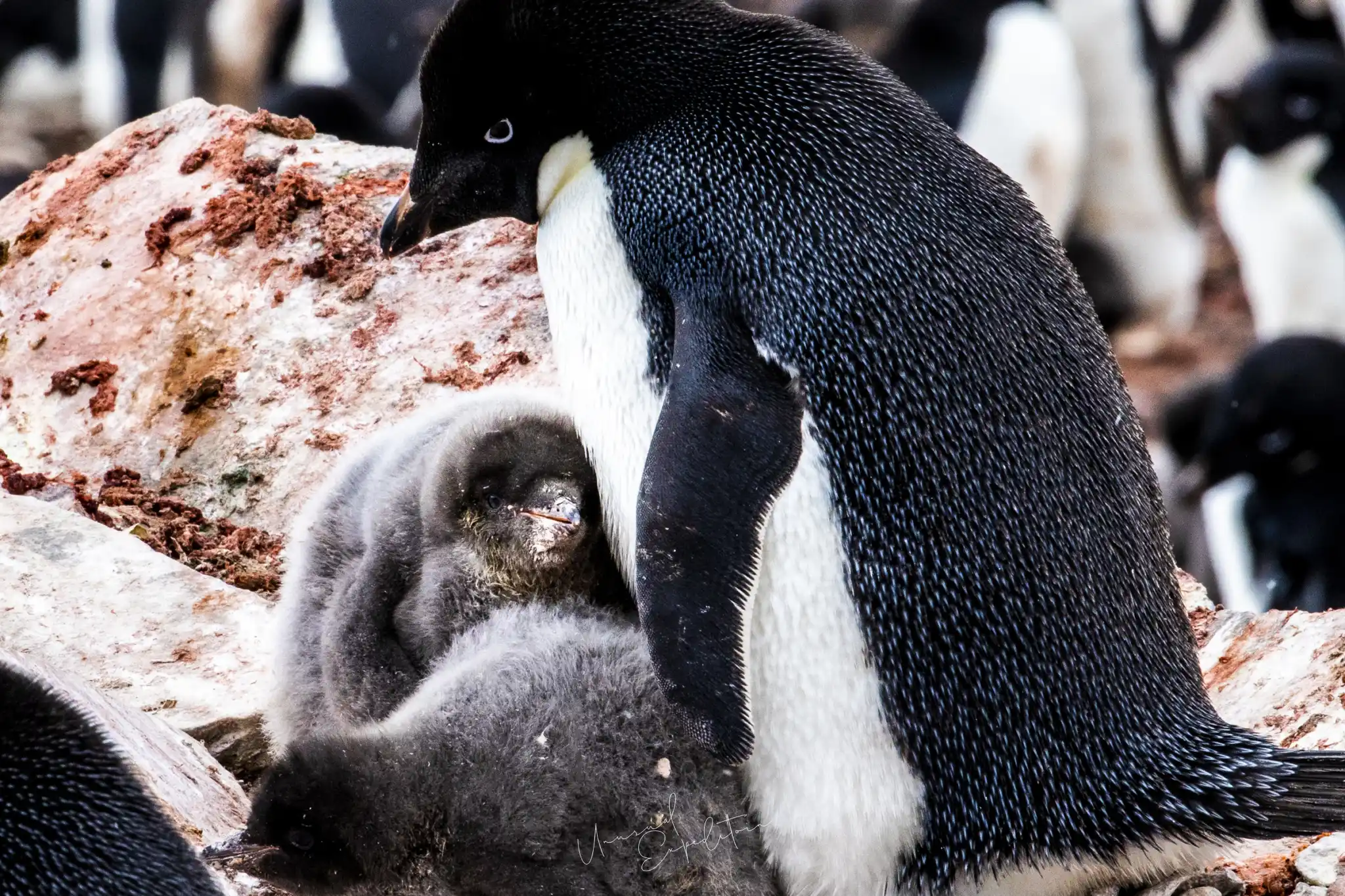
| January | Round the clock, sun dips at night | Most open water of the season | Chicks growing, creches forming | Common, bubble-net feeding most frequent | Most |
| February | Sunsets return, long evenings | Open water, glaciers calving, snow algae appearing | Large chicks chasing adults, Adelie colonies emptying | Numerous | Falling |
| March | About thirteen hours by mid month, long twilights | Early pack ice may reform, muddier shores | Fledging, adults in moult, gentoos dispersing | Most numerous and most relaxed | Few, last sailings late in the month |
| April to September | Season closed: darkness returns, sea ice reforms around the Peninsula, no tourist ships operate | ||||
The later you go, the better the animals and the sky, and the rougher the snow.
When do Antarctica cruises run?
Antarctica cruises run from late October to late March. The limit is physical. Sea ice around the Antarctic Peninsula breaks up through spring and reforms in autumn, and NSIDC records show the continent's sea ice at its smallest around late February or early March before it grows back. At the same time the days shorten quickly after the equinox and the weather turns. IAATO, the association that coordinates Antarctic tourism under the Antarctic Treaty, has its members operate inside that window, and Antarctica21, which has run fly-cruises from Punta Arenas since 2003, flies to King George Island in the same months. The six open months are not interchangeable. If you want the short version, read the best time to visit Antarctica for photography; if you want each month in turn, keep going.
October and November: clean snow and courtship
October is the slow start, with heavy sea ice, many sites closed and only the first few sailings. November is the month for pristine Antarctica. The snow at the landing sites has not yet been trodden, melted and stained; the big icebergs of winter are still drifting in the bays; and pack ice sits in the channels, good for pictures and bad for ship movement. Daylight is more than twenty hours, with a short twilight in place of night. Gentoo, chinstrap and Adelie penguins are courting, stealing pebbles, building nests and sitting on eggs, so you photograph pairs and posture, not chicks. Whales are still scarce because the krill feeding season is only beginning. If your Antarctica is white slopes, blue ice and penguins as a small, clean element in a big landscape, November is your month.
December: chicks under the midnight light
December is midsummer. From mid month the first chicks hatch, and the colonies change character as adults shuttle between nest and sea and skuas patrol the edges. The light never leaves: the sun dips toward the horizon late in the evening and lifts again a short while later, so you can photograph round the clock but there is no true sunset, no golden hour that ends and no dark sky. The channels are opening and the snow is softening. Whale numbers are building but still well short of their late-season peak. December is the month I know best, with frames from December 2018 and December 2019 among the four midsummer voyages I have led, and it is when many ships are on the Peninsula. For the chick pictures specifically, see photographing penguins in Antarctica.
January: the busiest month in Antarctica
January has the most open water, the most settled weather and the most ships. Chicks are growing fast and gathering in creches while both parents fish. The light is still round the clock, with the sun dipping lower at night than in December, so the late evening hours take on a little warmth without ever reaching a real sunset. Whales are now common in the Gerlache Strait area and the bays, and January is when bubble-net feeding by humpbacks is most frequent on the Peninsula. The price is company: with the most vessels of the season working the same sites, the IAATO limit of one hundred visitors ashore at a time means landings are scheduled tightly between ships. Two of my four voyages were in January, one of them running over the turn of the year, and the wildlife was at its richest; the queues for the best sites were also at their longest.
February: the sunsets return
February is when the sky comes back. The sun sets properly for the first time since November, the evenings turn gold and the twilights grow long, which changes landscape photography completely. Glaciers calve more as the summer melt peaks, and the pink and green snow algae begin to colour the slopes near the colonies. Chicks are large, in grey down and beginning to shed it, and the feeding chases between chick and adult give the funniest pictures of the season. Adelie colonies finish early and are largely emptied by late February. Whales are numerous and settled. Ship numbers fall from their January peak. February suits a photographer who wants wildlife behaviour, calving ice and colour in the sky in one trip, and it is the month most often recommended by people who have been more than once.
March: whales, moult and the last ships
March is the month we chose for our own departure. Daylight is about thirteen hours by mid month, the sun rising around breakfast and setting in mid evening, and the twilights are long enough to shoot a bay in gold and then blue. Humpbacks, minke and orca have fed all summer and are at their most numerous and most relaxed: lunge feeding, logging at the surface, tail slaps, close approaches to a stationary Zodiac. Gentoo chicks are dispersing, chinstrap chicks fledge from late February into March, and the adults stand in moult for about three weeks, scruffy and still. Snow algae are at their most visible. The colonies are muddier, some Adelie sites are deserted, and early pack ice can close a bay. The ships thin out and the last sailings leave late in the month. For the whale side of this, read photographing whales in Antarctica.
"People ask me which month and I ask them which picture. If the picture is a chick under a parent, it is December or January, and I have those in quantity from four voyages. If the picture is a humpback's tail against a sunset, it is March, and I do not have it yet. That is why we are going back in March."
Joseph Mak, tour leader, Unusual Expedition
April to September: why nothing sails
From April to September the Antarctic tourist season is closed. The sea ice reforms around the Peninsula and pushes north, the days shorten toward the polar night, and the Drake Passage weather worsens. Research stations keep a winter crew, but no tourist ship operates and the Antarctica21 flights to King George Island do not run. If you see an Antarctica trip advertised for those months, read the small print: it is usually a sub-Antarctic island voyage or an overflight. For a photographer the closed season is simply unavailable, which is why the choice is between six months and not twelve.
Antarctica weather by month: what to expect on deck
Antarctica weather by month on the Peninsula coast varies less than the light does. Temperatures sit close to freezing across the whole season; in March we expect roughly minus 5 to plus 3 degrees, and midsummer is a little milder. The thermometer is not the problem. Wind off the glaciers and the ship's own speed give a wind chill far below the air temperature, and conditions can swing from sun to snow shower within an hour in any month. Spray in the Zodiac is constant. What changes with the month is stability: December and January are the most settled, October and March the least, with more cancelled landings at both ends. Dress for the wind and the wet, not the cold, and read what to pack for an Antarctica cruise before you buy anything.
Pick your month, then come with us
If the month you want is March, we have the ship and the flight arranged. The Antarctica photography tour is a fly-cruise from Punta Arenas with Antarctica21, with one northbound Drake crossing, Cape Horn weather permitting, and Joseph Mak on deck and in the Zodiac with you. Current departure and fare are on the tour page.
Join the Antarctica photography tour
Antarctica Express Air-Cruise 2028 - Antarctica departs 10 Mar 2028 To 16 Mar 2028. Small group, photography first. All Antarctica photography tours.
Explore Antarctica in depth
- The Complete Guide to an Antarctica Photography TourAntarctica
- King George Island: Weather by Month, Daylight Hours and PenguinsAntarctica
- Sunset in Antarctica: Does the Sun Set, and What the Light DoesAntarctica
- Antarctica Photos: What It Really Looks Like from an Expedition ShipAntarctica
- What to Pack for an Antarctica Cruise (and the 25 kg Rule)Antarctica
- Photographing the South Shetland IslandsAntarctica
- King George Island, Antarctica: The Airstrip, the Bases and the ChurchAntarctica
- Is Antarctica Worth Visiting? A Photographer's ViewAntarctica
- Crossing the Drake Passage: What to ExpectAntarctica
- Cape Horn and the Beagle Channel: Photographing the End of the WorldAntarctica
- Camera Gear for Antarctica PhotographyAntarctica
- The Best Time to Visit Antarctica for PhotographyAntarctica
Upcoming Photo Tours
- Egypt Photo Tour – EgyptEgypt 12 Dec 2026 To 20 Dec 2026
- Inner Mongolia Winter Owl Photo Tour – ChinaChina 01 Jan 2027 To 04 Jan 2027
- Inner Mongolia Winter Photo Tour – ChinaChina 05 Jan 2027 To 11 Jan 2027
- Mekong And Central Highland Vietnam Photo Tour - VietnamVietnam 16 Jan 2027 To 24 Jan 2027