
Antarctica vs the Arctic for Photography: Which to Choose
Antarctica cruise vs Arctic cruise for photographers: wildlife, ice, people, aurora, access from Singapore, season and cost, side by side.
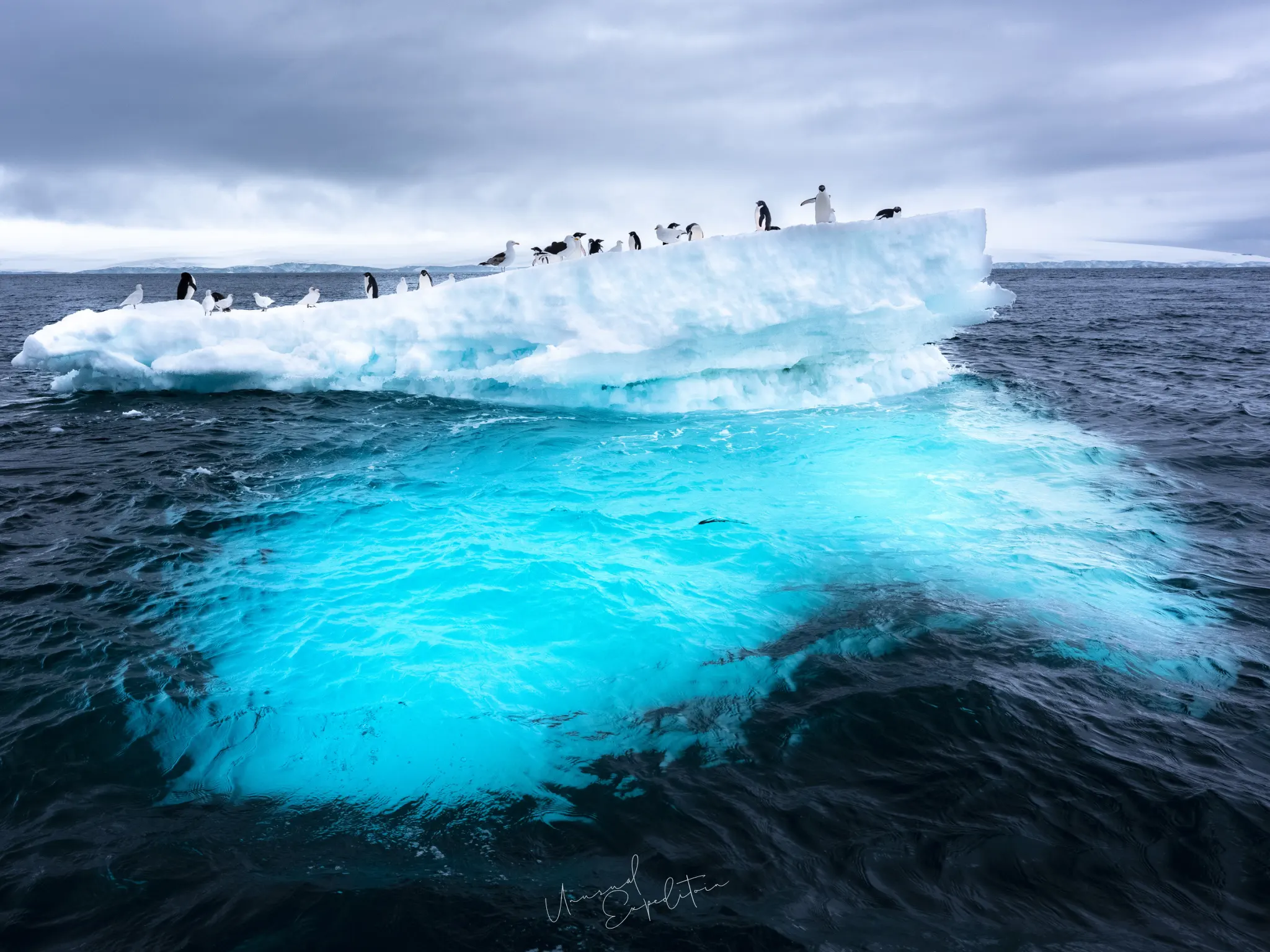
Antarctica versus the Arctic for photography is a choice between two different pictures. Antarctica gives penguins, whales at close range, ice on a scale the north cannot match, and no people at all. The Arctic, in our case East Greenland, gives polar bears, musk ox, a living settlement, autumn tundra and the Northern Lights. Joseph has led four midsummer voyages south and photographed Scoresby Sund in the north; here is how we weigh them, with the southern trip detailed in our complete Antarctica photography tour guide.
Antarctica cruise vs Arctic cruise: which should a photographer choose?
An Antarctica cruise versus an Arctic cruise is not a question of better or worse but of what you want to come home with. Both are small-ship expedition voyages with Zodiac landings, governed by visitor codes, IAATO in the south and AECO, the Association of Arctic Expedition Cruise Operators, in the north. Beyond that they diverge. Antarctica is a continent with no permanent population, no land predators and wildlife that ignores you. The Arctic is an inhabited region with towns, hunters, a top predator that can eat you, and a night sky. If your single must-have picture is a penguin, a humpback beside the Zodiac or an iceberg the size of a building, go south. If it is a polar bear, aurora over a fjord or a coloured village under snow, go north. The table below sets the two side by side as we run them.
| Aspect | Antarctica (Peninsula, March) | Arctic (East Greenland, September) |
|---|---|---|
| Wildlife | Gentoo, chinstrap and Adelie penguins, five seal species, humpback, minke and orca, albatross and petrels; no land predators | Polar bear possible, musk ox, Arctic fox, Arctic hare, seals, whales in the Denmark Strait; no penguins |
| Ice | Tabular and sculpted bergs, glacier fronts calving into bays, pack ice in channels, snow to the waterline | Grounded icebergs in the largest fjord system on earth, hanging glaciers, no shelf ice |
| People and settlements | Research stations only, no residents, access not guaranteed | Ittoqqortoormiit, a living hunting settlement, plus Reykjavik at either end |
| Aurora | Not a realistic goal in the tourist season | Dark skies from mid August, good to excellent in September |
| Access from Singapore | No nonstop; 30 to 40 hours door to door to Punta Arenas, then a two-hour charter flight | One or two changes to Reykjavik, then the ship |
| Season | Late October to late March | Ship access late July to early October |
| Cost band | High; small-ship expedition pricing plus the charter flight | High; small-ship expedition pricing in the same band |
The south wins on animals that come to you and on ice; the north wins on sky, culture and the one predator worth the trip.
Wildlife: penguins and whales against polar bears and musk ox
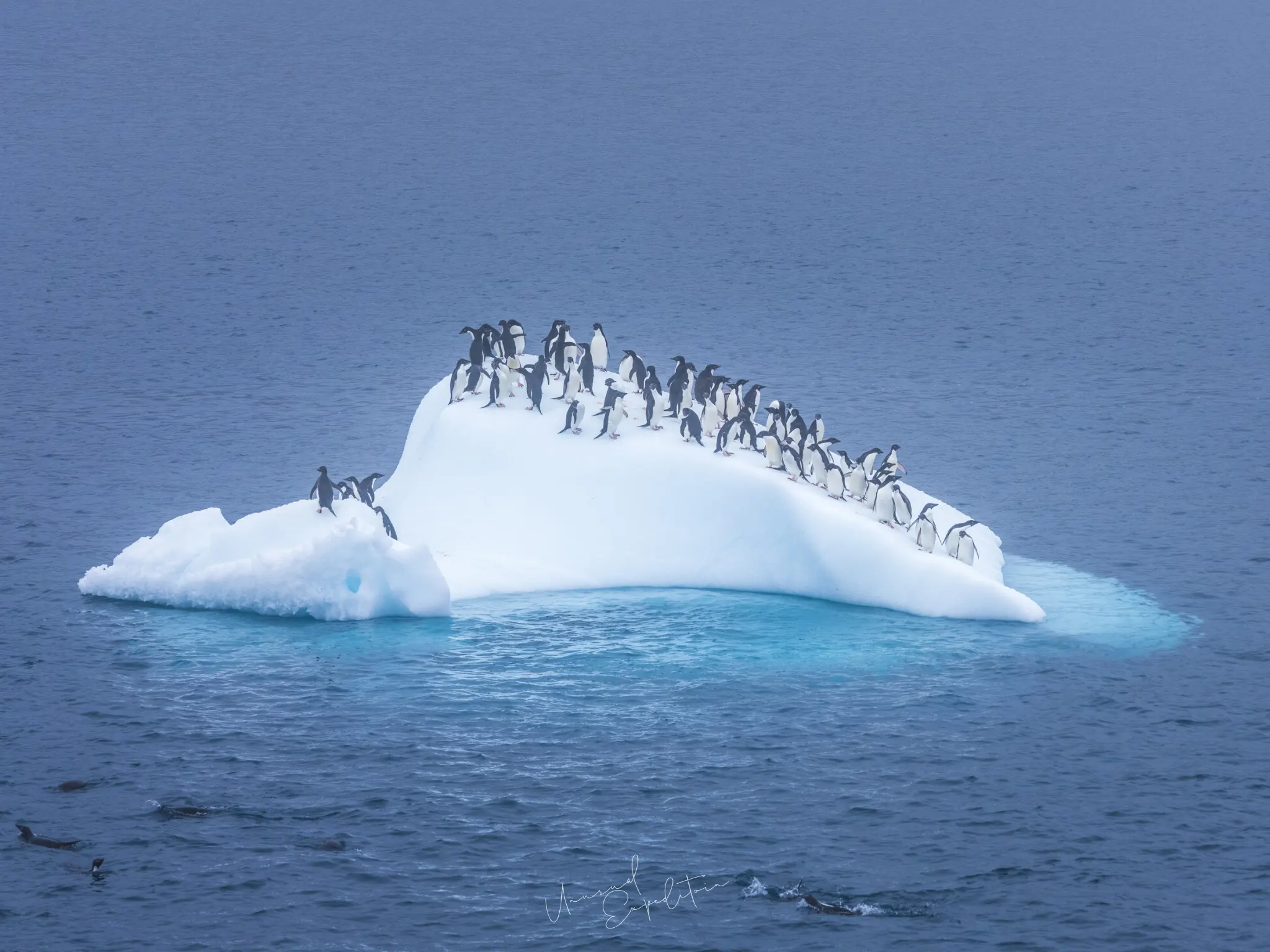
Antarctic wildlife has never been hunted on land, so it does not run. Gentoo and chinstrap penguins walk past your boots, Weddell seals sleep through a Zodiac passing, and in March the humpbacks, fed on a summer of krill, log at the surface beside a stationary boat. You photograph behaviour at eye level with a 70-200mm and are never short of subjects. The IAATO rule is to keep at least five metres away; the penguins do not know it. In East Greenland the animals know exactly what a human is. Musk ox are photographed at a distance with a 100-400mm, Arctic fox and hare are quick, and the polar bear, if seen at all, is seen from the ship or from a Zodiac with the guides' rifles out, because a bear is the reason every Greenland landing has a perimeter. The Arctic is harder wildlife work and the reward is one animal Antarctica cannot show you. For the southern list, see seals and seabirds of Antarctica.
Ice and landscape: the scale is different
Both places are iceberg country, but the ice behaves differently. Antarctica's bergs calve from shelves and glaciers along a continent and include the flat-topped tabular pieces the Arctic does not produce; the Peninsula's bays, Neko Harbour and Paradise Harbour among them, have glacier fronts that calve into the water while you watch, and the Lemaire Channel on a still morning is water like glass between cliffs. East Greenland's icebergs calve from glaciers deep in Scoresby Sund, drift out and ground on shallow banks, where they sit for a season against towering red sandstone and basalt walls. The Arctic gives you rock colour and tundra as a foreground; Antarctica gives you white and blue and almost nothing else, which is its strength. In both places the problem is scale and the solution is a Zodiac or the ship in the frame. Our approach to the southern version is in Antarctica iceberg and landscape photography.
People and settlements: only the Arctic has them
Antarctica has no residents. Under the Antarctic Treaty nobody owns it, and the only buildings are research stations, which are workplaces; a visit inside is never guaranteed, and the one church you may photograph is Trinity Church above Russia's Bellingshausen station on King George Island. For some photographers that absence is the point. East Greenland has Ittoqqortoormiit, a hunting settlement of coloured houses at the mouth of Scoresby Sund, with sled dogs staked on the slopes and people who have lived with the ice for generations. A landing there, conditions permitting, adds a human layer that Antarctica cannot. If your portfolio needs people, the choice is made for you. The wider Greenland trip, including the settlement and the aurora, is in our complete Greenland photography tour guide.
Aurora: only one of them gives you the night sky
The aurora is the clearest divider. In the Arctic, East Greenland sits under the auroral oval, the sky is dark from mid evening by early September, and the Northern Lights are a realistic goal on most clear nights of a September voyage. In Antarctica the aurora australis exists but the tourist season works against it: in December and January there is no darkness at all, and even in March the nights are short and the ship is usually moving or anchored under cloud. No responsible operator sells Antarctica as an aurora trip, and we do not. What March in Antarctica gives instead is real sunsets, which the midsummer months lack. If the night sky is in your top three pictures, the Arctic is the only answer.
Access from Singapore: how far is each?
Neither is close. Antarctica from Singapore means no nonstop flight, typically 30 to 40 hours door to door to Punta Arenas via Santiago, with the change at a European, American or Australian hub, then the two-hour charter across the Drake Passage to King George Island; the return is from Ushuaia via Buenos Aires. Chile and Argentina are visa-free for Singapore passports, 30 and 90 days respectively per the Singapore Ministry of Foreign Affairs. East Greenland is reached by ship from Reykjavik, which is one or two changes from Singapore through Europe, so the flying is shorter and simpler. The fly-cruise shape also removes the southbound Drake crossing, which matters to anyone prone to seasickness; the single northbound crossing is described in crossing the Drake Passage: what to expect. On access alone the Arctic is easier.
Season and light: March south, September north
The two trips sit at the end of their seasons for the same reason. In Antarctica, mid March gives roughly thirteen hours of daylight with sunrise around breakfast and sunset in mid evening, whales at their most numerous, fledging chicks, moulting adults, snow algae and fewer ships, at the cost of emptied Adelie colonies and a chance of early pack ice. In East Greenland, early September gives long days shortening fast, red tundra, fresh snow on the peaks, dark skies for aurora and the fjords at their most open before new ice forms. Temperatures are similar, around freezing in Antarctica and a little above in Greenland. The full southern calendar is in the best time to visit Antarctica for photography.
"After four midsummer voyages to Antarctica I still had no picture of a proper sunset there, and after one September in Scoresby Sund I had aurora over a fjord but not one animal that let me near it. The two places fix each other's gaps. I would not tell anyone to pick one for life, only which one to do first."
Joseph Mak, tour leader, Unusual Expedition
Which should you do first?
Our view: do Antarctica first if wildlife and ice are what you photograph, because nothing else on earth puts a whale and a penguin that close to a lens, and because the longer you leave it the more ships are going. Do the Arctic first if your work is landscape with a human element and you want the night sky in it. Do Antarctica first if seasickness worries you, because the fly-cruise crosses the Drake only once, northbound; do the Arctic first if long-haul flying is the harder part. Costs sit in the same high band. We run both and would not drop either.
Go south with us, then north
If the answer is Antarctica, the Antarctica photography tour is a March fly-cruise from Punta Arenas with Antarctica21, with Joseph Mak on deck and in the Zodiac with you. If the answer is the Arctic, the Greenland guide linked above leads to that tour. Either way the current departure and fare are on the tour page.
Join the Antarctica photography tour
Antarctica Express Air-Cruise 2028 - Antarctica departs 10 Mar 2028 To 16 Mar 2028. Small group, photography first. All Antarctica photography tours.
Explore Antarctica in depth
- The Complete Guide to an Antarctica Photography TourAntarctica
- King George Island: Weather by Month, Daylight Hours and PenguinsAntarctica
- Sunset in Antarctica: Does the Sun Set, and What the Light DoesAntarctica
- Antarctica Photos: What It Really Looks Like from an Expedition ShipAntarctica
- What to Pack for an Antarctica Cruise (and the 25 kg Rule)Antarctica
- Photographing the South Shetland IslandsAntarctica
- King George Island, Antarctica: The Airstrip, the Bases and the ChurchAntarctica
- Is Antarctica Worth Visiting? A Photographer's ViewAntarctica
- Crossing the Drake Passage: What to ExpectAntarctica
- Cape Horn and the Beagle Channel: Photographing the End of the WorldAntarctica
- Camera Gear for Antarctica PhotographyAntarctica
- The Best Time to Visit Antarctica for PhotographyAntarctica
Upcoming Photo Tours
- Egypt Photo Tour – EgyptEgypt 12 Dec 2026 To 20 Dec 2026
- Inner Mongolia Winter Owl Photo Tour – ChinaChina 01 Jan 2027 To 04 Jan 2027
- Inner Mongolia Winter Photo Tour – ChinaChina 05 Jan 2027 To 11 Jan 2027
- Mekong And Central Highland Vietnam Photo Tour - VietnamVietnam 16 Jan 2027 To 24 Jan 2027